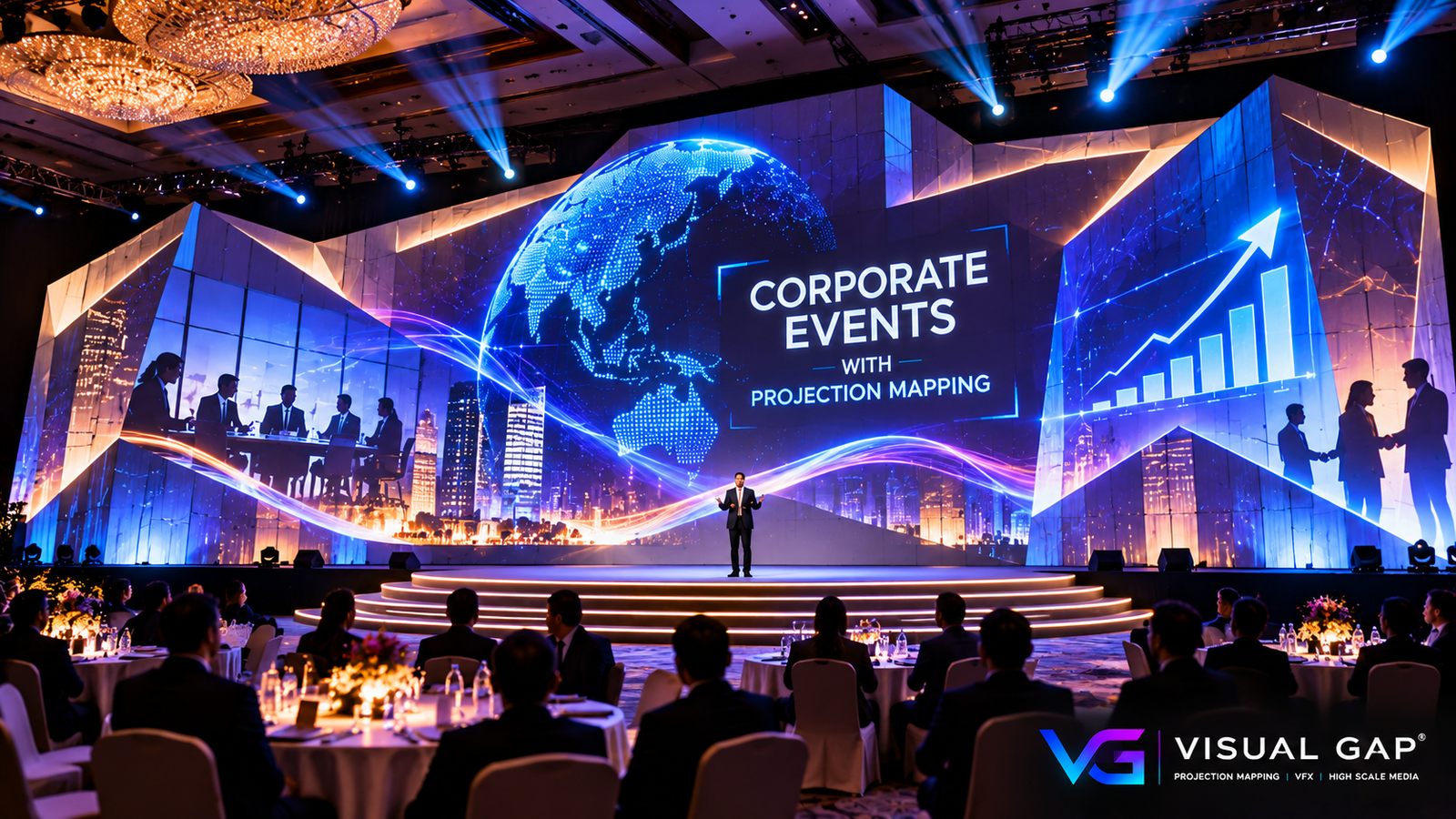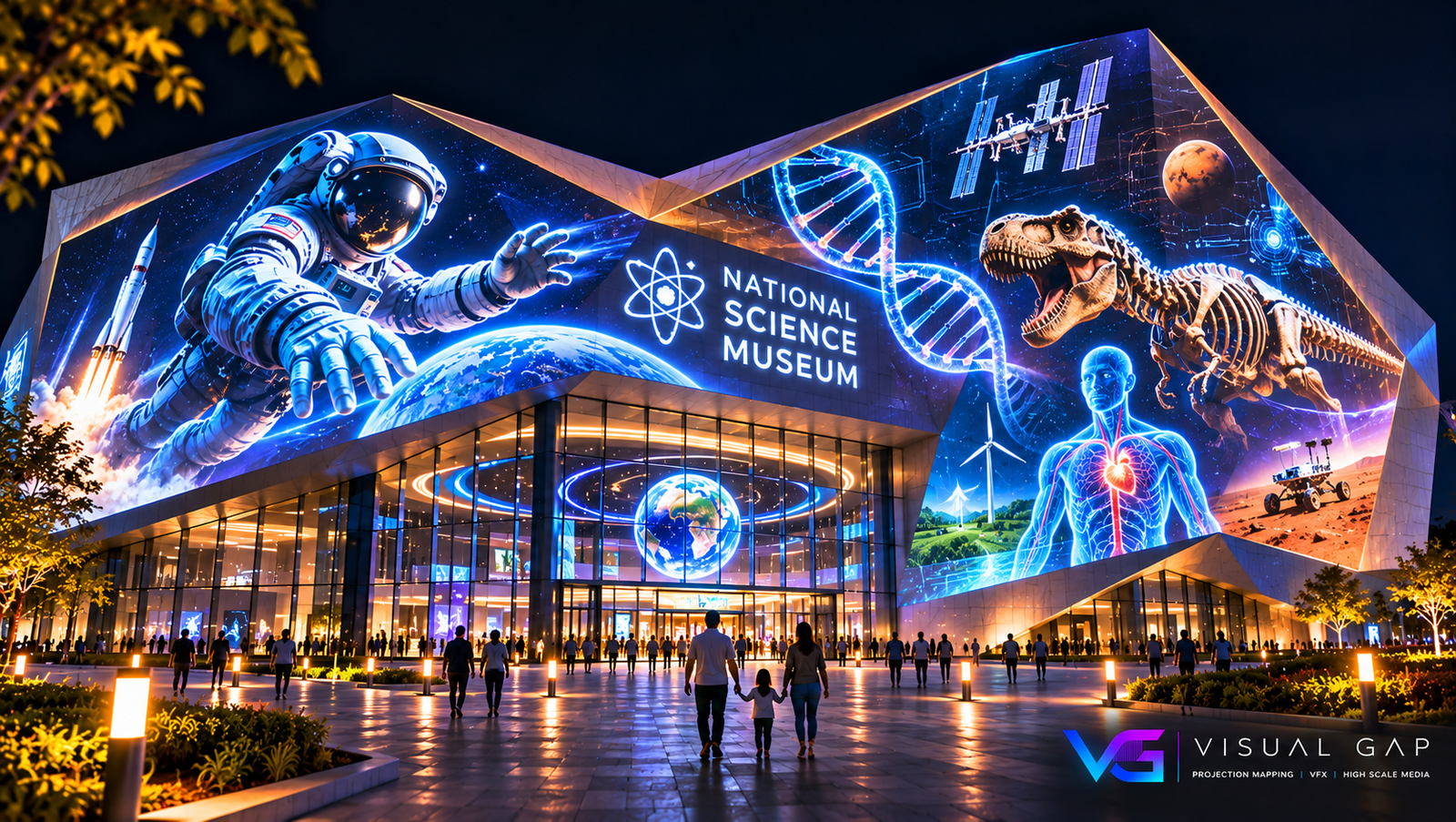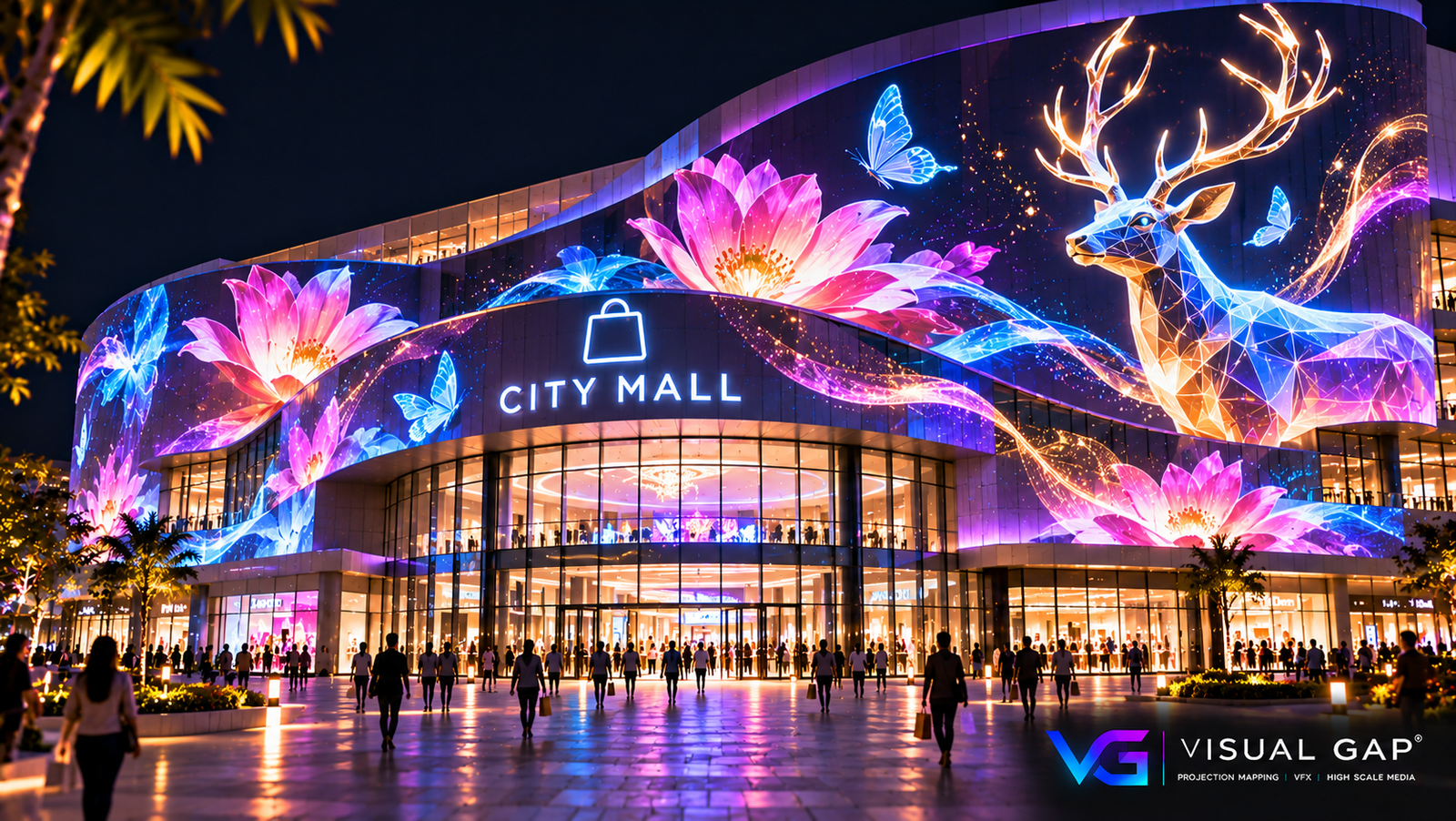
Projection mapping is a visual technology that transforms ordinary surfaces, such as buildings, walls, monuments, and objects, into dynamic displays using light, video, and animation.
Unlike traditional projection on a flat screen, projection mapping allows digital content to fit the shape and structure of a physical surface. This creates the illusion that buildings are moving, objects are changing their appearance, or entire spaces are coming to life.
Today, projection mapping is used in museums, cultural events, architectural displays, product launches, and immersive experiences. It combines technology and creativity to tell stories, communicate ideas, and create memorable visual experiences.
How Does Projection Mapping Work?
Projection mapping works by combining projectors, specially designed visual content, and mapping software.
The process begins with studying the surface where the visuals will appear. This could be a building façade, a monument, a museum exhibit, or an object with a unique shape.
Next, designers create animations and videos that match the surface’s dimensions and features. Specialised software helps align the content with the physical structure, ensuring that the projected visuals appear in the correct positions.
Once everything is aligned, the projector displays the content onto the surface.
For example, a building can appear to open, change materials, or transform into a completely different structure through carefully designed animation.
The final result depends on the quality of the content, the projection equipment, the surface, and the accuracy of the mapping process.
Where Is Projection Mapping Used?
Projection mapping can be adapted to different surfaces and environments, making it useful across a wide range of industries.
1. Architectural and Monument Projection Mapping
Buildings and monuments can become large visual canvases for storytelling.
Architectural projection mapping uses the structure of a building to create animations that interact with its windows, columns, walls, and other architectural features.
It is commonly used for cultural celebrations, public events, tourism attractions, and special occasions.
Monument projection mapping can also help present historical stories and cultural heritage through visuals, animation, and sound.
2. Museum Projection Mapping
Museums use projection mapping to make exhibitions more engaging and easier to understand.
Instead of relying only on text panels and static displays, museums can project animations onto physical models, maps, sculptures, and exhibit surfaces.
For example, a historical map can show how a city developed over time, or a model of an aircraft can display its different components and functions.
This approach combines visual storytelling with educational content to create a more engaging visitor experience.
3. Immersive Projection Experiences
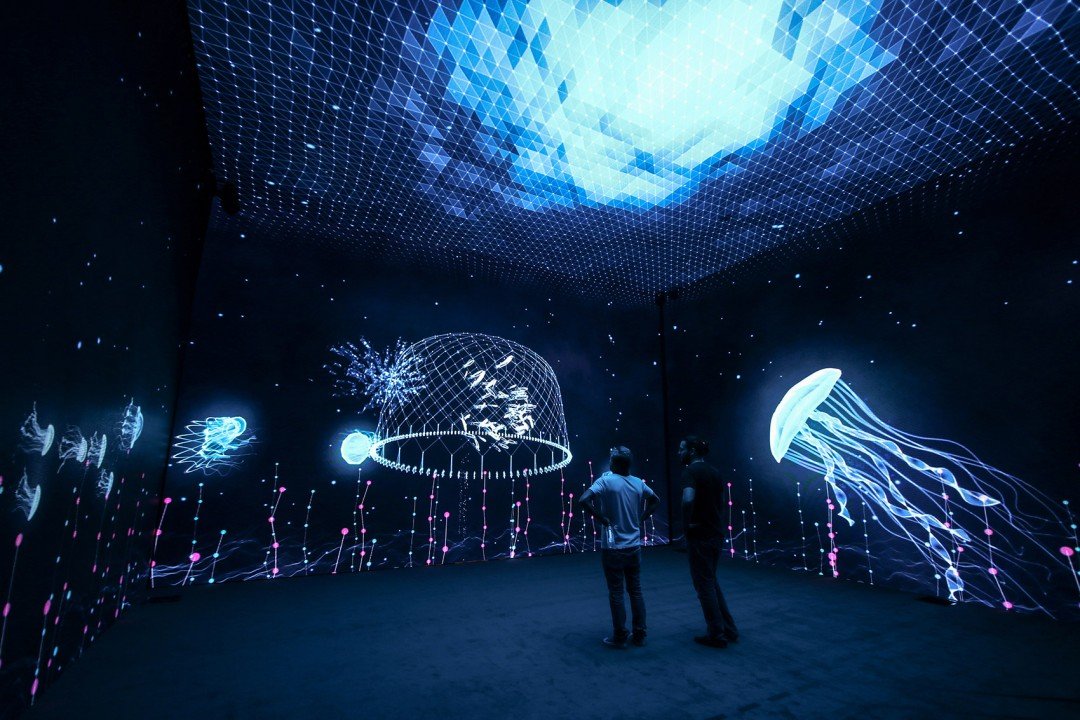
Immersive projection mapping transforms rooms and enclosed spaces using visuals projected across walls, floors, and sometimes ceilings.
These environments can transport visitors into digital landscapes, abstract worlds, historical scenes, or branded experiences.
Immersive spaces are used in exhibitions, museums, entertainment venues, art installations, and experiential marketing.
The goal is to create a visual environment that surrounds the audience rather than presenting content on a single screen.
4. Dome and 360° Projection
Dome projection creates visual experiences across a curved, dome-shaped surface.
It is commonly used in planetariums, science museums, educational environments, and immersive entertainment.
The projected content can take viewers through space, explore scientific concepts, or create panoramic visual stories that surround the audience.
5. Water Projection
Water projection uses a specially created water screen or mist to display videos and animations.
It is often used in outdoor attractions, fountain shows, cultural events, and large-scale entertainment installations.
When combined with music, lighting, and carefully designed visuals, water projection can create a distinctive visual experience.
What Are the Benefits of Projection Mapping?
Projection mapping offers several advantages for businesses, museums, event organisers, and cultural institutions.
Transforms ordinary spaces: Existing buildings, objects, and interiors can become dynamic visual displays without requiring a traditional LED screen across the entire surface.
Creates memorable experiences: Moving visuals and creative effects can capture attention and leave a lasting impression on audiences.
Makes storytelling more engaging: Animation, graphics, and visual effects help communicate stories and information in an accessible way.
Offers creative flexibility: Content can be designed around different surfaces, themes, events, and audiences.
Supports interactive experiences: When combined with suitable interactive technology, projection mapping can respond to movement, touch, or other inputs.
The best results come from combining a clear creative concept with appropriate equipment and careful technical planning.
What Equipment Is Needed for Projection Mapping?
A projection mapping installation typically requires several components, depending on the project’s size and complexity.
Projectors: Display the visuals onto the selected surface. Brightness, resolution, lens options, and throw distance are important considerations.
Mapping software: Helps align the projected content with the physical surface.
Media servers: Manage content playback and multiple video outputs when required.
Visual content: Includes animations, motion graphics, and 3D visuals created for the installation.
Audio and control systems: Coordinate sound, lighting, and other show elements when necessary.
A small installation may need only a basic setup, while a large architectural or museum project may require multiple projectors, specialised playback systems, and detailed on-site calibration.
Choosing the right equipment starts with understanding the surface, viewing conditions, creative requirements, and available budget.
What Is the Difference Between Projection Mapping and Traditional Projection?
Traditional projection usually displays images or videos on a flat screen or wall.
Projection mapping goes further by adapting the content to the shape and geometry of a physical surface.
For example, a traditional projector might display a video on a white wall. With projection mapping, the same wall could appear to crack open, change colour, reveal hidden architectural details, or transform through animation.
This makes projection mapping particularly useful when the physical surface itself is an important part of the visual experience.
Is Projection Mapping Suitable for Your Project?
Projection mapping can be suitable for projects that need more than a conventional display.
Museums may use it to explain historical events. Businesses may use it to create distinctive product launches. Cultural institutions may use it to bring heritage stories to life, while event organisers may use it to transform buildings and stages into dynamic visual environments.
However, every surface and venue has different requirements. Ambient light, surface colour, projector placement, viewing distance, content complexity, and installation conditions all influence the final result.
Understanding these factors early helps determine whether projection mapping is the right solution and what equipment and production work will be required.
Projection Mapping Solutions by Visual GAP
At Visual GAP, we work across projection mapping and immersive media to help transform physical spaces into engaging visual experiences.
Our areas of focus include architectural and monument mapping, museum projection, dome and 360° experiences, water projection, and immersive environments.
Every project starts with understanding the space, the creative vision, and the intended audience experience. From content development to technical planning, these elements need to work together to create a successful installation.
Whether you are developing a museum exhibition, planning a cultural event, or exploring an immersive brand experience, projection mapping offers new ways to communicate ideas through visual storytelling.
Planning a projection mapping project? Contact Visual GAP to discuss your requirements and explore the possibilities for your space.
Frequently Asked Questions About Projection Mapping
1. What is projection mapping in simple terms?
Projection mapping is a technology that projects videos, animations, and visual effects onto real-world surfaces such as buildings, walls, monuments, and objects.
2. How does projection mapping work?
It uses projectors, specially designed digital content, and mapping software to align visuals with the shape and dimensions of a physical surface.
3. Where is projection mapping commonly used?
Projection mapping is used in museums, monuments, architectural displays, concerts, exhibitions, product launches, immersive rooms, and water shows.
4. Can projection mapping be used on buildings?
Yes. Architectural projection mapping transforms building façades into large visual displays using carefully aligned animations and video content.
5. Does projection mapping require special equipment?
Yes. Most installations require suitable projectors, mapping software, and visual content. Larger projects may also need media servers, multiple projectors, audio systems, and additional technical equipment.
6. Is projection mapping suitable for museums?
Yes. Museums can use projection mapping to explain historical events, highlight exhibit details, visualise scientific concepts, and create more engaging educational experiences.
7. How much does projection mapping cost?
The cost depends on the surface size, number of projectors, content production, equipment requirements, installation conditions, and project duration. A site assessment and project brief help determine an accurate budget.
8. What is the difference between 2D and 3D projection mapping?
2D projection mapping generally adapts content to a surface using two-dimensional visual design and alignment. 3D projection mapping uses content designed around three-dimensional geometry to create more complex effects, such as the illusion of depth, movement, or structural transformation.
Conclusion
Projection mapping brings together technology, creativity, and storytelling to transform ordinary surfaces into dynamic visual experiences.
From historic monuments and museum exhibits to immersive rooms and large-scale events, it offers a flexible way to engage audiences and communicate ideas.
With the right creative approach, equipment, and technical planning, projection mapping can turn a physical space into an experience that people remember.
Explore projection mapping with Visual GAP and discover how your next project can bring spaces and stories to life.