Projection Mapping for Shopping Malls: Transforming Retail Spaces and Customer Experiences
Shopping malls are evolving beyond traditional retail destinations into entertainment, dining, and lifestyle experiences. To attract visitors and create memorable campaigns, mall operators and retail brands are exploring new ways to transform physical spaces into engaging visual environments.
Projection mapping for shopping malls offers an innovative way to turn building façades, atriums, retail displays, and architectural features into dynamic visual experiences. By combining digital animation, physical surfaces, and creative storytelling, projection mapping can help malls introduce seasonal attractions, promote brands, and create distinctive environments for visitors.
From festive celebrations and product launches to immersive brand activations, projection mapping provides a flexible platform for retail marketing and experiential design.
For shopping mall developers, retail marketing teams, advertising agencies, and event organizers, this technology offers new possibilities for engaging audiences in physical retail spaces.
What Is Projection Mapping for Shopping Malls?
Projection mapping is a visual technology that uses projectors to display digital content onto physical surfaces, adapting the imagery to their shapes, dimensions, and geometry.
Unlike conventional digital signage, which generally displays content on a dedicated screen, projection mapping can transform existing architecture, decorative structures, and specially designed installations into visual displays.
In a shopping mall, projection mapping can be used to create animated visuals on an atrium feature, introduce a new retail collection, present a seasonal campaign, or develop an immersive installation around a brand.
The content may include 2D and 3D animation, motion graphics, product visualizations, branded storytelling, and interactive elements.
The most effective installations are designed around the physical environment and the campaign’s objectives.
To understand the fundamentals, explore Visual GAP’s Complete Projection Mapping Guide.
1. Projection Mapping for Mall Atriums
Mall atriums often provide large, visually prominent spaces that can become focal points for immersive installations.
Depending on the architecture, projection mapping can transform suitable walls, central structures, decorative installations, and other surfaces into dynamic displays.
A shopping mall might use an atrium installation to introduce a seasonal theme, celebrate a festival, or create an attraction that encourages visitors to explore the space.
Potential applications include:
Seasonal visual installations.
Festival-themed projection shows.
Animated architectural displays.
Retail campaign launches.
Immersive brand experiences.
Special event presentations.
For example, a mall could develop a winter-themed visual experience featuring animated snowfall and decorative architectural effects. During a cultural festival, the content could be adapted to reflect the occasion.
Before selecting a concept, the installation team should assess the atrium’s height, surface geometry, ambient lighting, projector positions, and visitor viewing angles.
Large spaces may require multiple projectors, specialized lenses, and careful calibration to achieve consistent coverage.
2. Festive Campaigns and Seasonal Retail Experiences
Festivals and seasonal shopping periods provide opportunities for malls to introduce distinctive visual attractions.
Projection mapping can help shopping centres create themed environments that complement their decorations, promotions, and event programming.
Examples include:
Diwali campaigns: Display animated patterns, decorative lights, and festive visual storytelling on suitable architectural surfaces.
Christmas experiences: Create immersive winter landscapes, animated decorations, and seasonal displays.
New Year celebrations: Develop countdown visuals and coordinated animations for approved event areas.
Eid celebrations: Create culturally appropriate decorative visuals that complement the mall’s campaign.
Valentine’s Day promotions: Introduce romantic themes and branded experiences for participating retailers.
Summer campaigns: Use colourful animations and themed environments to support seasonal promotions.
The content should be tailored to the mall’s audience and brand positioning. Campaign visuals should also be reviewed for cultural appropriateness and coordinated with the property’s existing decorations.
Projection mapping is especially useful when a venue wants to change its visual theme without rebuilding an entire physical installation for every campaign.
3. Projection Mapping for Retail Brand Activations
Brand activations allow companies to engage customers through experiences that go beyond conventional advertising.
In a shopping mall, projection mapping can turn a designated activation area into an interactive or visually engaging brand environment.
Brands can use this approach to introduce products, communicate their identity, and create distinctive campaign experiences.
Possible applications include:
New product launches.
Fashion and lifestyle campaigns.
Consumer electronics demonstrations.
Beauty and cosmetics activations.
Automotive displays.
Premium brand installations.
Interactive promotional experiences.
For example, a cosmetics brand might use projected visuals to introduce a new collection, while a technology company could develop an installation that communicates the features of a new device.
Interactive features may include motion tracking, sensors, touch interfaces, or other systems that allow visitors to influence the content.
The installation should be designed around a clear campaign objective, such as product awareness, audience participation, or lead generation.
4. Projection Mapping for Fashion and Lifestyle Retail
Fashion and lifestyle brands rely heavily on visual identity, product presentation, and storytelling.
Projection mapping can help retailers create distinctive launch events and promotional displays within shopping malls.
A fashion brand could use a projection-mapped display to introduce a new collection, while a lifestyle retailer might develop a themed installation that reflects a seasonal campaign.
Potential applications include:
Fashion collection launches.
Premium retail showcases.
Lifestyle brand campaigns.
Visual storytelling around product design.
Limited-edition product promotions.
Window display enhancements.
Projection mapping can also be used on suitable mannequins, product models, and custom-built display structures.
However, projecting directly onto products requires careful consideration of their shape, colour, material, and surface reflectivity. The content must be designed around the physical object to maintain accurate alignment.
For everyday retail signage and pricing information, conventional displays may remain more practical. Projection mapping is generally most valuable when a campaign needs a distinctive visual presentation.
5. Immersive Shopping Mall Experiences
Some retail campaigns benefit from creating an environment that visitors can enter and explore.
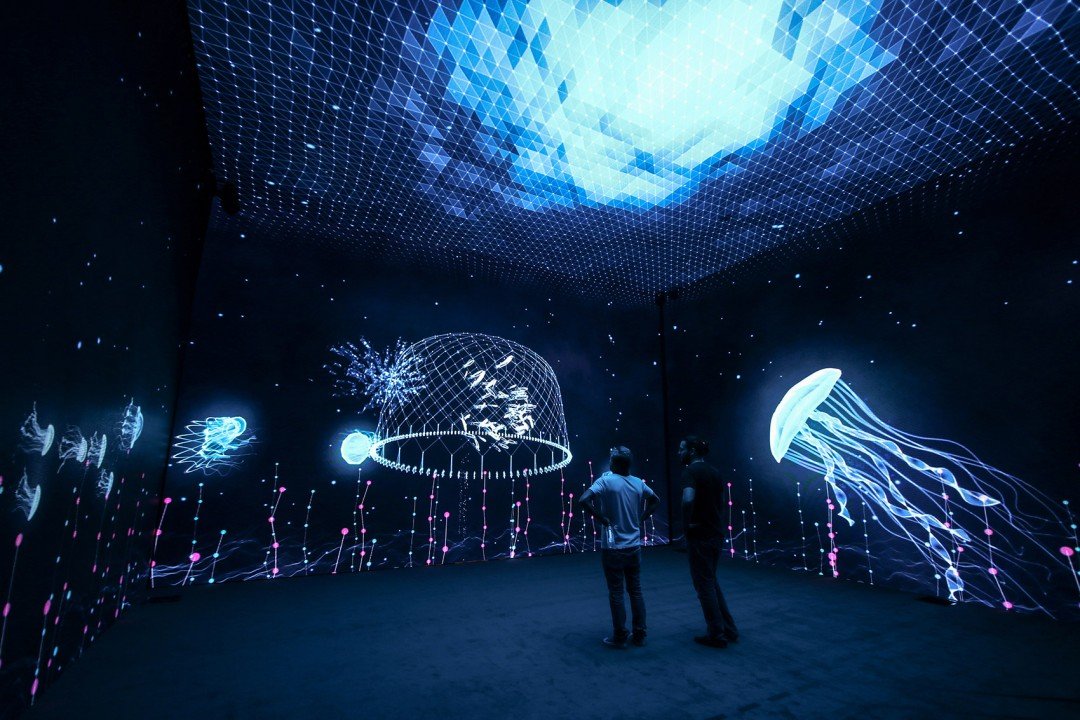
Immersive projection installations can use multiple surfaces to create a coordinated visual experience around a particular theme.
Depending on the available space, a mall might develop:
Immersive nature environments.
Digital art installations.
Seasonal themed rooms.
Interactive floor projections.
Branded experiential spaces.
Educational and family-oriented attractions.
For example, a family-focused mall could create an interactive environment in which projected visuals respond to visitors’ movements.
A luxury retail destination might choose a more restrained approach, using carefully designed animations and architectural lighting to create a premium atmosphere.
Immersive experiences should consider accessibility, crowd management, viewing time, and visitor circulation. The installation must not obstruct emergency exits or interfere with normal mall operations.
6. Projection Mapping for Shopping Mall Building Façades
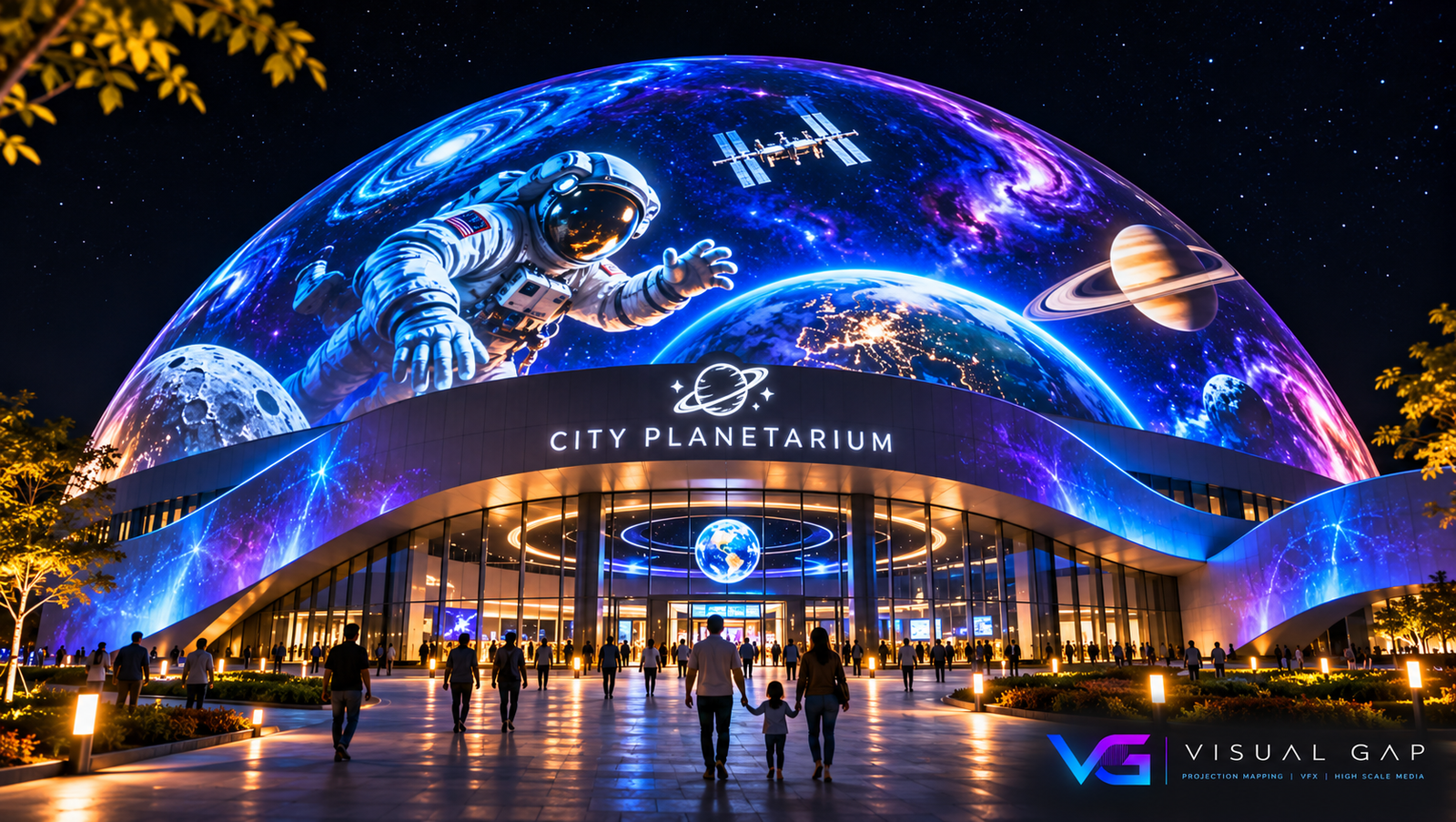
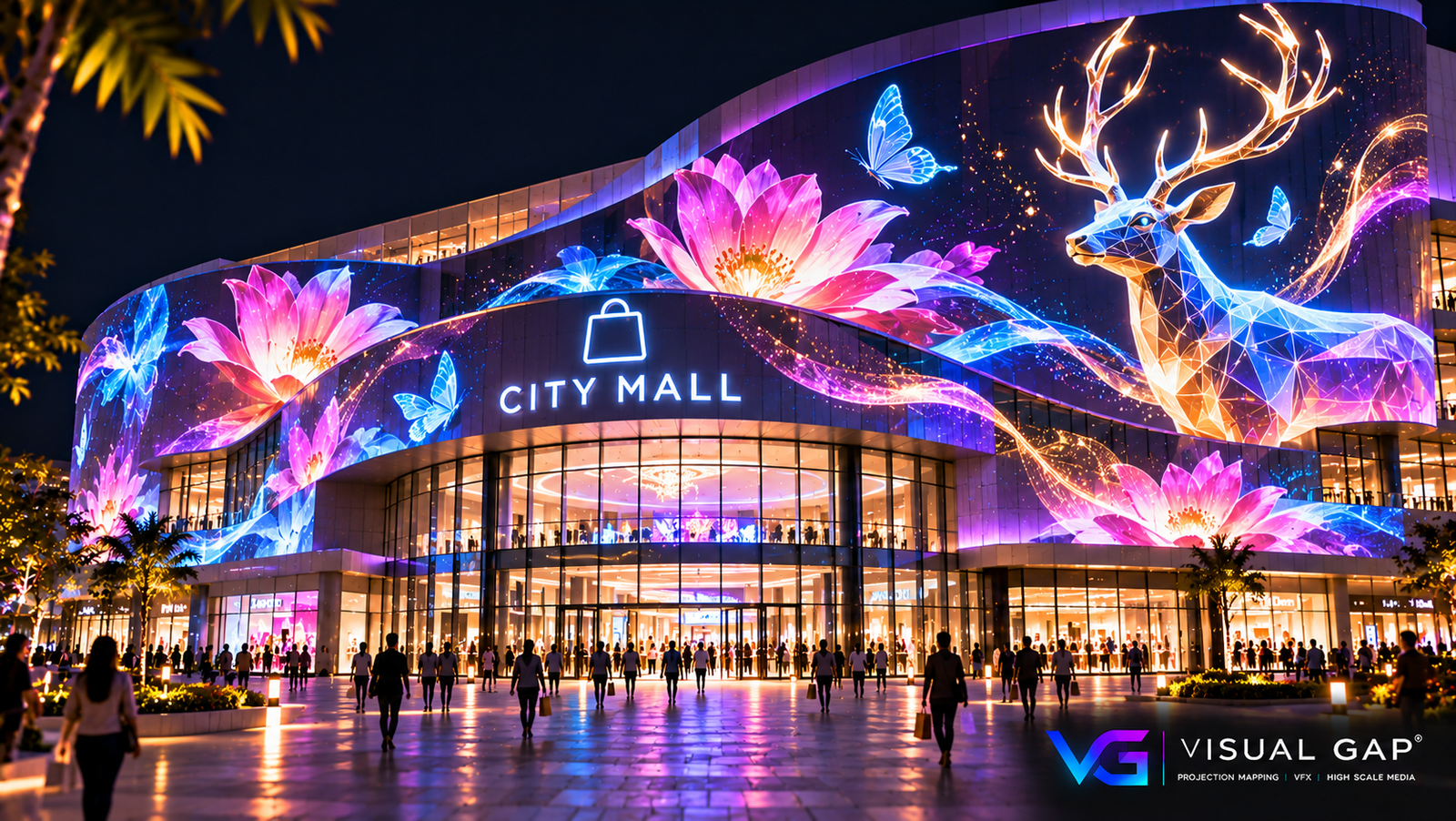
Exterior projection mapping can turn a suitable shopping mall façade into a large-scale visual attraction.
This approach may be used for mall launches, seasonal campaigns, anniversary celebrations, and special public events.
A façade show can introduce architectural storytelling, animated brand visuals, or a coordinated campaign sequence.
Potential applications include:
Shopping mall launch events.
Festive architectural displays.
Anniversary celebrations.
Seasonal promotional campaigns.
Special public celebrations.
Destination marketing.
Outdoor installations require careful planning because image visibility depends on ambient light, projection distance, surface characteristics, and projector brightness.
Projector placement, weather protection, power distribution, public safety, and local permissions must also be considered.
For further guidance, read Visual GAP’s article on Outdoor Projection Mapping.
7. Projection Mapping vs LED Screens in Shopping Malls
LED screens and projection mapping serve different purposes in retail environments.
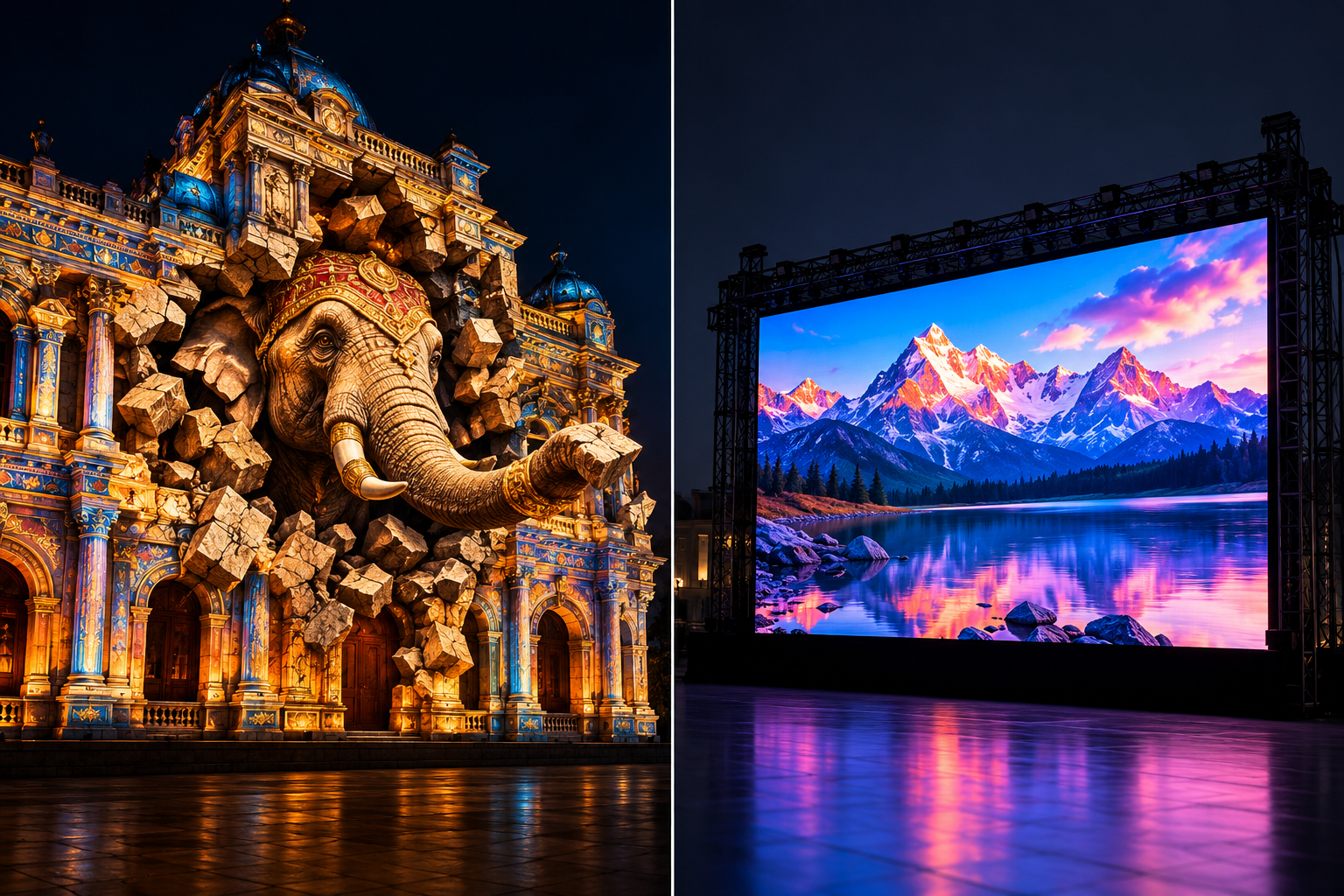
LED displays are often suitable for promotional messaging, advertising schedules, readable text, and bright digital signage. Projection mapping is particularly useful when visuals need to interact with architecture or physical objects.
| Feature | Projection Mapping | LED Screens |
|---|---|---|
| Display surface | Suitable architecture, objects, and custom structures | Dedicated LED panels |
| Creative flexibility | Can adapt visuals to physical geometry | Content fits the configured LED canvas |
| Bright environments | Performance depends on ambient light and surface conditions | Generally suitable for bright indoor spaces |
| Architectural integration | Can visually transform existing surfaces | Requires an installed display structure |
| Installation requirements | Projectors, alignment, mapping, and suitable surfaces | Panels, mounting structures, power, and control systems |
| Typical applications | Immersive experiences, architectural shows, product mapping | Advertising, announcements, promotional content, and live video |
| Content production | May require geometry-specific animation and mapping | Usually designed for the screen’s resolution and aspect ratio |
The right solution depends on the campaign’s goals, venue conditions, audience, and budget.
Some shopping malls may benefit from combining LED displays for regular advertising with projection mapping for special events and immersive installations.
8. How Much Does Projection Mapping for Shopping Malls Cost?
The cost of projection mapping for a shopping mall depends on the size of the installation, the number of projection surfaces, the creative requirements, and the technical complexity.
A small promotional installation may require only a limited projection setup, while a large atrium show or exterior façade installation may involve multiple projectors and custom content.
Major cost factors include:
Number and brightness of projectors.
Size and geometry of the projection surface.
Custom 2D and 3D animation.
Mapping and calibration requirements.
Media servers and playback systems.
Cabling, mounting, and installation.
Interactive sensors and control systems.
Audio and lighting synchronization.
Technical rehearsals and on-site operation.
Installation duration and logistics.
Content production can represent a significant part of the overall budget, particularly when the visuals must be designed around complex architecture or physical products.
Mall operators should also consider the installation schedule, visitor management, maintenance, and whether the content will be reused for future campaigns.
For a realistic estimate, prepare a brief that includes the venue dimensions, campaign dates, target audience, projection surfaces, and desired visual experience.
Read Visual GAP’s Projection Mapping Costs guide for a broader overview of project budgeting.
9. How to Plan a Successful Mall Projection Mapping Campaign
Successful projection mapping requires coordination between creative development, technical planning, mall operations, and campaign management.
Define the Campaign Objective
Determine whether the installation is intended to support a product launch, seasonal promotion, visitor attraction, or brand activation.
Survey the Location
Evaluate the projection surfaces, ambient lighting, ceiling height, available mounting positions, power supply, and viewing areas.
Develop the Creative Concept
Create a visual direction that reflects the campaign theme, brand guidelines, and shopping mall environment.
Plan the Technical Setup
Select suitable projectors, lenses, playback equipment, mapping software, and control systems based on the installation requirements.
Coordinate With Mall Management
Confirm installation access, working hours, safety procedures, crowd management, electrical requirements, and any necessary permissions.
Test Before Launch
Conduct technical rehearsals to check alignment, brightness, colour, content playback, and synchronization.
Measure Campaign Performance
Where appropriate, evaluate attendance, dwell time, audience participation, campaign engagement, and feedback. These measurements can help determine whether the installation achieved its intended goals.
Conclusion
Projection mapping for shopping malls offers new opportunities to transform retail spaces into engaging visual environments.
From festive atrium shows and immersive installations to product launches and branded experiences, projection mapping can help shopping centres create distinctive campaigns that complement their architecture and retail identity.
The strongest results come from combining creative content with careful technical planning and a clear understanding of visitor needs.
For mall operators, retail brands, and advertising agencies, projection mapping can become a valuable part of an experiential marketing strategy when the installation is designed around a specific objective.
Visual GAP develops projection mapping and immersive visual experiences for retail environments, events, museums, architectural spaces, and branded installations. By combining technical expertise with creative storytelling, Visual GAP helps transform physical spaces into engaging visual experiences.