Complete Projection Mapping Guide: Types, Equipment, Applications and Costs
Projection mapping has changed the way people experience buildings, museums, exhibitions, events, and entertainment spaces. Instead of displaying visuals on a traditional screen, it allows digital content to interact with real-world surfaces, creating experiences that combine technology, creativity, and storytelling.
A building can appear to transform before an audience, a museum exhibit can come to life through animation, and an ordinary room can become an immersive digital environment.
But how do you choose the right projection mapping setup? What equipment is required, which types of projection mapping are available, and how much planning does a project need?
This complete projection mapping guide covers the essential information you need to understand the technology, explore its applications, and plan a successful installation.
What Is Projection Mapping?
Projection mapping is a visual technology that uses projectors and specially designed digital content to display images and animations on physical surfaces.
Unlike traditional projection, which usually displays content on a flat screen, projection mapping adapts the visuals to the shape, dimensions, and features of a particular object or structure.
These surfaces can include buildings, monuments, sculptures, museum exhibits, products, floors, walls, and ceilings.
The technique combines digital content with accurate image alignment to make visuals appear integrated with the physical environment.
For example, projection mapping can make a building’s façade appear to open, reveal a different architectural design, or transform into a dynamic visual landscape.
The final experience depends on the surface, projector setup, creative concept, and technical execution.
How Does Projection Mapping Work?
Projection mapping involves several creative and technical stages. Each stage helps ensure that the digital content fits the physical surface and appears as intended.
1. Surface Analysis
The process begins with examining the target surface. The team studies its dimensions, geometry, colour, texture, and architectural features.
This information helps determine the projector positions, image coverage, and content requirements.
2. Projector Selection
The project team selects suitable projectors based on the surface size, ambient lighting, resolution requirements, and available installation positions.
Large outdoor structures may require a different setup from a small indoor exhibit.
3. Content Creation
Artists and designers develop animations, motion graphics, 3D visuals, and other digital assets based on the creative concept.
The content is designed to work with the physical surface rather than simply being played as a standard video.
4. Mapping and Alignment
Specialised software helps align the content with the surface. Techniques such as warping and masking ensure that the visuals appear in the intended locations.
5. Testing and Calibration
Finally, the team tests the projection setup, adjusts the alignment, checks image quality, and verifies that the playback system works reliably.
For a more detailed explanation, read our guide on How Does Projection Mapping Work?.
What Are the Different Types of Projection Mapping?
Projection mapping can be adapted to different surfaces, spaces, and creative objectives. The following are some of the most common applications.
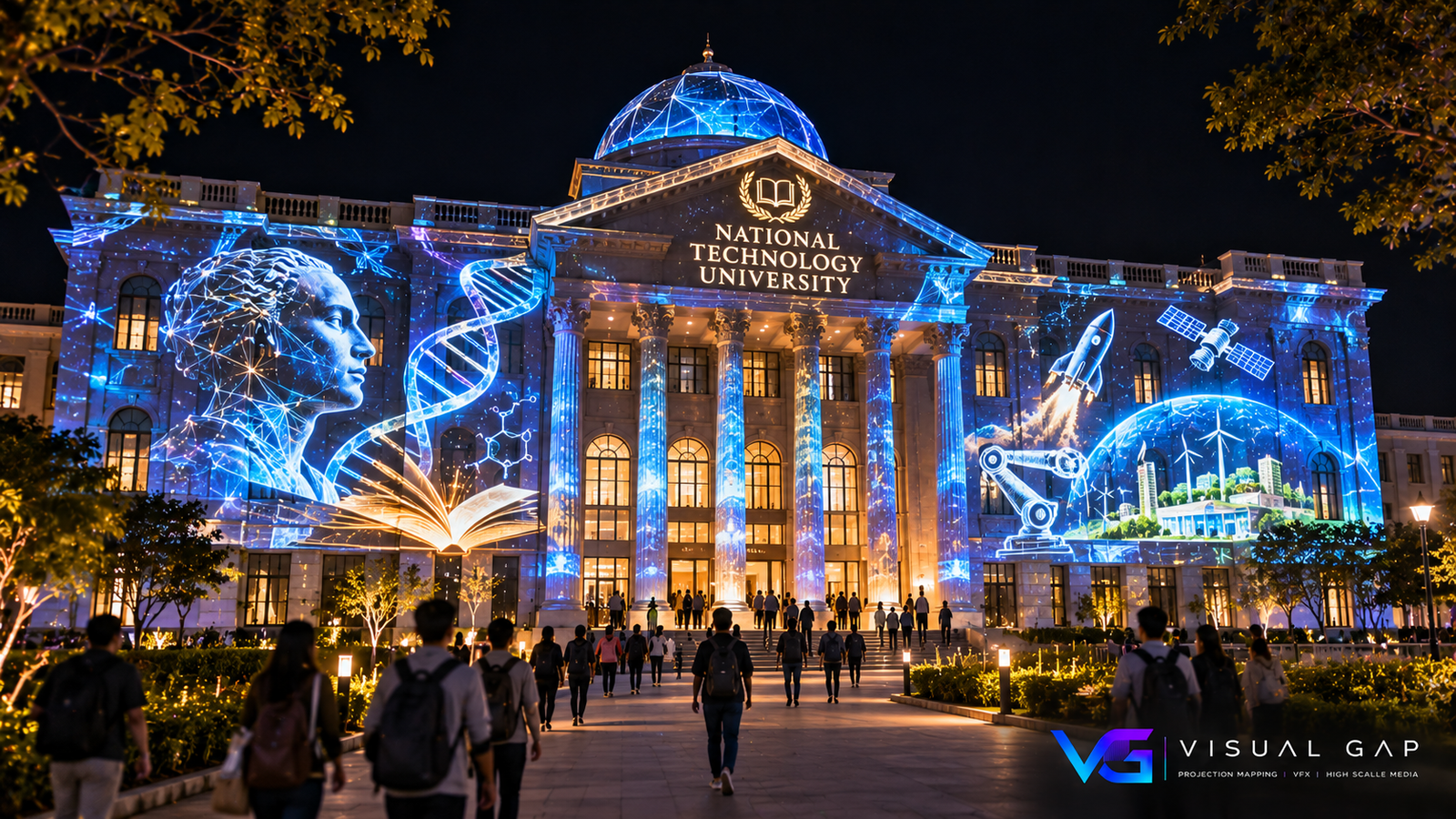
1. Architectural Projection Mapping
Architectural projection mapping uses buildings and other large structures as projection surfaces.
It is commonly used for public events, cultural celebrations, tourism attractions, brand experiences, and visual storytelling.
Animations can interact with architectural features such as windows, columns, balconies, and entrances.
Because every building has a different shape, the content and projector arrangement must be planned according to the structure.
2. Monument Projection Mapping
Monument projection mapping brings historical structures and landmarks to life through digital storytelling.
It can help communicate historical events, cultural traditions, and important stories without permanently changing the monument itself.
This application requires careful consideration of the monument’s architecture, surface characteristics, viewing distance, and preservation requirements.
3. Museum Projection Mapping
Museums use projection mapping to make exhibits more engaging and easier to understand.
Digital content can explain historical events, demonstrate scientific principles, recreate past environments, or highlight details that visitors might otherwise overlook.
Projection mapping can be applied to walls, artefacts, models, display structures, and dedicated exhibition spaces.
The content should support the educational objectives of the museum while respecting the objects and environment being presented.
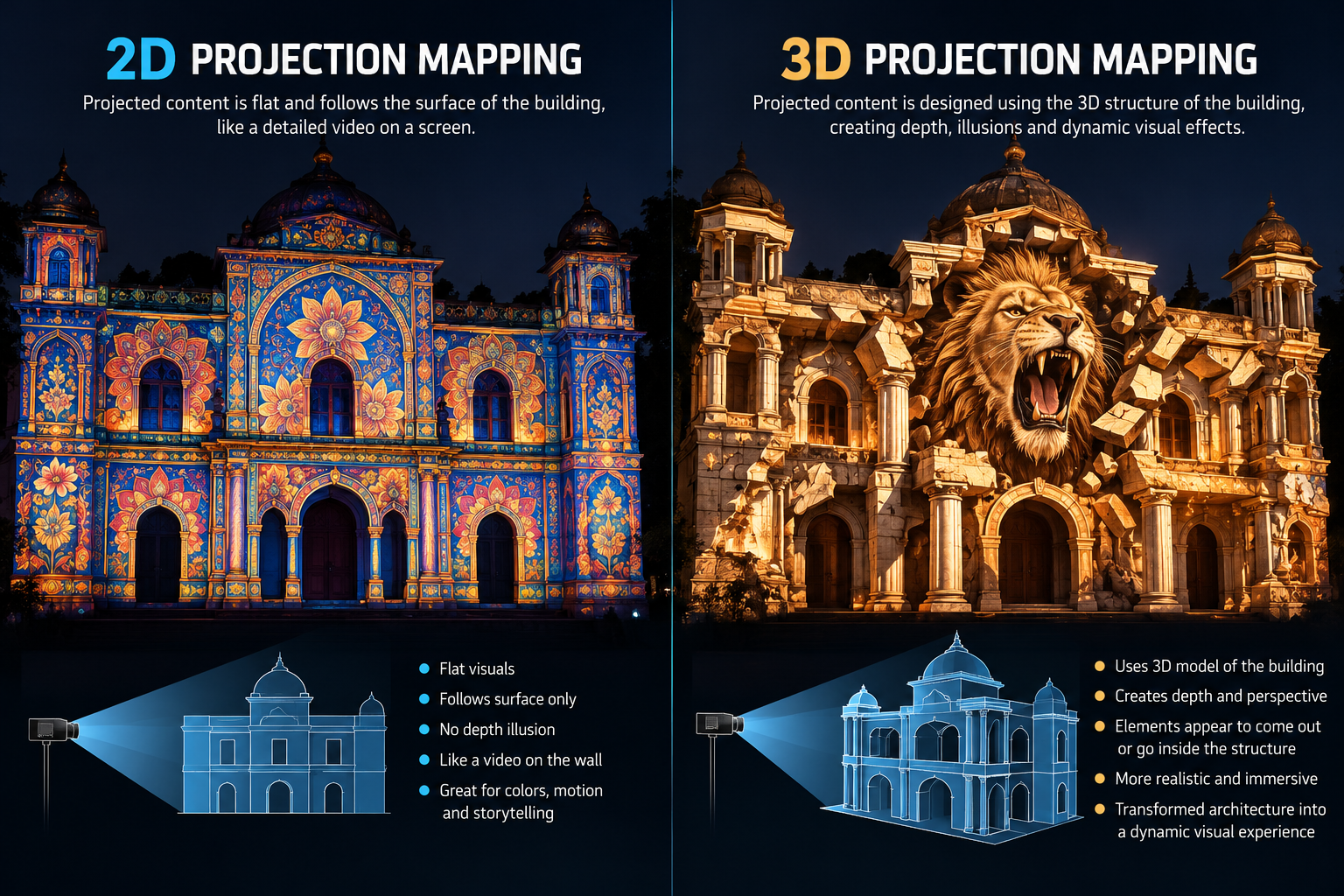
4. 3D Projection Mapping
3D projection mapping creates visual effects that make a surface appear to change shape, reveal depth, or transform into a different object.
These effects are produced through carefully designed content, perspective, surface alignment, and suitable viewing positions.
Although the visuals can create an illusion of depth, the physical surface does not necessarily change.
This technique is often used for architectural shows, product presentations, monuments, and special events.
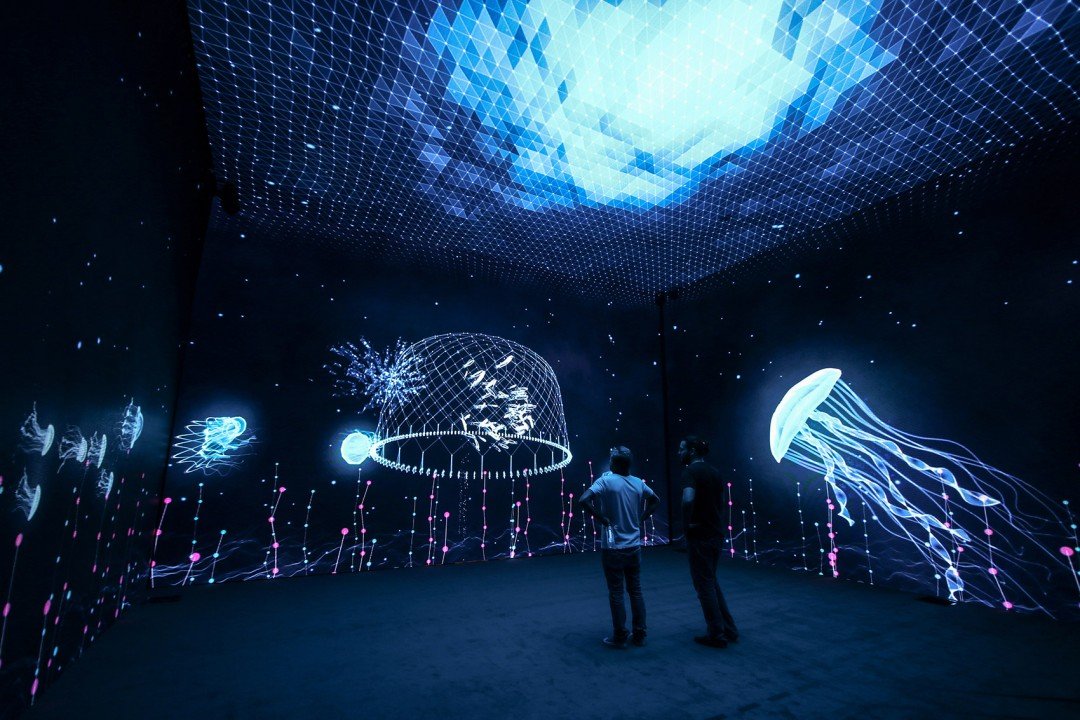
5. Immersive Room Projection
Immersive projection uses multiple surfaces to create a digital environment around the viewer.
Images and animations can cover walls, floors, and ceilings, allowing visitors to experience a coordinated visual space.
Immersive rooms are used for exhibitions, museums, educational environments, entertainment, and branded experiences.
The number and placement of projectors depend on the room’s geometry, the intended viewing experience, and the content requirements.
6. Dome and 360° Projection
Dome projection creates panoramic visual experiences across curved surfaces.
It is useful for astronomy presentations, educational shows, immersive storytelling, and entertainment.
Unlike projection on a flat wall, dome content must account for the curved geometry and the way images appear from different viewing positions.
The content format and projection system must be designed for the dome’s dimensions and technical configuration.
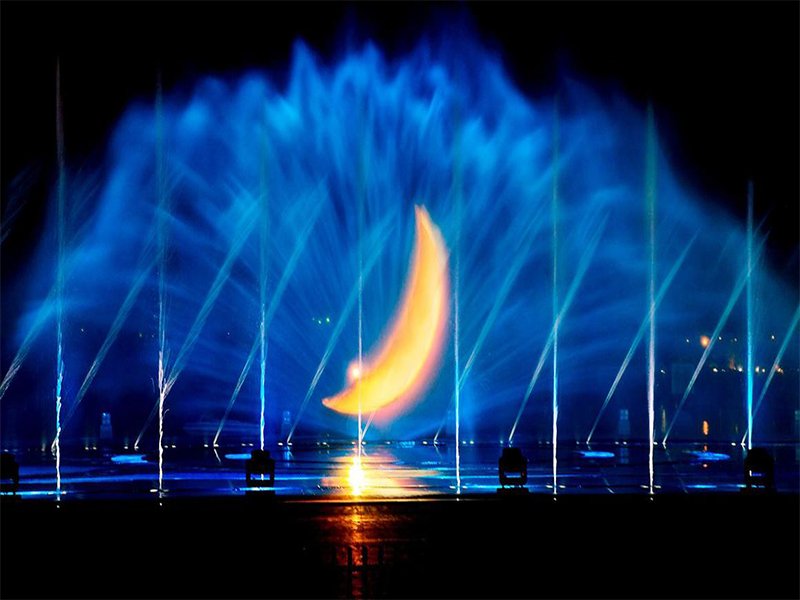
7. Water Projection
Water projection uses a specially created water screen or mist as a surface for displaying images and animations.
It is often used for outdoor events, festivals, attractions, and large-scale visual presentations.
The results depend on water-screen design, environmental conditions, projector placement, and the contrast between the projected content and its surroundings.
Each type of projection mapping requires a setup tailored to the location and creative objectives.
What Equipment Is Required for Projection Mapping?
The equipment required for a projection mapping project depends on the size, complexity, and location of the installation.
Projectors
Projectors display the digital content on the target surface.
Important specifications include brightness, resolution, lens options, throw distance, and compatibility with the playback system.
The right projector should be selected according to the environment and the intended image quality.
Projection Mapping Software
Mapping software helps align digital content with the physical surface.
Depending on the system, it may provide features for warping, masking, geometric correction, and managing multiple projection outputs.
Media Servers and Playback Systems
Playback systems deliver the content to the projectors and may also coordinate multiple outputs, audio, and lighting.
More complex installations may require dedicated media servers with suitable processing capabilities.
Content Creation Tools
Creative teams use animation, compositing, 3D modelling, and video production tools to create visuals suited to the projection surface.
The choice of software depends on the project’s creative requirements and production workflow.
Mounting and Installation Equipment
Projector stands, mounting structures, cabling, power distribution, and environmental protection may be required depending on the installation.
Outdoor projects need particular attention to equipment placement, weather protection, electrical safety, and site access.
Audio and Lighting Systems
Some projection mapping experiences combine visuals with sound and lighting to create a coordinated presentation.
These systems may need to be synchronised with the projected content.
How to Choose the Right Projection Mapping Setup
Choosing the right setup begins with understanding the project rather than selecting equipment first.
Consider the following factors before making a decision.
Surface size and shape: A small object, a large building, and a curved dome have very different projection requirements.
Lighting conditions: Ambient light can affect image contrast and visibility, especially outdoors.
Content requirements: Simple graphics may require a different production workflow from detailed 3D animation or interactive content.
Projector placement: Available space, throw distance, mounting positions, and obstructions affect equipment selection.
Viewing distance: The intended audience position influences image size, resolution, and visual detail.
Number of projectors: Larger surfaces or complex environments may require multiple projectors to achieve the desired coverage.
Budget and timeline: Equipment, content production, installation, testing, and operational support must fit the project’s budget and schedule.
Planning these factors together helps the project team develop a solution that meets both creative and technical objectives.
How Much Does Projection Mapping Cost?
Projection mapping costs vary significantly depending on the scale and complexity of the installation.
A small indoor installation may require only one projector and relatively simple content. A large architectural projection mapping show may involve multiple high-brightness projectors, custom animation, media servers, installation structures, and a dedicated technical team.
The main cost factors include:
Projector quantity, brightness, and resolution.
Lens selection and projector positioning.
Custom animation and 3D content production.
Mapping software and playback equipment.
Installation, calibration, and technical labour.
Venue access and infrastructure requirements.
Audio, lighting, and synchronisation.
Event duration and operational support.
Permanent installations may also require maintenance planning and provisions for equipment servicing.
There is no single price that applies to every projection mapping project. A reliable estimate requires information about the surface, location, visual objectives, equipment requirements, and project duration.
For a more detailed breakdown, read our upcoming guide on how much projection mapping costs.
What Are the Benefits of Projection Mapping?
Projection mapping offers several advantages for venues, brands, museums, and event organisers.
Creates Engaging Visual Experiences
Projection mapping can transform familiar structures into visually interesting environments, helping attract attention and encourage audience engagement.
Supports Visual Storytelling
Animations and visual effects can communicate information in a way that is easier to follow than static displays alone.
Adapts to Different Surfaces
The technology can be used on many types of surfaces, including buildings, sculptures, exhibition structures, and interior spaces.
Offers Creative Flexibility
Digital content can be updated or changed for different events, exhibitions, campaigns, and storytelling objectives.
Enhances Museums and Exhibitions
Projection mapping can support educational displays, explain complex concepts, and provide additional context for exhibits.
Creates Memorable Brand Experiences
Businesses can use projection mapping for product launches, event presentations, and immersive brand environments.
The value of projection mapping depends on how well the creative concept, technical setup, and audience requirements work together.
What Challenges Should You Consider?
Although projection mapping offers many creative possibilities, successful implementation requires careful planning.
Ambient Light
Excessive surrounding light can reduce image contrast. Outdoor installations may require suitable scheduling, projector selection, and control of nearby lighting where possible.
Surface Geometry
Irregular surfaces, architectural details, and complex structures can make image alignment more challenging.
Technical Alignment
Multiple projectors must be aligned carefully to avoid visible gaps, overlaps, and brightness differences.
Content Production
The visual content must be designed for the actual surface. Generic video content may not produce the intended mapping effects without adaptation.
Weather and Site Conditions
Outdoor installations must account for weather exposure, secure equipment placement, electrical safety, and environmental conditions.
Installation Time
Large projects may require site surveys, equipment installation, calibration, and repeated testing before the final presentation.
Identifying these challenges early helps reduce avoidable delays and technical issues.
Where Is Projection Mapping Used?
Projection mapping has applications across several industries.
Events and entertainment: Concerts, festivals, ceremonies, and live presentations use projection mapping to create distinctive visual experiences.
Museums and heritage sites: Digital storytelling helps visitors explore historical narratives, cultural heritage, and educational content.
Tourism and public attractions: Buildings and landmarks can become platforms for visual storytelling and public engagement.
Education: Immersive projection can help explain scientific, historical, and technical concepts.
Retail and product launches: Brands can use projection mapping to highlight products and create memorable presentations.
Immersive experiences: Projection across multiple surfaces can transform rooms and exhibition spaces into coordinated digital environments.
Each application benefits from a solution designed around its audience, physical environment, and objectives.
How Visual GAP Helps Bring Projection Mapping Projects to Life
At Visual GAP, we bring together visual storytelling, projection technology, and immersive media to develop experiences for different environments.
Our areas of work include architectural and monument mapping, museum projection, dome and 360° experiences, water projection, and immersive rooms.
Every project begins with understanding the space, the audience, and the creative objectives. These requirements help guide decisions about content development, projector selection, mapping, playback, and installation.
Whether the goal is to communicate a historical story, create an immersive exhibition, or transform a building into a visual experience, the approach must be tailored to the project.
If you are planning a projection mapping installation, the first step is to define your objectives, assess the surface, and understand the technical requirements.
Contact Visual GAP to discuss your projection mapping project and explore a suitable creative and technical approach.
Frequently Asked Questions
What is projection mapping used for?
Projection mapping is used for architectural displays, monuments, museums, exhibitions, immersive rooms, domes, product launches, and live events. It allows digital content to be aligned with physical surfaces for visual storytelling and presentations.
What are the main types of projection mapping?
Common applications include architectural mapping, monument mapping, museum projection, 3D projection mapping, immersive room projection, dome projection, and water projection.
What equipment is needed for projection mapping?
A typical setup includes projectors, mapping software, a playback system, and custom visual content. Larger installations may also require media servers, mounting structures, audio systems, lighting, and additional technical equipment.
Is projection mapping suitable for outdoor events?
Yes. Projection mapping can be used on buildings, monuments, and outdoor event structures. The setup must account for ambient light, weather protection, projector placement, and site conditions.
Does projection mapping require 3D animation?
No. Projection mapping can use 2D graphics, video, motion graphics, or 3D animation. The choice depends on the surface and the desired visual effect.
How much does projection mapping cost?
The cost depends on the project size, equipment, content complexity, installation requirements, and duration. A site survey and project brief help establish an appropriate budget.
How long does a projection mapping project take?
The timeline depends on the size of the surface, content production, equipment availability, installation conditions, and calibration requirements. Larger projects generally require more preparation and testing.
Can projection mapping be used in museums?
Yes. Museums can use projection mapping to animate exhibits, explain historical events, visualise scientific concepts, and create immersive educational environments.
Conclusion
Projection mapping combines digital content, projection technology, and accurate surface alignment to transform physical spaces into dynamic visual experiences.
Understanding the different types of projection mapping, the equipment involved, and the requirements of the installation helps you make better decisions when planning a project.
From architectural displays and monument mapping to museum exhibitions, dome experiences, and immersive rooms, the possibilities depend on the surface, the creative concept, and the technical approach.
With careful planning and well-designed content, projection mapping can become a powerful tool for storytelling, education, entertainment, and audience engagement.
Ready to explore projection mapping for your next project? Get in touch with Visual GAP to discuss your requirements.