Types of Projection Mapping: A Complete Guide to Different Techniques
Projection mapping is used to transform buildings, monuments, products, museum exhibits, and indoor spaces into dynamic visual experiences. However, not every projection mapping project uses the same technique. The method depends on the surface, the creative concept, the viewing environment, and the desired visual effect.
Understanding the different types of projection mapping can help you choose the right approach for an event, exhibition, museum, or immersive installation.
From architectural projection mapping to 3D object mapping and immersive room projection, each technique offers different creative possibilities.
In this guide, we explore the main types of projection mapping, how they work, where they are used, and what to consider when choosing a technique for your project.
What Are the Different Types of Projection Mapping?
Projection mapping can be categorised according to the surface being used, the visual technique, or the environment in which the installation operates.
Some techniques focus on large architectural structures, while others are designed for small objects, curved surfaces, or entire rooms.
The most common types include:
Architectural projection mapping
Monument projection mapping
3D projection mapping
2D projection mapping
Object and product projection mapping
Indoor and immersive room projection
Dome and 360° projection
Water screen projection
Interactive projection mapping
Let’s explore each type in detail.
1. Architectural Projection Mapping
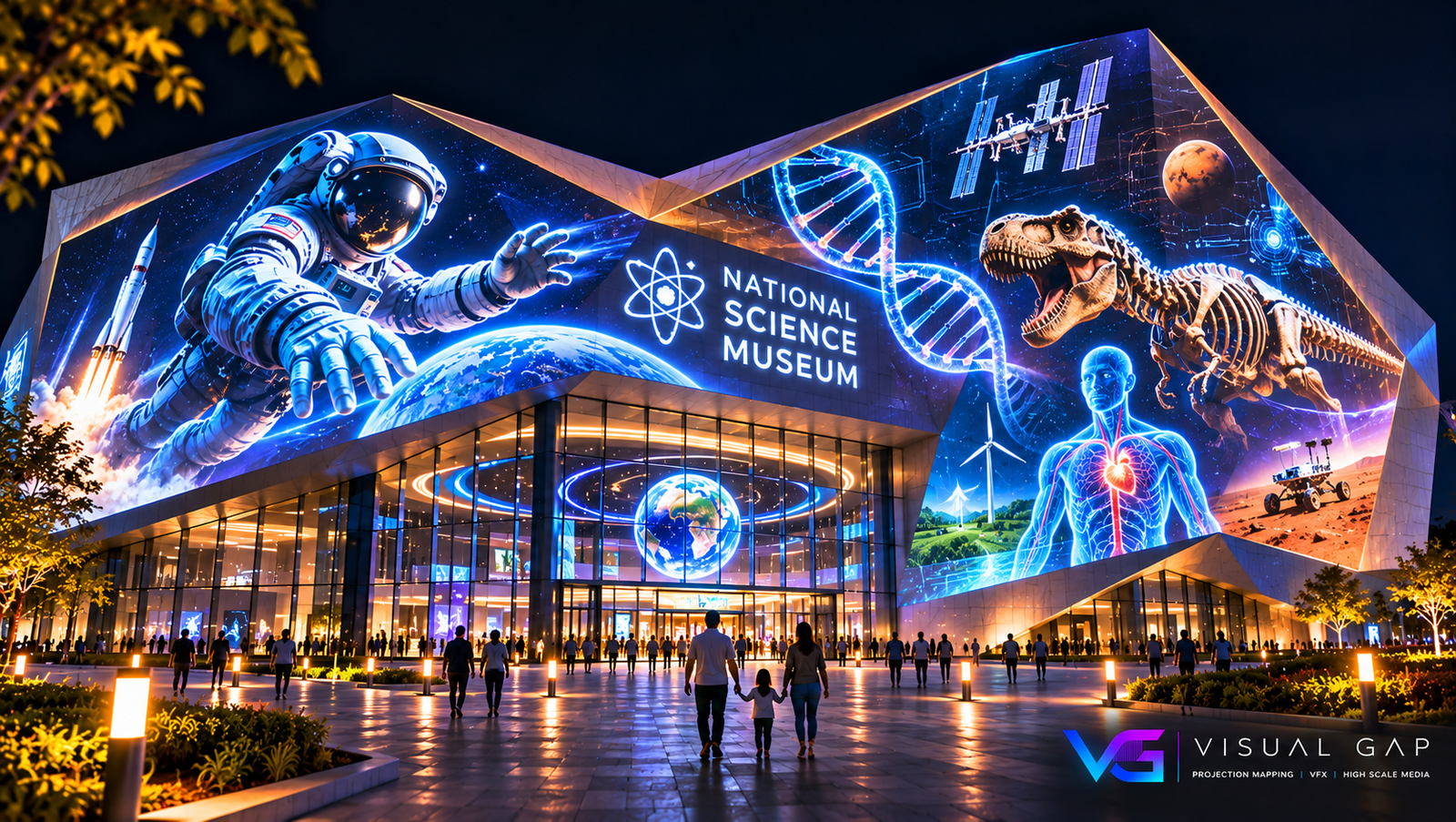
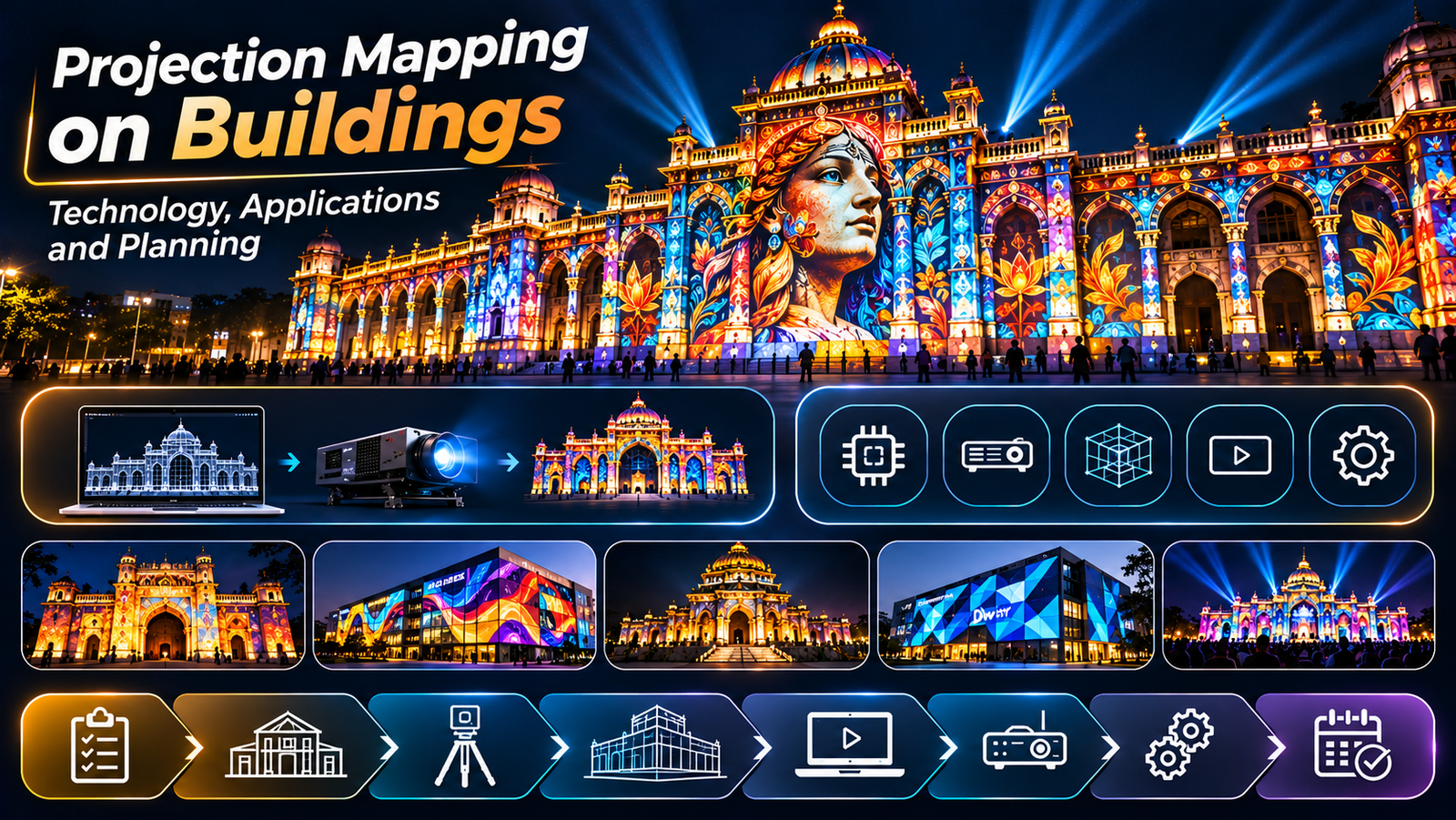
Architectural projection mapping uses buildings and other large structures as projection surfaces. Projectors display specially designed visuals that align with the building’s architectural features.
Windows, columns, balconies, entrances, and other structural elements can become part of the animation.
For example, a building might appear to change its architectural style, open up to reveal an imaginary interior, or transform into a moving visual landscape.
Where Is Architectural Projection Mapping Used?
Architectural mapping is commonly used for:
Cultural festivals and public celebrations
Tourism attractions and landmark events
Brand launches and promotional campaigns
Government and institutional events
Historical and cultural storytelling
What Makes It Different?
The building itself becomes an important part of the visual content. Instead of simply displaying a video on a large surface, the animation is designed around the structure’s geometry.
Successful architectural mapping requires accurate measurements, suitable projectors, carefully designed content, and precise image alignment.
2. Monument Projection Mapping
Monument projection mapping focuses on historical monuments, statues, heritage buildings, and other culturally significant structures.
It combines digital visuals with storytelling to present historical events, cultural traditions, and important narratives.
For example, a heritage monument can become the setting for a visual story about its construction, historical significance, or cultural legacy.
Common Applications
Monument mapping is used for:
Heritage storytelling
Historical light and sound shows
Cultural festivals
Tourism experiences
Public education and awareness
Important Considerations
Every monument has its own shape, surface characteristics, and preservation requirements.
The projection setup must be planned carefully to ensure accurate alignment and suitable image quality. Installation methods should also respect the structure and follow applicable heritage protection requirements.
Monument projection mapping can help audiences engage with historical places through visual storytelling without requiring permanent visual alterations to the structure.
3. 3D Projection Mapping
3D projection mapping creates visual illusions that make physical surfaces appear to change shape, open, break apart, or reveal hidden structures.
These effects are produced through specially designed animation, perspective, geometric alignment, and carefully controlled viewing positions.
Although the content can create a strong illusion of depth, the physical object does not necessarily move or change shape.
How Does 3D Projection Mapping Work?
The creative team studies the object’s geometry and develops visuals that correspond to its physical features.
The animation is then aligned with the surface using projection mapping software.
When viewed from the intended audience position, the projected visuals can create the illusion that the object is transforming.
Where Is 3D Projection Mapping Used?
Common applications include:
Building façades
Product launches
Museum exhibits
Sculptures and installations
Stage productions
Special events and brand experiences
The quality of the effect depends on content design, surface geometry, projector placement, and accurate calibration.
4. 2D Projection Mapping
2D projection mapping uses flat images, graphics, video, and motion graphics that are aligned with a physical surface.
Although the content may be two-dimensional, it can still interact with architectural details or the shape of an object.
For example, graphics can highlight the windows of a building, animate a display panel, or introduce movement across a wall with an irregular outline.
When Is 2D Projection Mapping Suitable?
This approach can be suitable when the project requires:
Animated graphics and visual storytelling
Simple surface transformations
Informational displays
Promotional content
Budget-conscious installations with limited creative complexity
2D projection mapping can deliver effective results when the content is designed for the surface and the installation is calibrated correctly.
It does not necessarily create the dramatic depth illusions associated with more elaborate 3D projection mapping.
5. Object and Product Projection Mapping
Object projection mapping uses smaller physical objects as projection surfaces.
These may include sculptures, product models, furniture, packaging, exhibition pieces, or specially constructed display objects.
The projected visuals are designed to match the object’s shape and features.
For example, a product launch might use projection mapping to highlight different parts of a product, demonstrate its features, or show a sequence of design transformations.
Common Applications
Object and product mapping is often used for:
Product launches
Retail displays
Advertising campaigns
Corporate presentations
Art installations
Museum exhibits
Why Is It Useful?
It allows a physical object to become part of the presentation rather than simply being displayed under conventional lighting.
However, smaller surfaces can require highly accurate alignment because even minor positioning errors may be noticeable.
The object’s colour, texture, shape, and material can also influence the final result.
6. Immersive Room Projection Mapping
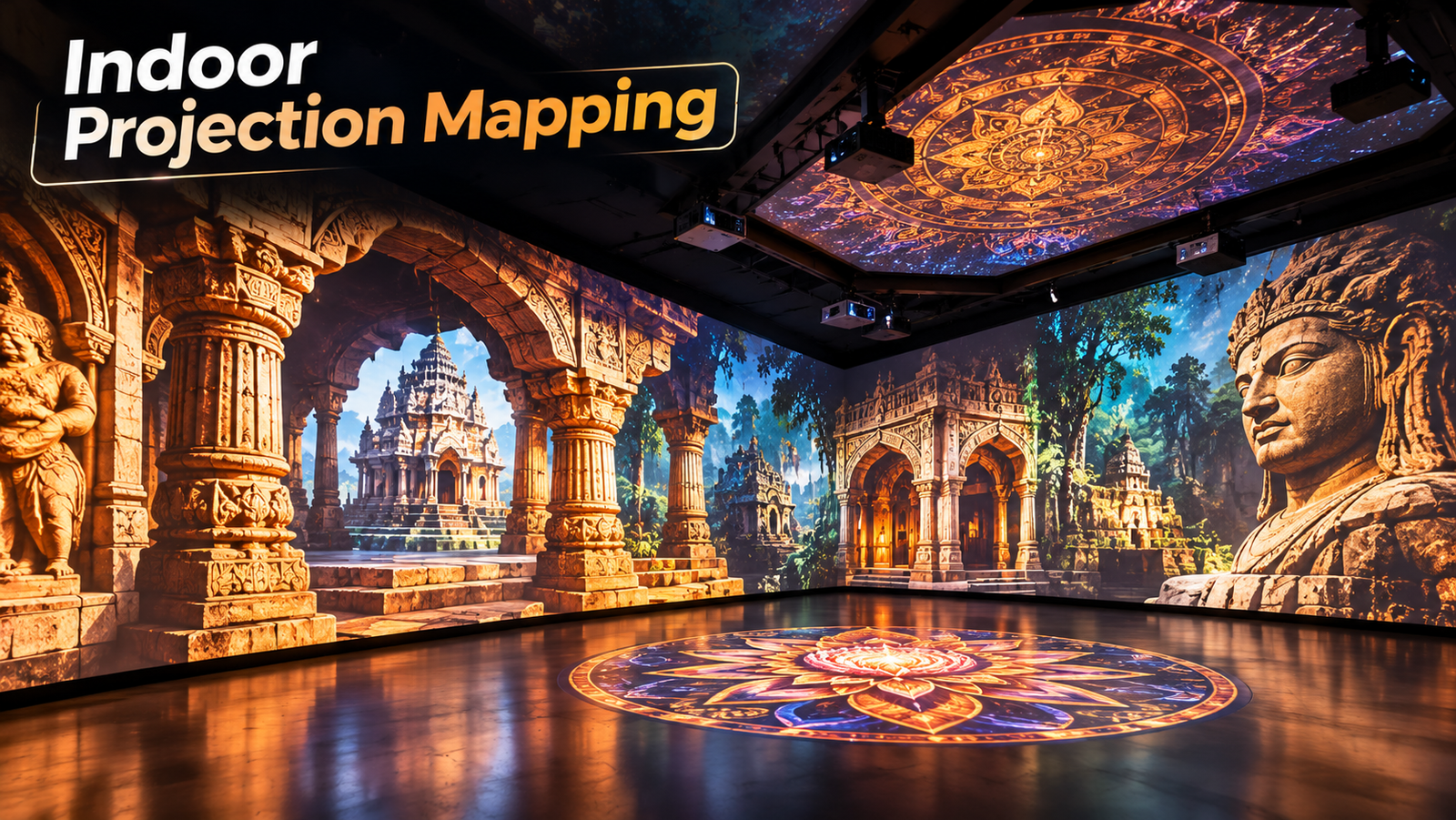
Immersive room projection uses multiple projectors to create a coordinated visual environment across walls, floors, ceilings, or other interior surfaces.
Instead of viewing content on a single screen, visitors experience digital visuals around them.
The content might depict a natural landscape, an underwater environment, a historical setting, or an abstract animated world.
Where Is Immersive Projection Used?
Immersive projection is used in:
Museums and exhibitions
Educational environments
Art installations
Visitor attractions
Brand experiences
Entertainment spaces
What Should You Consider?
The room’s dimensions, surface colours, projector positions, and viewing areas all affect the design.
When multiple projectors are used, their images must be aligned carefully. Edge blending may be required to create continuous visuals across overlapping projection areas.
The content should also be designed for the room as a whole, rather than treating each wall as a separate screen.
7. Dome and 360° Projection Mapping
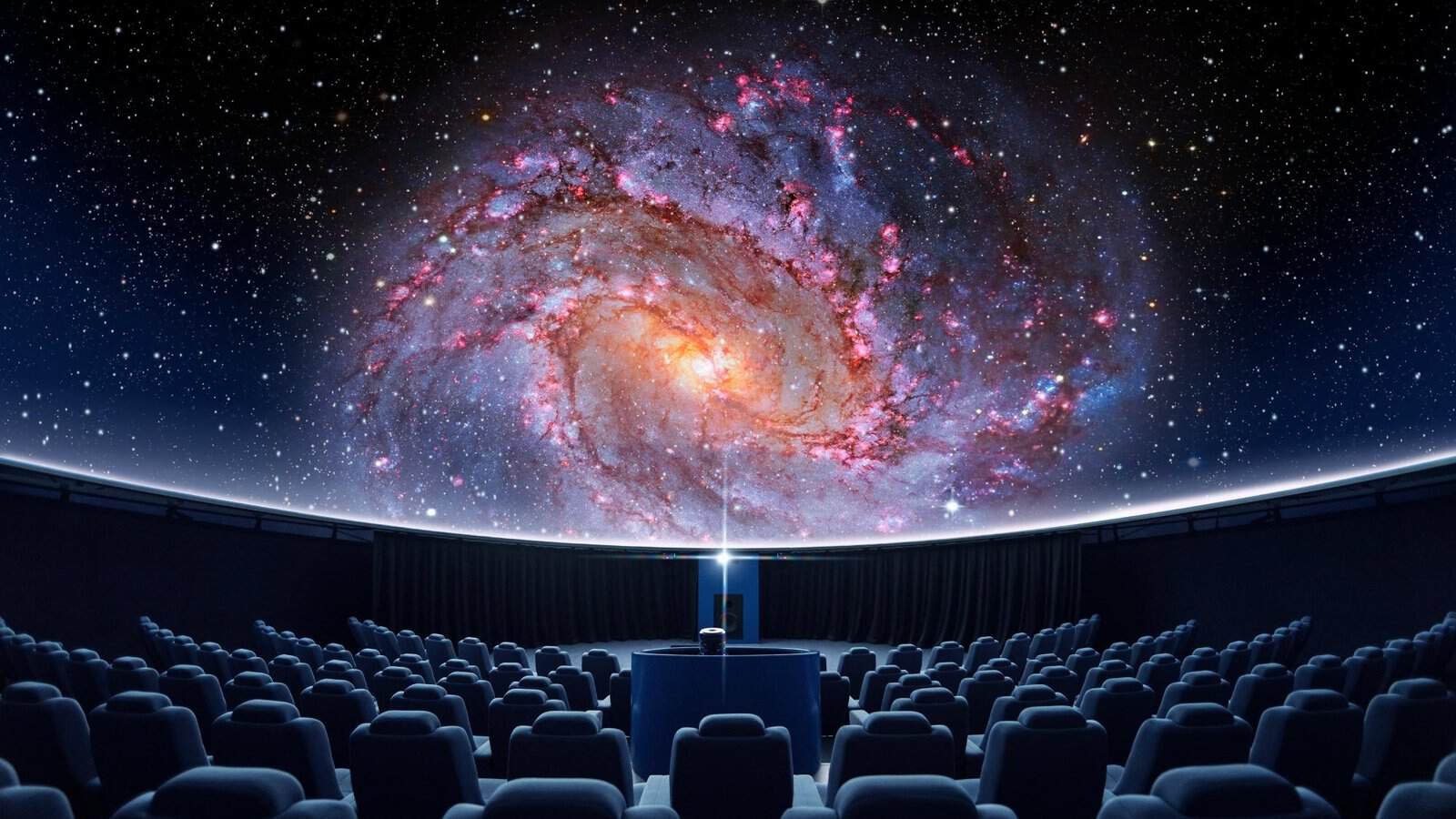
Dome and 360° projection creates panoramic visual experiences across curved or surrounding surfaces.
Dome installations are commonly used for astronomy presentations, immersive storytelling, educational shows, and entertainment.
Depending on the system, the experience may use a single specialised projection system or multiple projectors working together.
How Is Dome Projection Different?
A dome has a curved geometry, so the content must be designed and mapped for that surface.
The team must consider the dome’s dimensions, projection arrangement, image geometry, and the audience’s viewing positions.
Content designed for a conventional flat screen may require substantial adaptation before it can be displayed correctly across a dome.
Common Applications
Planetariums and astronomy education
Science museums
Immersive exhibitions
Educational presentations
Panoramic entertainment experiences
Dome projection can create a strong sense of visual immersion when the content and projection system are designed together.
8. Water Screen Projection
Water screen projection uses a specially created screen of water or fine mist to display images and animations.
The water forms a temporary projection surface, making the technique suitable for certain outdoor events and attractions.
Depending on the setup, the projected visuals can appear to float against the surrounding environment.
Where Is Water Projection Used?
Water projection is often used for:
Outdoor entertainment shows
Festivals and public events
Tourism attractions
Special ceremonies
Large-scale visual presentations
Technical Considerations
Water screen projection requires specialised equipment and careful environmental planning.
Factors such as wind, water distribution, projector placement, ambient light, and viewing distance can affect the result.
The system must be designed to create a sufficiently stable projection surface for the intended content.
Water screen projection is different from projecting directly onto a building near a fountain, although both techniques can be incorporated into larger visual productions.
9. Interactive Projection Mapping
Interactive projection mapping responds to audience movement, gestures, touch, or other inputs.
Unlike a completely pre-programmed show, an interactive installation can change its visuals in response to what visitors do.
For example, people walking across a projected floor might trigger animations, or visitors might interact with a museum display to reveal additional information.
Technologies Used
Depending on the project, interactive projection mapping may use:
Motion tracking
Cameras and sensors
Touch-sensitive systems
Real-time graphics software
Interactive playback systems
Where Is It Used?
Interactive projection mapping is useful for museums, educational installations, exhibitions, retail environments, and public engagement spaces.
The technical setup depends on the type of interaction required, the number of visitors, and the responsiveness expected from the system.
Careful testing is essential to ensure that the interaction works reliably in the intended environment.
How to Choose the Right Type of Projection Mapping
The best projection mapping technique depends on your project’s objectives, surface, environment, and budget.
Before selecting a solution, consider the following factors.
1. Identify the Projection Surface
Determine whether you want to project onto a building, monument, object, wall, floor, dome, or water screen.
The surface will influence the projector setup, mapping process, and content design.
2. Define Your Creative Objective
Decide what you want the audience to experience.
A historical storytelling show may benefit from architectural mapping, while a product launch may be better suited to object mapping.
An educational attraction might require an immersive room or dome installation.
3. Assess the Environment
Indoor and outdoor installations have different requirements.
Outdoor projects must account for ambient light, weather protection, projector positioning, and site access. Indoor installations require careful consideration of room dimensions, surface finishes, and audience movement.
4. Plan the Content
Choose a content style that suits the surface and the purpose of the installation.
Simple graphics, detailed 3D animation, interactive visuals, and panoramic content all have different production requirements.
5. Evaluate the Technical Requirements
Consider projector brightness, resolution, lens options, playback systems, software, mounting arrangements, and calibration.
The equipment should be selected after the surface and creative requirements have been assessed.
6. Establish a Budget and Timeline
The budget should account for content production, equipment, installation, calibration, testing, and operational support where required.
Larger installations generally require more coordination and preparation.
Planning these factors early makes it easier to choose a suitable projection mapping approach.
What Equipment Is Needed for Different Types of Projection Mapping?
Although equipment varies by project, most projection mapping installations use a combination of the following components.
Projectors: Display digital content on the selected surface.
Mapping software: Aligns and adjusts the visuals to match the surface geometry.
Media servers or playback systems: Deliver content to the projectors and manage multiple outputs when required.
Content creation tools: Help artists produce animation, motion graphics, and 3D visuals.
Mounting and installation equipment: Supports secure projector placement and reliable operation.
Audio and lighting systems: Add sound and coordinated lighting effects when needed.
Interactive installations may also require sensors, cameras, tracking systems, or other specialised components.
The equipment configuration should be based on the specific installation rather than using the same setup for every project.
How Much Does Projection Mapping Cost?
The cost of projection mapping depends on the size of the surface, the type of installation, equipment requirements, content complexity, and project duration.
A small product display may need a relatively simple setup, while a large architectural show can require multiple high-brightness projectors, custom animation, professional playback systems, and a dedicated installation team.
The main cost factors include:
Projector quantity and specifications
Lens requirements and installation positions
Content creation and animation
Mapping software and playback equipment
Installation and calibration
Site access and infrastructure
Audio, lighting, and synchronisation
Technical support and event duration
An accurate estimate requires a clear understanding of the surface, location, creative objectives, and technical requirements.
For a detailed cost breakdown, read our upcoming guide on how much projection mapping costs.
How Visual GAP Approaches Projection Mapping
At Visual GAP, projection mapping brings together visual storytelling, digital content, and technical planning to create experiences for different spaces.
Our areas of work include architectural and monument mapping, museum projection, dome and 360° experiences, water projection, and immersive rooms.
Every project requires a different approach. A monument mapping installation has different technical considerations from a product display or an immersive exhibition.
Understanding the space, audience, content requirements, and installation conditions helps determine the most suitable solution.
Whether you are planning a museum experience, an architectural show, or an immersive environment, the right combination of creative development and technical execution is essential.
Planning a projection mapping project? Contact Visual GAP to discuss your concept, location, and technical requirements.
Frequently Asked Questions
1. What are the main types of projection mapping?
The main types include architectural projection mapping, monument mapping, 2D mapping, 3D mapping, object mapping, immersive room projection, dome projection, water screen projection, and interactive projection mapping.
2. What is the difference between 2D and 3D projection mapping?
2D projection mapping typically uses flat graphics, video, and motion graphics aligned with a surface. 3D projection mapping uses specially designed visuals and perspective to create the illusion of depth, movement, or structural transformation.
3. Which type of projection mapping is best for buildings?
Architectural projection mapping is generally the most suitable approach for buildings. The content and equipment must be designed around the building’s size, geometry, lighting conditions, and viewing environment.
4. What type of projection mapping is used in museums?
Museums can use object mapping, architectural mapping, immersive room projection, interactive projection, or other techniques depending on the exhibits and educational objectives.
5. Can projection mapping be interactive?
Yes. Interactive projection mapping can respond to movement, gestures, touch, or sensor input. The technology depends on the interaction and the environment.
6. Is dome projection the same as 360° projection?
The terms are related, but they are not always interchangeable. Dome projection refers to content displayed on a dome-shaped surface, while 360° projection can describe panoramic experiences across different types of surrounding surfaces.
7. Can projection mapping be used outdoors?
Yes. Architectural mapping, monument mapping, and water screen projection are examples of outdoor applications. The setup must account for ambient light, equipment protection, and environmental conditions.
8. How do I choose the right projection mapping technique?
Start by identifying the surface, defining the creative objective, assessing the environment, and establishing your budget. A technical site assessment can help determine the most suitable approach.
Conclusion
The different types of projection mapping offer a wide range of possibilities for transforming physical spaces into engaging visual experiences.
Architectural and monument mapping can bring large structures to life, object mapping can enhance product presentations, and immersive rooms can surround visitors with digital environments. Dome, water screen, and interactive projection provide additional options for specialised applications.
The right technique depends on the surface, the creative concept, the viewing environment, and the technical requirements.
With careful planning and suitable content, projection mapping can support storytelling, education, entertainment, exhibitions, and brand experiences.
Explore projection mapping possibilities with Visual GAP and find an approach that suits your next project.