Projection Mapping vs LED Wall: Which Is Better for Your Event?
When planning a large-scale visual experience, one of the most common questions is whether to choose projection mapping or an LED wall. Both technologies can deliver impressive visuals, dynamic content, and immersive experiences. However, they work in different ways and are suited to different environments.
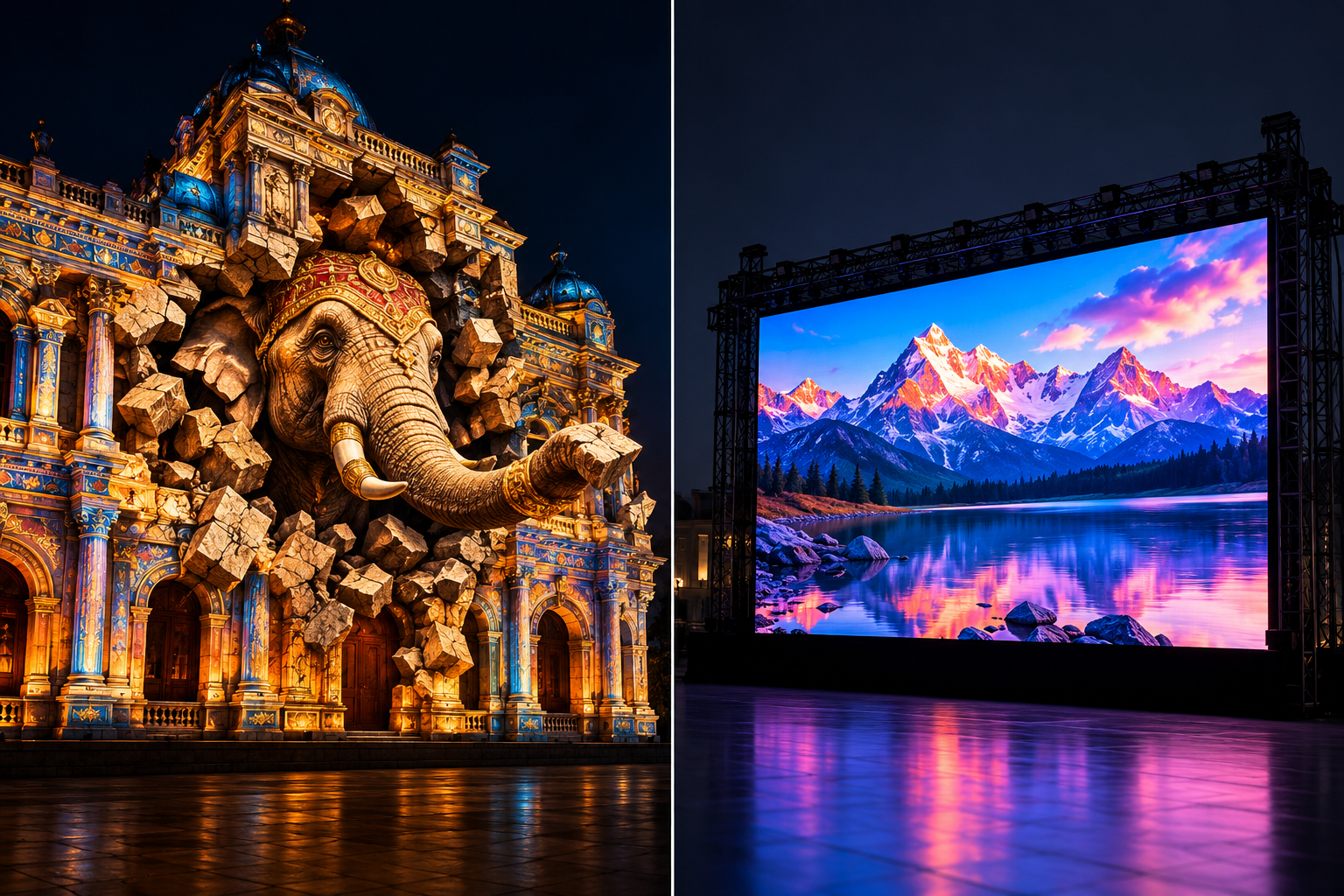
Projection mapping can transform buildings, monuments, museum exhibits, and irregular surfaces into dynamic visual displays. LED walls, on the other hand, use panels of light-emitting diodes to create bright, high-resolution screens for events, concerts, conferences, and brand presentations.
So, which technology is right for your project?
The answer depends on your venue, creative vision, lighting conditions, budget, screen size, and the experience you want your audience to have.
In this guide, we will compare projection mapping and LED walls, explain their advantages and limitations, and help you choose the right solution for your next event or installation.
What Is Projection Mapping?
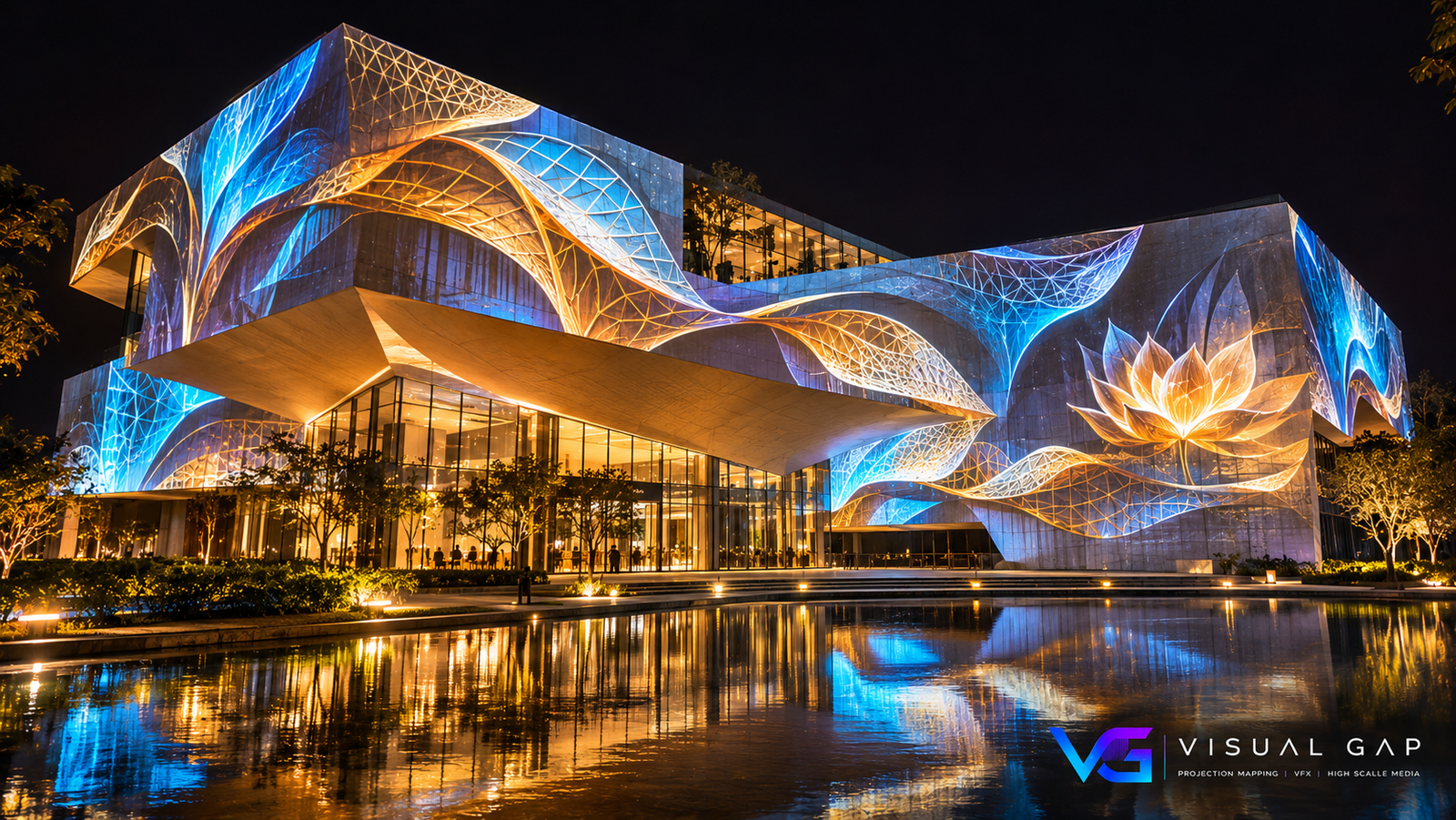
Projection mapping is a visual technology that uses projectors to display digital content onto physical surfaces. Unlike a conventional projector that displays an image on a flat screen, projection mapping allows content to be aligned with the shape, dimensions, and features of a real object or structure.
These surfaces can include building facades, monuments, sculptures, museum exhibits, stages, architectural structures, and specially designed installations.
The content is carefully mapped to the surface so that animations, visual effects, and storytelling appear integrated with the physical structure.
For example, a building can appear to open, change its architectural style, or transform into a completely different environment through carefully designed visuals. In a museum, projection mapping can bring historical events, artifacts, and educational stories to life.
Projection mapping is particularly useful when the physical environment itself is an important part of the experience.
Common applications of projection mapping include:
Architectural and monument projection mapping
Museum and heritage installations
Live events and stage productions
Product launches and brand activations
Water screen projection
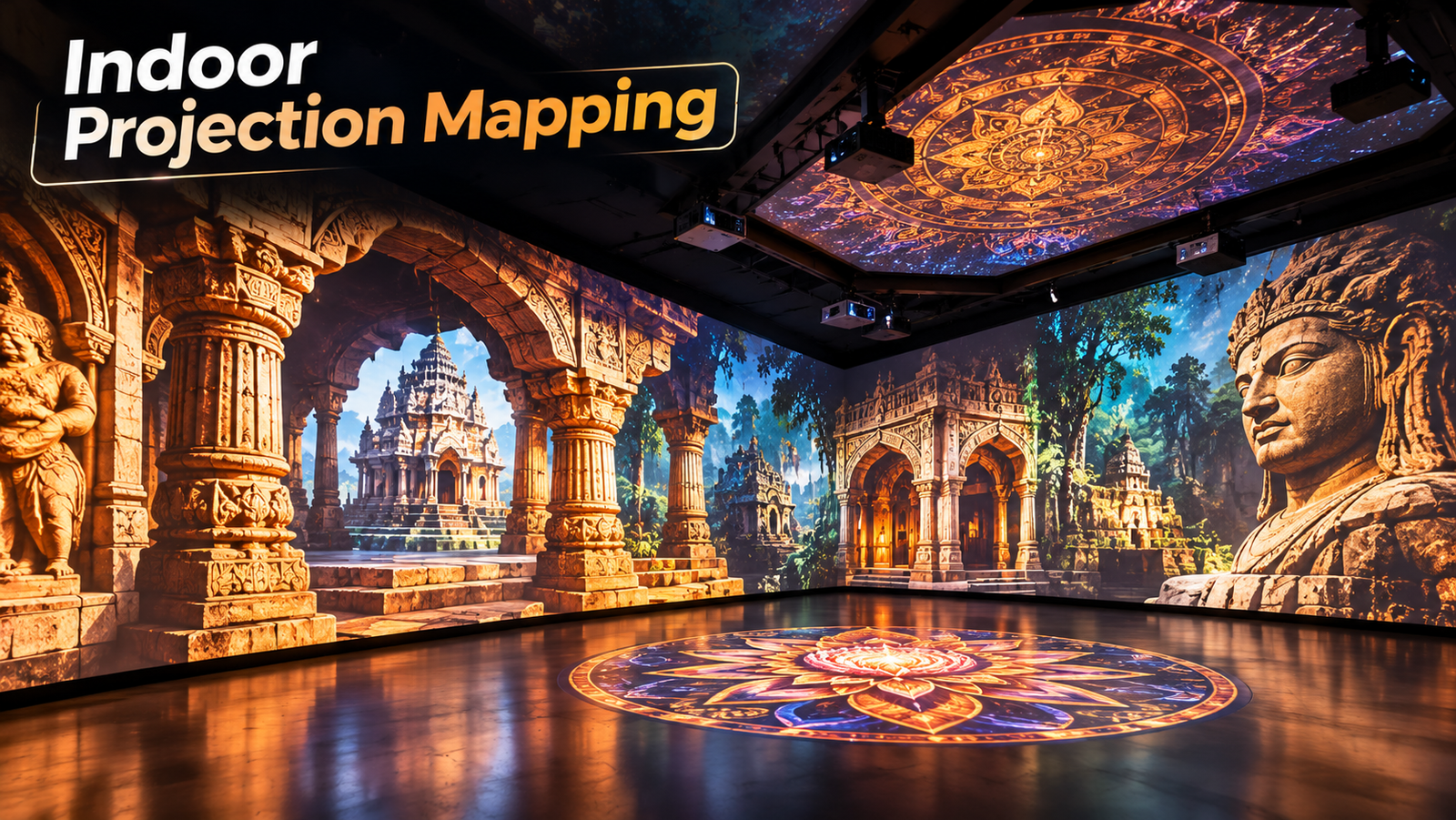
Immersive rooms and experiential spaces
Dome and 360-degree visual experiences
What Is an LED Wall?
An LED wall is a large display made from multiple LED panels connected to create a single visual screen. Each panel contains light-emitting diodes that produce the colors and brightness required to display images, videos, graphics, and animations.
LED walls are widely used in concerts, corporate events, exhibitions, television studios, retail environments, and live entertainment.
Unlike projection mapping, an LED wall produces its own light. This makes it suitable for environments where ambient light is difficult to control.
LED walls can also be built in different sizes and configurations, depending on the event requirements. They are commonly used for stage backgrounds, presentation screens, digital advertising, and large-format visual communication.
Common applications of LED walls include:
Concerts and music festivals
Corporate conferences and presentations
Exhibition booths and trade shows
Product launches
Television and virtual production studios
Retail displays and digital signage
Live event backgrounds
Projection Mapping vs LED Wall: Key Differences
Although both technologies can display high-quality digital content, their capabilities differ significantly.
1. Visual Experience
Projection mapping: Projection mapping integrates digital visuals with the physical environment. Instead of simply watching content on a screen, the audience sees a building, sculpture, stage element, or exhibit become part of the visual narrative.
This creates opportunities for spatial storytelling, architectural transformation, and visually engaging experiences.
LED wall: An LED wall provides a bright, defined display area. It is ideal when the content needs to remain clearly visible and consistent, such as presentations, branded graphics, live camera feeds, and concert visuals.
Which is better? Projection mapping is often the stronger choice when the goal is to transform a physical space. An LED wall is often better when the goal is to deliver content on a dedicated display.
2. Brightness and Ambient Light
Lighting conditions are an important consideration when choosing between these technologies.
Projection mapping: Projected images can become less visible when exposed to strong ambient light or direct sunlight. The final result depends on projector brightness, surface characteristics, projection distance, content design, and surrounding lighting.
For outdoor installations, projection mapping is generally most effective after dark or in environments where lighting can be controlled.
LED wall: LED walls generate their own light and are generally more visible in bright environments. Outdoor-rated LED systems can be used in daylight, although their suitability depends on the panel’s brightness, weather rating, viewing distance, and surrounding conditions.
Which is better? LED walls are generally more suitable for bright environments. Projection mapping is often better for nighttime experiences where lighting can be controlled.
3. Creative Flexibility
Projection mapping: One of the biggest advantages of projection mapping is that the content can be designed around the physical structure. Visuals can follow architectural details, emphasize sculptures, animate building features, or create the illusion that a surface is moving or transforming.
The creative possibilities depend on the surface geometry, projector placement, available brightness, and quality of the content mapping.
LED wall: LED walls support a wide range of digital content, including video, animation, graphics, and live feeds. They can also be configured into different shapes, including curved or custom-built displays, when suitable panels and supporting structures are available.
However, content displayed on an LED wall generally remains within the physical boundaries of the display.
Which is better? Projection mapping is particularly effective for integrating visuals with existing architecture and objects. LED walls are highly effective for dedicated display surfaces and flexible screen configurations.
4. Installation and Setup
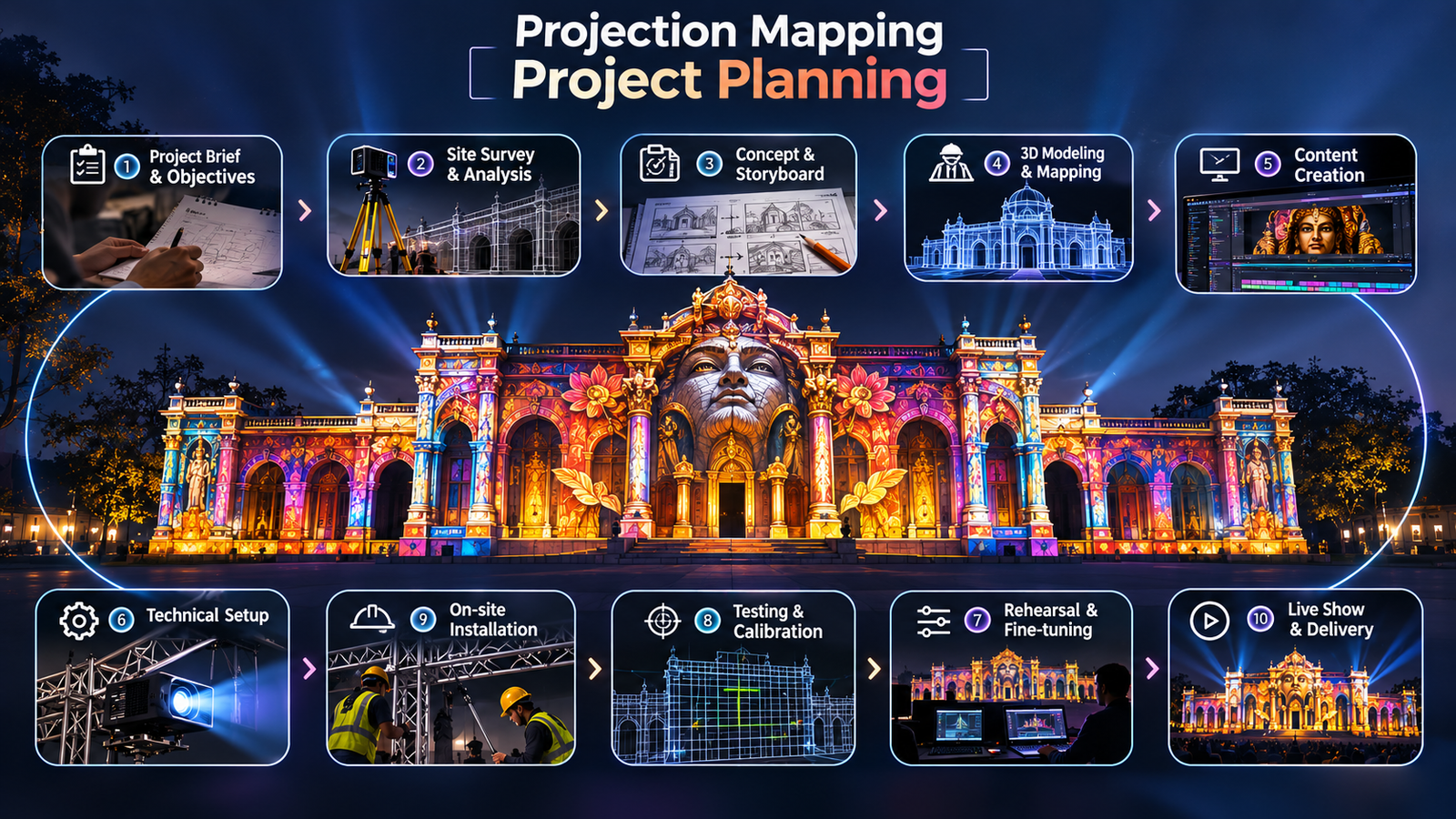
Projection mapping: A projection mapping installation requires careful planning. The team must assess the surface, measure the projection area, determine projector positions, calculate throw distances, select suitable lenses, and align the content with the physical structure.
Large or complex installations may require multiple projectors, media servers, specialized mapping software, and technical rehearsals.
LED wall: LED walls require panels, mounting structures, processors, power distribution, signal connections, and configuration. Large installations may also require rigging, structural planning, and specialist technicians.
The setup requirements vary according to the size and type of installation.
Which is better? Neither technology is automatically easier to install. A simple LED screen may be easier to deploy than a complex mapping setup, while an existing building surface may make projection mapping more practical than constructing a large LED display structure.
5. Cost of Projection Mapping vs LED Wall
Cost is one of the most important factors when planning an event or permanent installation.
The total cost depends on the project scale, equipment specifications, content requirements, venue, installation duration, technical crew, and operating conditions.
Projection mapping costs may include:
Projector rental or purchase
Projection lenses and mounting equipment
Media servers and playback systems
Content creation and 2D or 3D animation
Surface mapping and calibration
Installation, alignment, and technical operation
Transportation and equipment protection
LED wall costs may include:
LED panel rental or purchase
Processing and playback equipment
Mounting structures and rigging
Power distribution and cabling
Content creation and formatting
Installation and dismantling
Technical crew and transportation
Projection mapping may be cost-effective when a suitable surface already exists and the project benefits from transforming it visually. However, high-brightness projectors, specialist lenses, multiple-projector systems, and complex content can make large installations expensive.
An LED wall may be more practical when a dedicated screen is required, especially if suitable panels are already available for rental. Purchasing an LED wall for a one-time event, however, may not be economical.
Which is cheaper? There is no universal winner. Compare the complete project cost rather than equipment rental alone.
6. Image Quality and Resolution
Projection mapping: Image quality depends on the projector’s resolution, lens, brightness, projection distance, surface texture, ambient light, and content alignment. The surface itself can affect the final image, particularly if it is uneven, highly textured, or reflective.
A well-designed projection mapping installation can produce detailed, cinematic visuals across large surfaces. However, the result must be evaluated in the context of the physical environment.
LED wall: Image quality depends on the display resolution, pixel pitch, viewing distance, processing, and content quality. Fine-pitch LED panels can deliver sharp images at relatively close viewing distances, while larger-pitch panels are often suitable for audiences viewing from farther away.
Which is better? LED walls offer predictable display characteristics when the correct pixel pitch and viewing distance are selected. Projection mapping can deliver impressive large-scale visuals, but its quality depends heavily on the projection environment and surface.
7. Surface and Venue Requirements
Projection mapping: Projection mapping needs a suitable surface and a clear projection path. Walls, monuments, sculptures, stages, and other structures can become part of the display. Surfaces with complex geometry may require more detailed mapping and content preparation.
Obstructions, trees, audience movement, and competing light sources can affect the installation.
LED wall: An LED wall requires a suitable mounting or support arrangement, along with power and signal infrastructure. It can be installed on a stage, suspended from a properly designed rigging system, or integrated into a permanent structure.
Which is better? Projection mapping is useful when the existing architecture or object should become part of the experience. LED walls are useful when a dedicated display surface can be installed.
8. Outdoor Performance
Outdoor conditions can influence the performance and reliability of both technologies.
Projection mapping: Outdoor mapping is commonly used for monuments, heritage buildings, festivals, and nighttime public experiences. Projector brightness, weather protection, ambient light, surface conditions, and audience sightlines must be considered.
Rain, dust, humidity, and other environmental factors may require additional protection for equipment.
LED wall: Outdoor LED walls are designed for exterior use when the correct weather-rated equipment is selected. Their brightness can make them suitable for daytime events, but installation must account for wind loads, structural stability, power, weather exposure, and safe operation.
Which is better? For a nighttime architectural transformation, projection mapping can be an excellent choice. For a bright outdoor event requiring a visible screen, an appropriately specified outdoor LED wall may be more suitable.
Comparison Table: Projection Mapping vs LED Wall
| Feature | Projection Mapping | LED Wall |
|---|---|---|
| Basic technology | Projected digital content | Self-illuminating LED panels |
| Visual approach | Integrates content with physical surfaces | Displays content on a dedicated screen |
| Best-known use | Buildings, monuments, museums, immersive experiences | Concerts, conferences, exhibitions, presentations |
| Ambient light | Performance can decrease in bright conditions | Generally performs better in bright conditions |
| Surface requirements | Needs a suitable projection surface | Needs panels and a suitable support structure |
| Creative potential | Can transform architectural features and objects | Can create flexible display shapes and screen layouts |
| Image quality | Depends on projector, surface, light, and alignment | Depends on pixel pitch, resolution, and viewing distance |
| Installation | Requires projection planning and calibration | Requires panel assembly, processing, power, and mounting |
| Daytime use | Often challenging in strong ambient light | Often suitable with appropriately specified panels |
| Cost factors | Projectors, lenses, content, mapping, and crew | Panels, rigging, processing, content, and crew |
| Typical advantage | Makes the physical environment part of the story | Provides a bright, dedicated digital display |
| Typical limitation | Sensitive to ambient light and surface conditions | Requires a physical display structure and panel infrastructure |
When Should You Choose Projection Mapping?
Projection mapping is a strong option when your project needs more than a conventional screen.
Consider projection mapping if:
You want to transform a building, monument, or architectural structure.
You are developing a museum or heritage storytelling experience.
You want visuals that interact with the shape of a physical object.
Your event takes place at night or in a controllable lighting environment.
You want to create an immersive visual narrative around an existing space.
Your project requires architectural, water, dome, or immersive projection experiences.
For example, a heritage museum could use projection mapping to recreate historical events on architectural surfaces, while a monument show could use animation to make a structure appear to change shape.
If you are exploring this approach, read our guide to how projection mapping works.
When Should You Choose an LED Wall?
An LED wall is often the more practical option when your primary requirement is a bright, dedicated screen.
Consider an LED wall if:
Your event requires presentations, text, or live camera feeds.
You need strong visibility in a bright venue.
You are organizing a concert, conference, or exhibition.
Your content needs a consistent rectangular display area.
You need to change content quickly during a live event.
Your production already has access to suitable LED panels and technical infrastructure.
For example, a corporate conference may use an LED wall for speaker presentations, branding, and live video, while an outdoor daytime event may use an appropriately specified LED display to keep content visible.
Can Projection Mapping and LED Walls Be Used Together?
Yes. Projection mapping and LED walls can complement each other in the same production.
A hybrid setup can combine the strengths of both technologies. An LED wall can provide bright, high-resolution content, while projection mapping can extend the visual experience onto the stage, surrounding architecture, props, or set pieces.
For example, a product launch could use an LED wall for product specifications and live video, with projection mapping transforming the stage around it. A museum installation could combine LED displays for detailed information with projection mapping for large-scale storytelling.
However, combining the technologies requires coordinated content design, playback systems, colour management, synchronization, and technical planning.
The best approach is to select the technology according to the role each visual element needs to perform, rather than using both simply because they are available.
What Should You Consider Before Making a Decision?
Before selecting projection mapping or an LED wall, answer these questions:
What is the purpose of the experience? Is it primarily storytelling, architectural transformation, presentation, advertising, or live entertainment?
Where will it take place? Consider indoor or outdoor conditions, available space, surface geometry, and audience positions.
What are the lighting conditions? Ambient light can significantly affect projection mapping, while LED performance depends on the selected display specifications.
What is the viewing distance? Screen resolution, pixel pitch, projector resolution, and content scale should suit the audience’s position.
What content will be displayed? Text-heavy presentations may favour a dedicated display, while architectural narratives may benefit from projection mapping.
What is the complete budget? Include equipment, content creation, installation, transport, technical staff, and dismantling where applicable.
Is the installation temporary or permanent? Rental, maintenance, equipment ownership, and future reuse can change the financial decision.
Answering these questions early can help reduce technical problems and prevent unnecessary expenditure.
Projection Mapping vs LED Wall: Final Verdict
Projection mapping and LED walls serve different purposes, and neither technology is always better than the other.
Choose projection mapping when you want to transform architecture, monuments, museum exhibits, or physical objects into an immersive visual experience.
Choose an LED wall when you need a bright, dedicated display for presentations, concerts, exhibitions, live video, or branded content.
Choose a hybrid setup when your production needs both a dedicated display and visuals that extend into the surrounding environment.
The right choice comes from matching the technology to your creative vision, venue conditions, technical requirements, and budget.
At Visual GAP, we work with projection-based experiences for architecture, museums, domes, water screens, and immersive environments. The goal is to select the right visual approach for each space and create experiences that connect technology with storytelling.
If you are planning a projection mapping or immersive visual project, visit the Visual GAP website to explore our services and discuss your requirements.
Frequently Asked Questions
Is projection mapping better than an LED wall?
Projection mapping is often better for transforming buildings, monuments, and physical objects into visual experiences. LED walls are often better for bright, dedicated displays used in concerts, presentations, and exhibitions. The best option depends on the project.
Is projection mapping cheaper than an LED wall?
Not necessarily. Projection mapping costs depend on projector specifications, lenses, content production, surface mapping, and installation. LED wall costs depend on panel specifications, pixel pitch, rigging, processing, and installation. Compare the total project cost before deciding.
Can projection mapping be used during the day?
It can be used in some daytime environments, but strong ambient light can reduce visibility and contrast. The feasibility depends on projector brightness, the surface, ambient conditions, and the required image quality. LED walls are generally more practical when high visibility in bright conditions is essential.
Can an LED wall replace projection mapping?
An LED wall can replace projection mapping when the main requirement is displaying content on a screen. However, it does not automatically reproduce the effect of mapping visuals onto an existing building, monument, sculpture, or other physical surface.
Which technology is best for a product launch?
An LED wall is useful for product presentations, specifications, live feeds, and branded visuals. Projection mapping can create a more spatial experience by transforming the product, stage, or surrounding architecture. A hybrid setup may be appropriate for larger productions.
Which technology is better for museums?
Both technologies can be useful in museums. Projection mapping can integrate storytelling with artifacts, walls, and architectural features. LED displays can present detailed information, videos, and interactive content. Many museums can benefit from combining the two.
Can projection mapping and LED walls work together?
Yes. A production can use an LED wall for its primary screen and projection mapping for the surrounding stage, architecture, or set pieces. Successful integration requires coordinated content, playback, synchronization, and technical planning.