Projection Mapping for Museums: Creating Immersive Visitor Experiences
Museums are evolving beyond traditional displays and information panels. Today, visitors increasingly expect engaging experiences that help them understand history, culture, science, and heritage in more interactive ways.
Projection mapping for museums makes this possible by transforming walls, artefacts, architectural structures, and exhibition spaces into immersive storytelling environments. By combining digital visuals, animation, sound, and carefully planned content, museums can present complex subjects in a memorable and engaging format.
In this guide, we explore how museum projection mapping works, its applications, and the key considerations for planning a successful installation.
What Is Museum Projection Mapping?
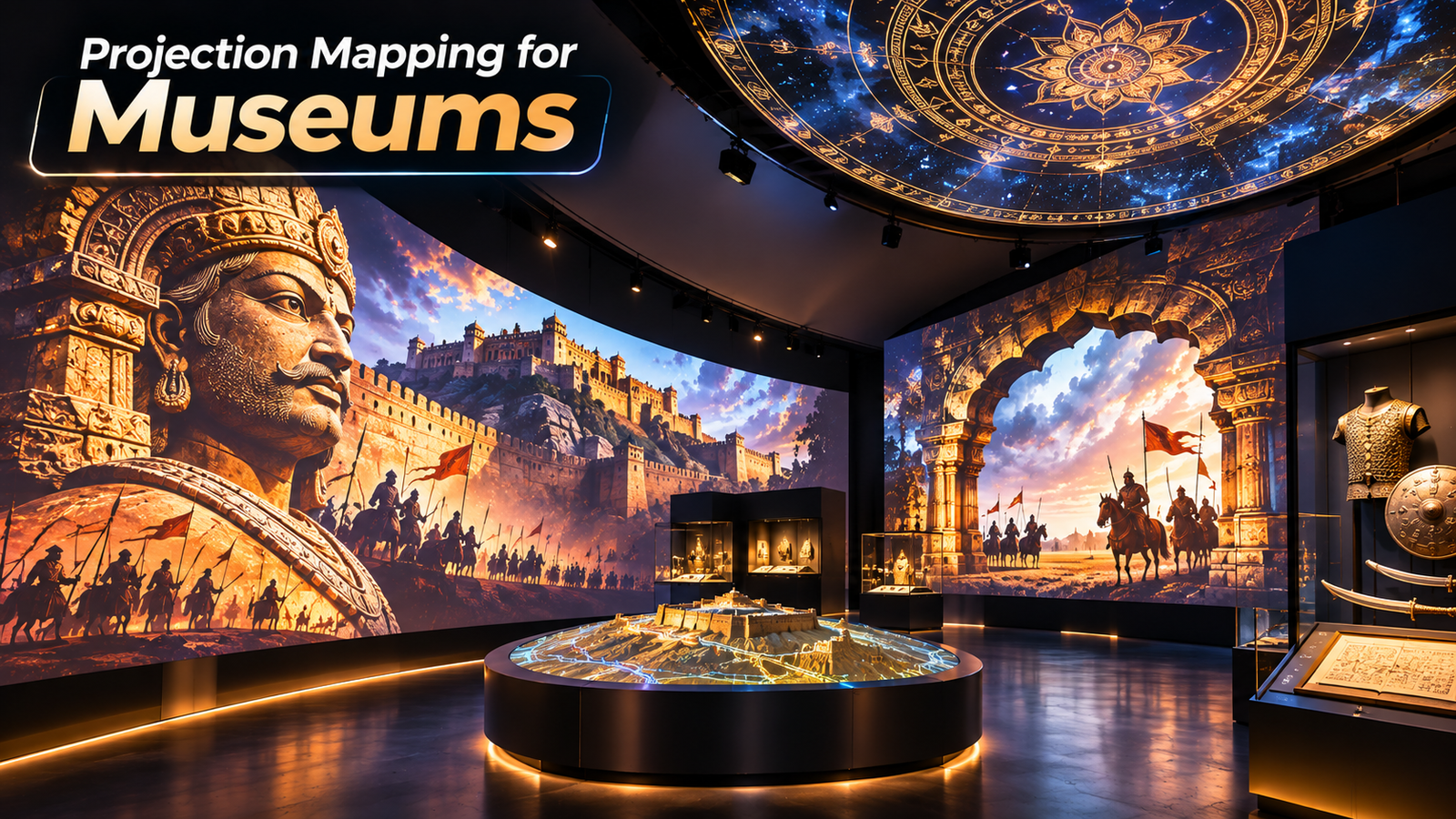
Museum projection mapping is a visual technology that uses projectors to display digital content on physical surfaces within a museum.
Instead of relying only on conventional screens, the technology integrates visuals with the exhibition environment. Historical buildings, miniature models, sculptures, maps, and specially designed display structures can become part of the storytelling experience.
For example, a historical monument model could show how its architecture evolved over time, while a large exhibition wall could illustrate an important historical event through animation.
To understand the underlying technology, read our guide on how projection mapping works.
How Is Projection Mapping Used in Museums?
1. Historical Storytelling
Projection mapping can help museums present historical events through animated sequences, timelines, and reconstructed environments.
Instead of reading about an event, visitors can watch a visual narrative unfold across a wall, model, or architectural surface.
This approach can make historical information easier to follow while helping visitors understand the relationship between people, places, and events.
2. Interactive Digital Maps
Large projection-based maps can communicate geographical, cultural, and historical information.
Visitors may explore regions, migration routes, military campaigns, trade networks, or the development of ancient settlements.
When combined with interactive systems, these maps can respond to visitor selections and display relevant information.
3. Artefact and Object Projection
Projection mapping can add contextual visuals to selected objects and models.
For example, a physical model of a historical structure could display its original appearance, construction stages, or surrounding environment through carefully aligned animation.
The goal is to provide additional context without unnecessarily distracting visitors from the physical exhibit.
4. Immersive Museum Rooms
Immersive rooms use projections across multiple walls and, where appropriate, floors or ceilings.
These environments can transport visitors into historical landscapes, natural habitats, scientific environments, or cultural narratives.
The content should be designed around the room’s dimensions, viewing positions, visitor movement, and the educational purpose of the exhibition.
5. Military and Heritage Museums
Military and heritage museums can use projection mapping to explain operations, historical campaigns, equipment development, and important moments in institutional history.
Animated maps, battlefield visualisations, archival imagery, and timeline-based storytelling can help visitors understand complex information.
For sensitive historical subjects, the content should remain accurate, respectful, and consistent with the museum’s educational objectives.
Benefits of Projection Mapping for Museums
More Engaging Storytelling
Projection mapping combines visuals, motion, and sound to present information in a compelling format. It can help visitors connect individual exhibits to a larger historical or educational narrative.
Better Understanding of Complex Subjects
Subjects such as architectural development, scientific processes, military strategies, and historical geography can be difficult to communicate through static displays alone.
Animated visualisations can make these relationships easier to understand.
Flexible Digital Content
Digital content can be updated as exhibitions change or new material becomes available. This can help museums refresh experiences without redesigning every physical display.
Greater Use of Exhibition Space
Walls, ceilings, models, and architectural features can become storytelling surfaces, allowing museums to use their existing spaces creatively.
Memorable Visitor Experiences
A well-designed projection mapping installation can become a distinctive part of the museum visit and encourage visitors to spend more time exploring an exhibition.
What Equipment Is Required?
The equipment depends on the museum’s architecture, lighting conditions, content requirements, and visitor experience goals.
Typical components include:
Projectors: Selected according to brightness, resolution, projection distance, and surface requirements.
Projection mapping software: Used to align visuals with walls, models, and architectural features.
Media servers: Used to play content and manage complex multi-projector installations.
Audio systems: Used for narration, music, and environmental sound.
Interactive technology: Optional sensors, touch interfaces, or tracking systems can allow visitors to influence the experience.
Mounting and signal equipment: Supports secure installation and reliable playback.
Large installations may require several synchronised projectors, edge blending, specialised lenses, and centralised playback control.
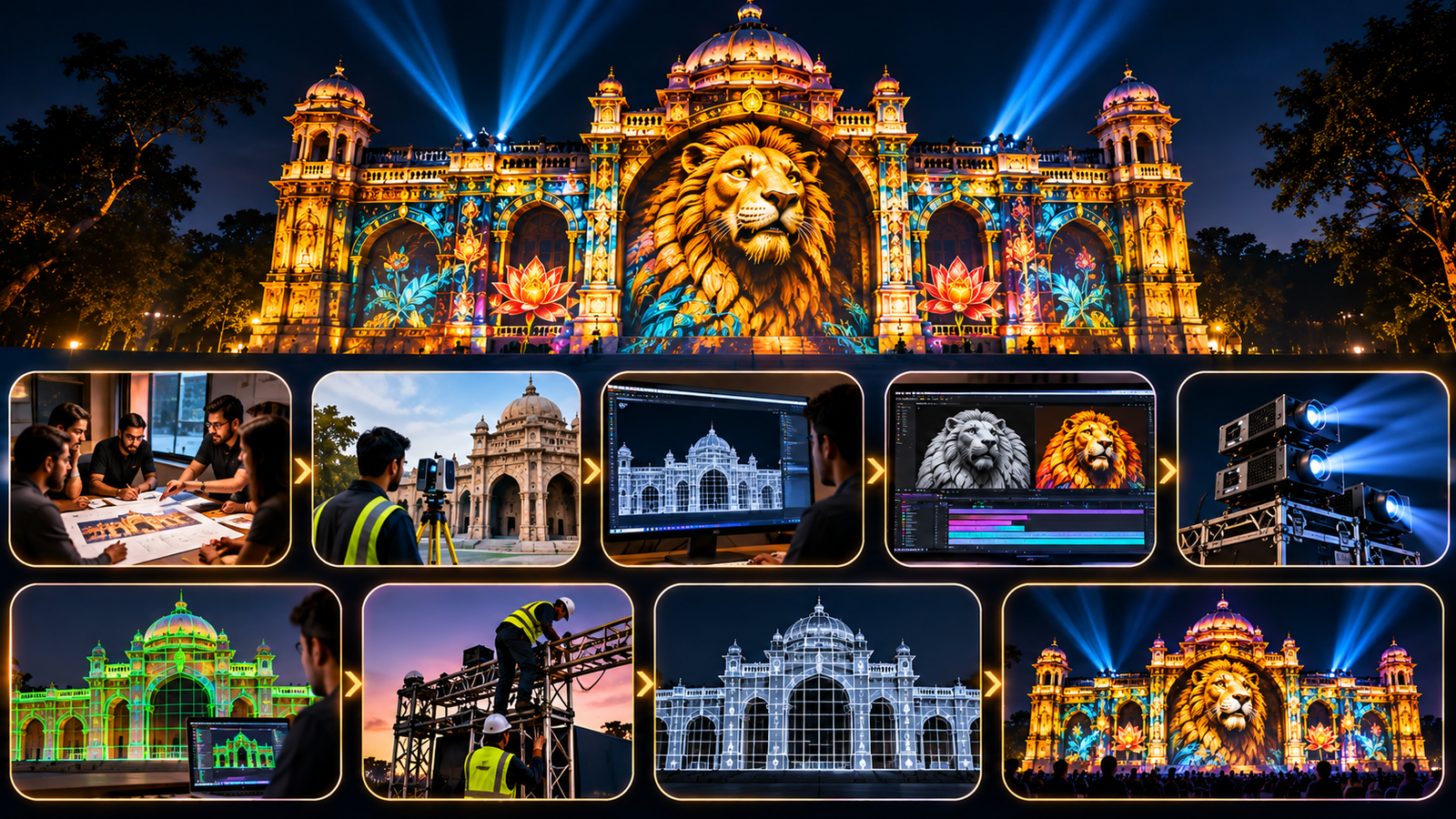
How to Plan a Museum Projection Mapping Project
A successful installation requires coordination between creative, technical, and museum teams.
1. Define the educational objective: Decide what visitors should learn, understand, or experience.
2. Survey the site: Measure the space, inspect the projection surfaces, assess ambient light, and identify obstructions.
3. Develop the visitor journey: Determine how the content will unfold and how visitors will move through the exhibition.
4. Create the content: Develop historically accurate visuals, animation, narration, and sound according to the exhibition concept.
5. Design the technical system: Select suitable projectors, lenses, playback systems, and interactive components.
6. Install and calibrate: Align the projections with the physical surfaces and test the complete experience.
7. Test with visitors in mind: Check readability, sound levels, viewing angles, accessibility, and playback reliability before opening.
Early planning can reduce technical challenges and help ensure that the installation supports the museum’s objectives.
How Much Does Museum Projection Mapping Cost?
The cost varies considerably depending on the scale and complexity of the project.
Important cost factors include:
Exhibition size and number of projection surfaces
Projector quantity and specifications
Custom animation and content production
Media servers and playback software
Interactive technology
Installation and calibration
Audio systems and technical support
A single projection-based exhibit will have different requirements from a multi-room immersive museum installation.
For a more detailed breakdown, read our guide on projection mapping costs.
Projection Mapping vs Traditional Museum Displays
Traditional displays remain valuable for presenting labels, documents, artefacts, and detailed reference information.
Projection mapping serves a different purpose: it adds movement, visual context, and immersive storytelling to selected areas of an exhibition.
The most effective museum environments often combine physical exhibits, informative text, conventional displays, and projection-based experiences rather than relying on one technology alone.
Conclusion
Projection mapping gives museums new ways to communicate history, culture, science, and heritage through immersive visual storytelling.
From animated historical maps to architectural visualisations and multi-wall immersive rooms, the technology can make exhibitions more engaging while supporting educational objectives.
At Visual GAP, we develop projection-based experiences for museums, heritage environments, immersive rooms, and specialised installations. Our approach combines creative storytelling, content development, and technical planning to suit the needs of each project.
If you are planning a new museum or upgrading an existing exhibition, projection mapping can be an effective way to bring stories and spaces together.
Frequently Asked Questions
What is projection mapping in museums?
It is a technology that projects digital visuals onto museum walls, models, objects, and architectural surfaces to support storytelling and visitor engagement.
Can projection mapping be used in small museums?
Yes. A small museum can use projection mapping on a single wall, display model, or selected exhibit. The system should be designed around the available space and budget.
Can museum projection mapping be interactive?
Yes. Interactive installations can use sensors, touch interfaces, or other input systems to let visitors select information and influence what appears on the projection surfaces.
Does museum projection mapping require a dark room?
Not always. However, ambient light affects image contrast and visibility. The projector specifications, surface properties, and lighting conditions must be considered during planning.