Monument Projection Mapping Guide: Planning, Technology and Applications
Monument projection mapping transforms historic buildings, architectural landmarks, and heritage structures into large-scale visual storytelling experiences. By projecting carefully designed animations onto architectural surfaces, it allows monuments to communicate history, culture, and important stories through light, motion, and sound.
From heritage tourism and cultural festivals to permanent visitor attractions, monument projection mapping offers a creative way to connect audiences with historic places.
However, a successful monument mapping show requires more than powerful projectors. It involves architectural analysis, content development, equipment selection, technical planning, and precise on-site calibration.
This guide explains how monument projection mapping works, its applications, and the key factors to consider when planning a project.
What Is Monument Projection Mapping?
Monument projection mapping is a specialised form of architectural projection mapping in which digital visuals are projected onto monuments, heritage buildings, forts, temples, memorials, and other significant structures.
Instead of displaying a conventional video on a flat screen, the content is designed around the monument’s actual architecture.
Columns, arches, domes, windows, sculptures, and decorative details can become part of the visual narrative.
For example, a historic fort could appear to change through different historical periods, while a memorial could present a carefully researched story using animation, archival imagery, and sound.
To understand the broader technology, explore our Complete Projection Mapping Guide.
How Does Monument Projection Mapping Work?
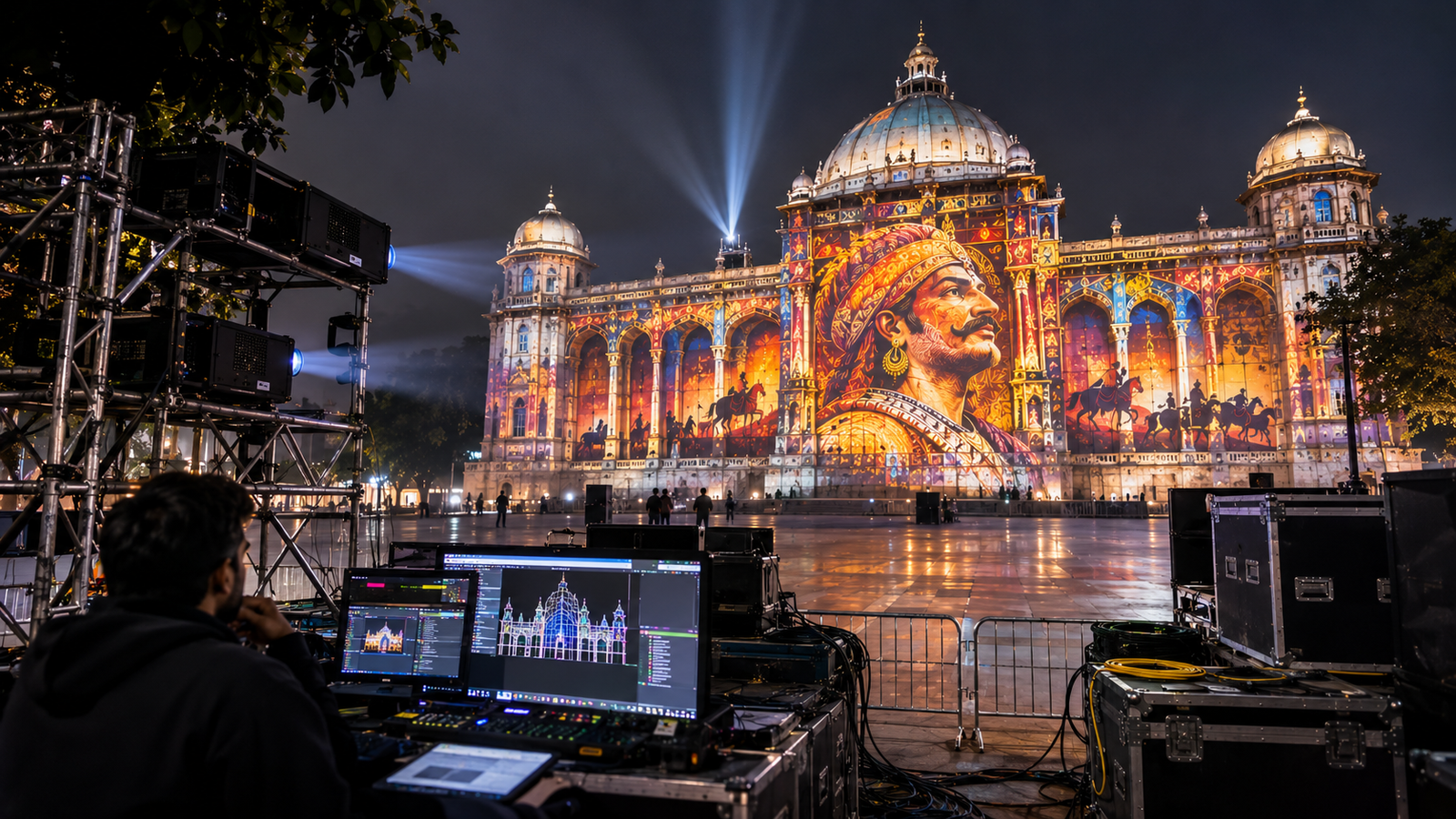
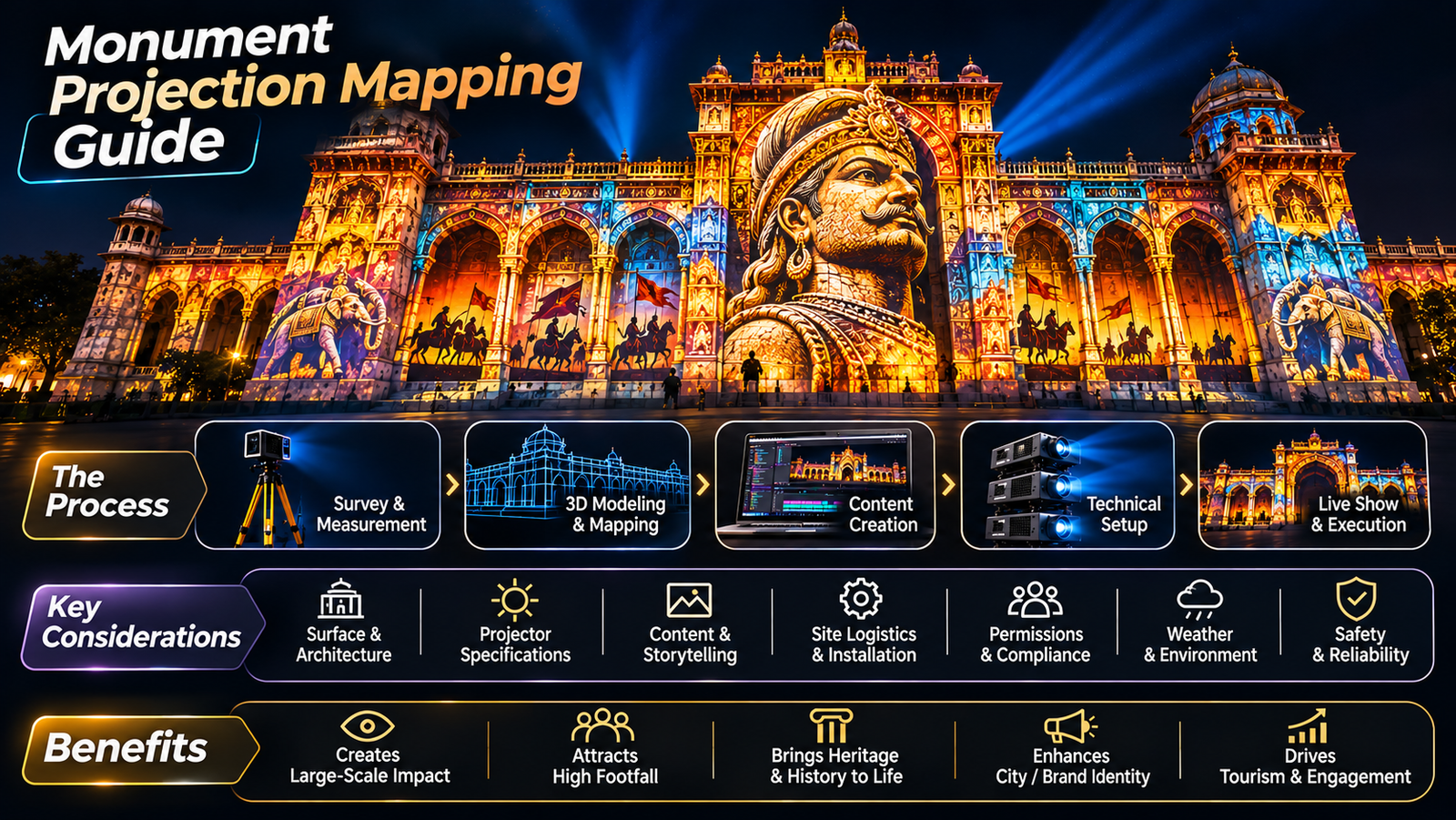
A monument projection mapping project combines digital content with a carefully planned projection system.
1. Architectural Survey
The first step is to study the monument and understand its dimensions, surface geometry, architectural details, and surrounding environment.
Depending on the project, this may involve architectural drawings, photographs, elevation references, site measurements, or 3D models.
The survey helps the team determine which surfaces can be illuminated and where projectors can be installed.
2. Content Design and 3D Animation
Artists develop visuals that correspond to the monument’s shape and architectural features.
Content may include historical reconstructions, animated textures, architectural transformations, environmental effects, and narrative sequences.
For convincing 3D illusions, the content must account for perspective and the intended viewing position.
3. Projector Selection and Placement
Projectors are selected according to the size of the monument, required brightness, projection distance, surface coverage, ambient light, and installation constraints.
Large monuments may require multiple projectors to cover the entire facade.
The team must also consider lens selection, overlapping projection areas, image blending, and access for maintenance.
4. Mapping and Calibration
Projection mapping software is used to align the digital content with the monument’s architecture.
The team adjusts geometry, position, scale, and perspective to ensure that the visuals fit the intended surfaces.
On-site calibration is particularly important because real structures may differ from available drawings or digital models.
5. Audio and Show Synchronisation
Many monument shows combine visuals with narration, music, and sound effects.
Playback systems coordinate the different elements so that the story unfolds as a unified audiovisual experience.
Before the show opens, the team tests image alignment, playback reliability, sound levels, and the overall visitor experience.
Applications of Monument Projection Mapping
Heritage Storytelling
Monument mapping can communicate historical events, architectural evolution, cultural traditions, and important stories associated with a location.
Visual storytelling can help visitors understand a monument’s significance beyond the information provided on conventional display panels.
Tourism and Cultural Attractions
Tourism authorities and destination managers can use projection mapping to develop evening attractions and special cultural programmes.
A well-designed show can become an additional reason for visitors to explore a heritage destination.
However, its success depends on the quality of the story, visitor accessibility, operational planning, and the site’s conservation requirements.
Government and Public Events
Monument projection mapping may be used during commemorations, cultural celebrations, public festivals, and significant national or regional events.
The content should reflect the purpose of the event and be appropriate to the monument’s historical and cultural context.
Museums and Heritage Interpretation
Projection mapping can complement museum exhibitions by presenting historical architecture, artefacts, and cultural narratives in a visual format.
It can also connect an indoor exhibition with an outdoor monument experience, creating a more consistent visitor journey.
Educational Experiences
Schools, universities, and heritage institutions can use projection-based storytelling to explain architectural features, historical timelines, and cultural developments.
When content is carefully researched, visualisation can help make complex subjects easier to understand.
What Equipment Is Required for Monument Projection Mapping?
The equipment requirements depend on the scale of the monument and the intended visual effect.
Typical components include:
High-brightness projectors: Selected according to the projection area, ambient light, image quality, and viewing distance.
Specialised lenses: Matched to projector positions and throw distances.
Media servers: Used to manage content playback and synchronisation.
Projection mapping software: Used for image alignment, warping, and multi-projector workflows.
Audio systems: Used for narration, music, and sound effects.
Mounting and rigging equipment: Supports secure projector installation.
Signal and power infrastructure: Provides reliable connections and power distribution.
Monitoring and backup systems: Helps maintain operational reliability during performances.
Some projects may also require weather protection, remote monitoring, specialised enclosures, and additional safety measures.
The equipment should be specified after a site survey rather than selected using monument size alone.
Key Challenges in Monument Projection Mapping
Ambient Light
Streetlights, nearby buildings, and other sources of illumination can reduce image contrast.
Projector brightness, show timings, and surrounding lighting should be evaluated during the planning stage.
Complex Architecture
Irregular surfaces, deep recesses, columns, domes, and decorative elements can complicate projection coverage.
Detailed mapping and careful projector positioning help minimise shadows and alignment problems.
Projection Distance
Projector placement affects image size, focus, brightness, and lens requirements.
A technically suitable projector may not work well if its lens and installation position are poorly matched to the site.
Weather and Environmental Conditions
Outdoor installations may be affected by rain, dust, humidity, temperature, and wind.
Equipment protection and contingency planning are important for installations exposed to changing weather conditions.
Heritage Conservation
Historic structures require particular care.
Installation methods should respect the site’s conservation requirements, avoid unnecessary physical alterations, and comply with applicable permissions and restrictions.
The project team should coordinate with the relevant heritage authorities and site managers before installation.
How to Plan a Monument Projection Mapping Project
A structured planning process can reduce technical risks and help keep the project aligned with its objectives.
Step 1: Define the objective. Establish whether the show is intended for tourism, education, cultural storytelling, public events, or another purpose.
Step 2: Survey the monument. Collect measurements, photographs, architectural references, and information about the surrounding environment.
Step 3: Develop the narrative. Research the monument’s history and create a clear storyline suited to the audience and show duration.
Step 4: Design the projection system. Determine projector positions, lenses, coverage, brightness requirements, playback equipment, and audio needs.
Step 5: Produce and previsualise the content. Develop animations and test how they fit the monument’s architecture before final installation.
Step 6: Install and calibrate. Set up the equipment, align the projections, and correct geometry and blending issues.
Step 7: Test the complete show. Evaluate visuals, audio, safety, playback, audience viewing positions, and operational procedures.
Step 8: Plan ongoing operations. Establish maintenance, equipment checks, content updates, and procedures for technical failures or adverse weather.
For a more detailed planning framework, read our guide on Projection Mapping Project Planning.
How Much Does Monument Projection Mapping Cost?
Monument projection mapping costs vary significantly depending on the structure, creative ambition, technical requirements, and project duration.
Major cost factors include:
Monument dimensions and architectural complexity
Projector quantity, brightness, and lens specifications
Custom animation and 3D content production
Site surveys and technical design
Media servers and playback systems
Installation, rigging, and calibration
Audio equipment and show control
Permissions, logistics, and operational support
Maintenance and equipment requirements
A short event using rented equipment will have a different budget from a permanent installation designed for regular public performances.
For a general overview of pricing factors, see our article on How Much Does Projection Mapping Cost?.
Conclusion
Monument projection mapping brings architecture, technology, and storytelling together to create memorable heritage experiences.
From historical narratives and cultural attractions to educational installations and large-scale public events, it offers new ways to communicate the significance of important structures.
Successful projects depend on accurate research, suitable projection equipment, well-designed content, detailed site planning, and careful respect for heritage conservation requirements.
At Visual GAP, we develop projection-based experiences that combine visual storytelling, content production, and technical planning for architectural, museum, and immersive environments.
If you are planning a monument mapping show, start with the story, understand the site, and build the technical system around the experience you want visitors to remember.
Frequently Asked Questions
What is monument projection mapping?
Monument projection mapping uses projectors to display digital animations and visual content on monuments and architectural structures, turning their surfaces into storytelling environments.
How many projectors are needed for monument mapping?
The number depends on the monument’s size, shape, projection distance, brightness requirements, and desired coverage. A site survey is needed to determine the appropriate configuration.
Can projection mapping be used on historic monuments?
Yes, subject to the relevant permissions and conservation requirements. Installation methods and equipment placement must be planned carefully to protect the structure.
How long does it take to create a monument projection mapping show?
The timeline depends on research, content complexity, technical design, equipment procurement, installation, and testing. Larger projects generally require more coordination and production time.
Is monument projection mapping suitable for tourism projects?
Yes. It can support heritage interpretation, cultural storytelling, and evening visitor experiences when the content and operations are designed for the destination.