Projection Mapping for Retail and Shopping Malls: Transforming Shopping Experiences
Retail spaces are evolving beyond traditional product displays and static advertisements. Shopping malls and retail brands are increasingly exploring immersive visual technologies to attract attention, promote products, and create memorable customer experiences.
Projection mapping for retail and shopping malls transforms storefronts, display windows, architectural features, and selected interior spaces into dynamic visual experiences. By combining animation, motion graphics, spatial design, and projected imagery, retailers can present their products and campaigns in more engaging ways.
From seasonal shopping campaigns to product launches and immersive brand activations, projection mapping offers creative opportunities to make retail environments stand out.
What Is Projection Mapping in Retail?
Projection mapping is a visual technology that aligns digital content with the shape and dimensions of a physical surface. Instead of displaying visuals only on a conventional screen, it allows images and animations to interact with architecture, objects, display structures, and retail installations.
In retail environments, projection mapping can be used on:
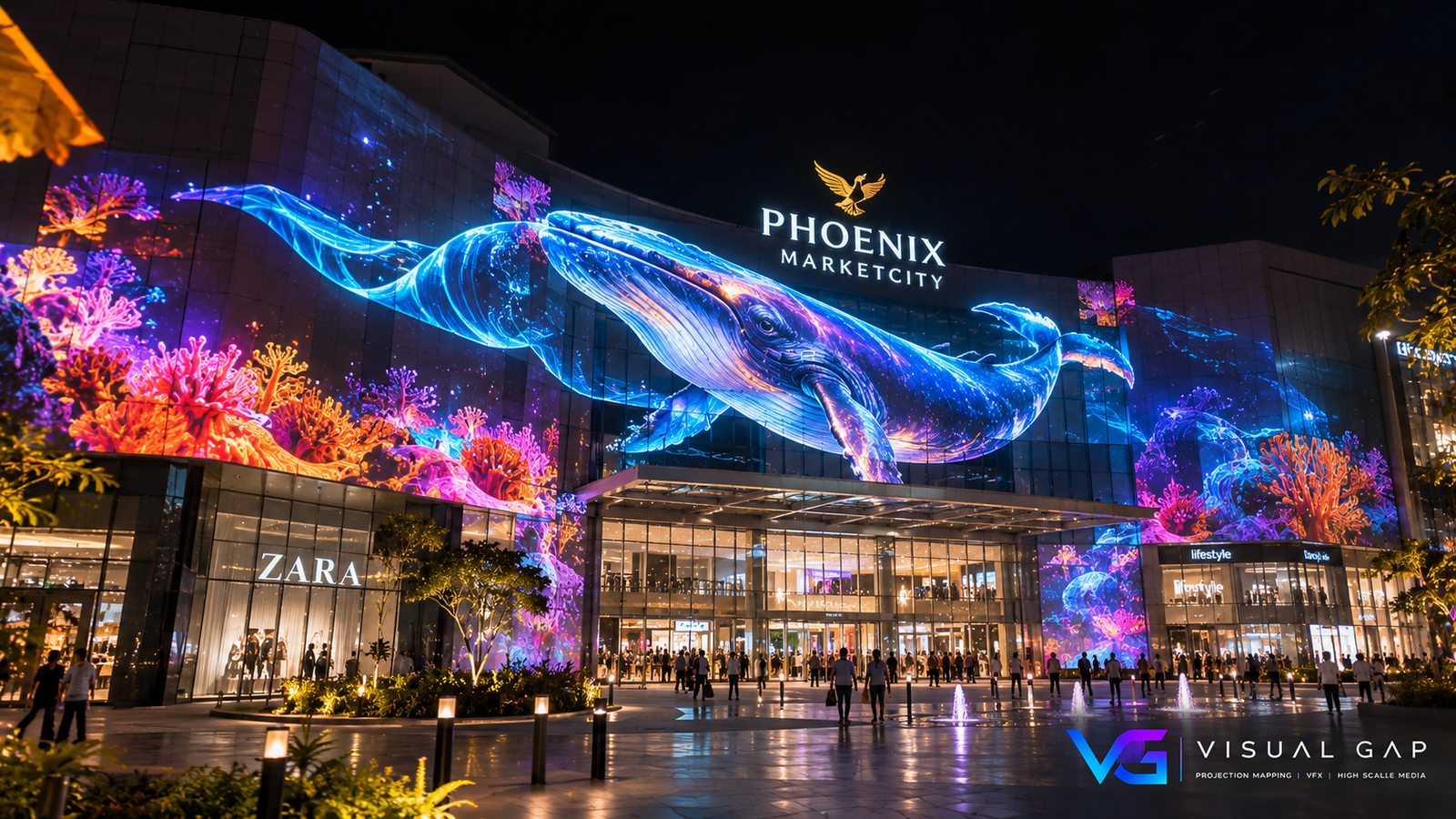
Shopping mall facades
Storefronts and display windows
Product displays and sculptural installations
Atriums and architectural features
Pop-up retail installations
Exhibition and brand activation spaces
The content can be designed around a product, campaign, seasonal theme, or brand identity.
For example, a fashion retailer could transform its storefront into a digital fashion presentation, while a shopping mall could use architectural visuals to introduce a festive campaign.
Learn more about the technology in our Complete Projection Mapping Guide.
Benefits of Projection Mapping for Retail Brands
1. Create Eye-Catching Storefront Displays
A storefront is often the first interaction a potential customer has with a retail brand. Traditional displays can communicate products and promotions, but projection mapping introduces movement, visual transformation, and storytelling.
A display window could appear to open into a digital environment, a product could be revealed through animated sequences, or the surrounding architecture could become part of the campaign.
These displays can be particularly useful for flagship stores, premium retail outlets, and locations with high pedestrian traffic.
However, visibility depends on ambient lighting, the projection surface, viewing distance, and the placement of the projector.
2. Support Product Launches
Product launches provide an opportunity to introduce a new product through a carefully planned visual narrative.
Projection mapping can reveal product features, communicate design details, or create an animated environment around the product itself.
Possible applications include:
Fashion collection launches
Consumer electronics presentations
Automotive brand activations
Beauty and cosmetics promotions
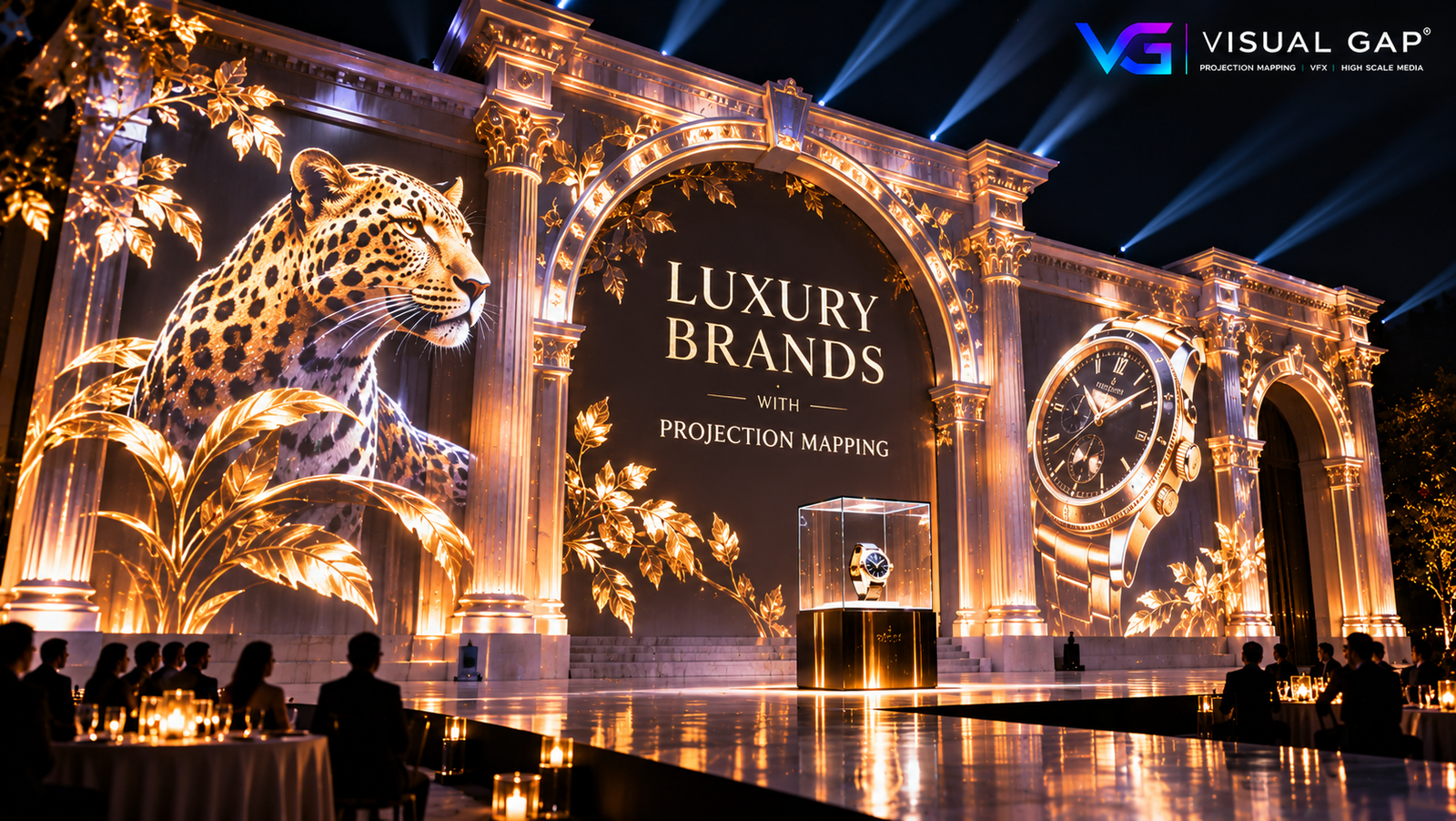
Luxury product showcases
Limited-edition product reveals
The projection content should reinforce the product’s defining qualities rather than overwhelm the audience with unnecessary effects.
3. Enhance Shopping Mall Attractions
Shopping malls compete to provide experiences that encourage visitors to explore beyond individual stores.
Projection mapping can transform selected architectural areas into visual attractions. Large atriums, event zones, facades, and suitable interior surfaces may become platforms for seasonal shows, themed installations, and promotional events.
For example, a mall could present a festive projection experience during Diwali or create a themed visual installation during a holiday shopping campaign.
These attractions can complement entertainment, dining, and retail offerings while providing visitors with additional reasons to explore the venue.
4. Create Seasonal and Festive Campaigns
Seasonal campaigns are important opportunities for retail brands and shopping centres to refresh their visual identity.
Projection mapping allows campaigns to evolve throughout the year without necessarily rebuilding an entire physical display.
Potential applications include:
Diwali and other festive campaigns
Christmas and New Year celebrations
Valentine’s Day promotions
Summer and winter collections
Back-to-school campaigns
Anniversary celebrations
Special shopping festivals
Custom content can be created for each campaign, allowing the visuals to reflect the brand’s messaging and the occasion.
5. Develop Immersive Brand Activations
Brand activations aim to introduce products and encourage audiences to interact with a brand in memorable ways.
Projection mapping can contribute to immersive environments in which architecture, products, graphics, and sound work together to communicate a brand story.
A brand activation might include a projection-mapped product display, an immersive visual tunnel, a themed event environment, or an animated installation in a shopping mall.
The experience can be designed around a specific campaign objective, such as product awareness, audience engagement, or content creation for marketing channels.
Popular Applications of Retail Projection Mapping
Different retail environments require different creative and technical approaches.
| Retail Application | Projection Mapping Concept |
|---|---|
| Storefronts | Animated displays that complement a product or campaign |
| Shopping mall facades | Large-scale seasonal or promotional visuals |
| Mall atriums | Immersive architectural experiences |
| Product launches | Visual reveals and product storytelling |
| Luxury retail | Premium visual presentations for selected products |
| Pop-up stores | Temporary immersive brand environments |
| Retail exhibitions | Projected visuals across custom display structures |
The most appropriate solution depends on the available space, target audience, campaign duration, lighting conditions, and budget.
Projection Mapping vs Traditional Retail Displays
Traditional displays remain useful for communicating prices, product information, and promotional messages. Projection mapping provides a different set of creative possibilities.
| Feature | Projection Mapping | Traditional Displays |
|---|---|---|
| Visual content | Animated and spatially aligned visuals | Printed graphics or conventional digital displays |
| Physical integration | Can interact visually with architecture and objects | Usually occupies a defined display area |
| Campaign flexibility | Content can be updated digitally | Physical graphics may need replacement |
| Creative potential | Supports visual transformations and storytelling | Strong for straightforward product communication |
| Environmental requirements | Often needs controlled lighting and suitable surfaces | Depends on the specific display format |
| Best suited for | Experiential campaigns and distinctive visual presentations | Everyday signage, prices, and product information |
Projection mapping does not replace every retail display. It is most useful when a brand wants to create a distinctive visual experience that goes beyond conventional signage.
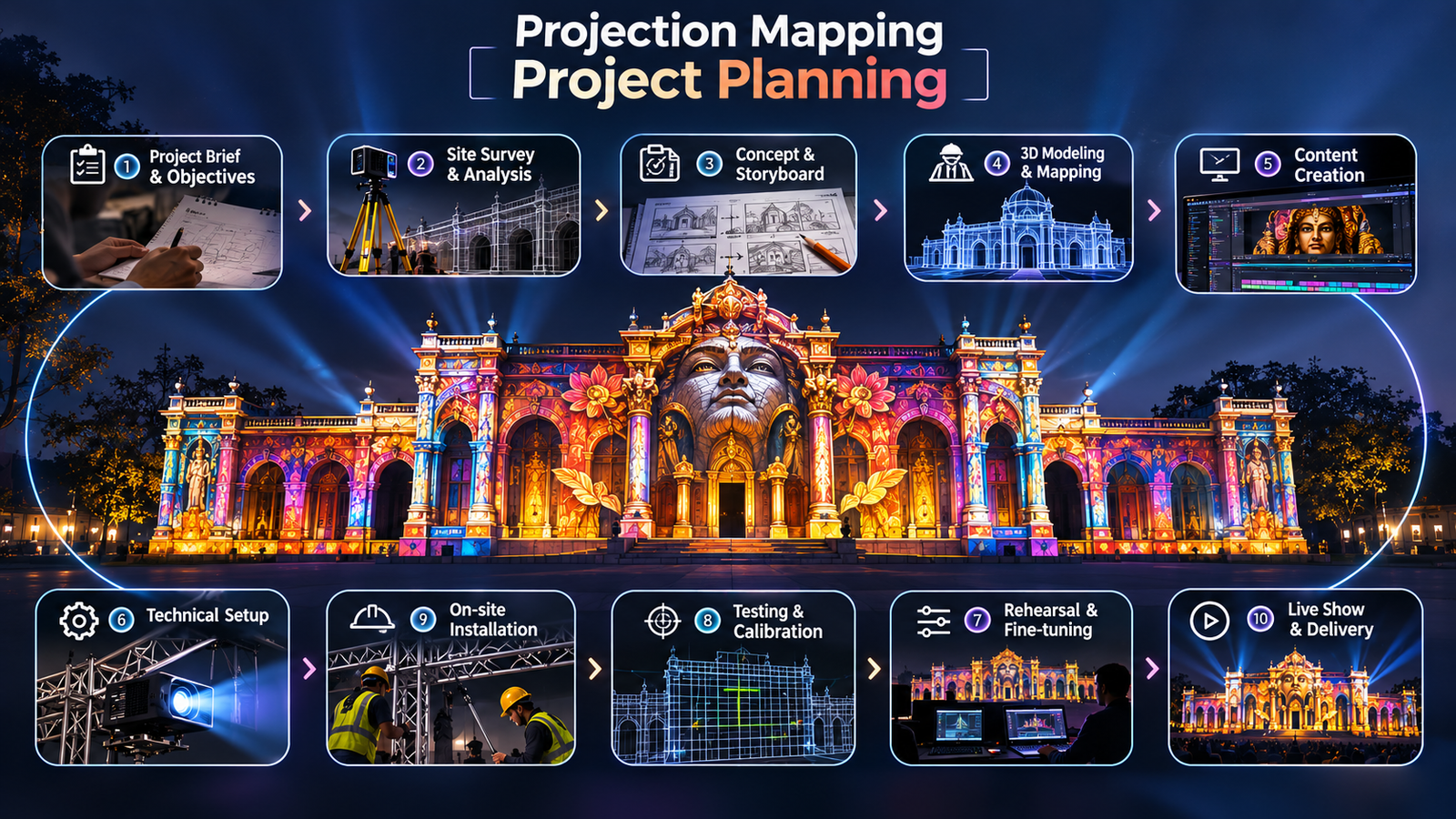
How to Plan a Retail Projection Mapping Installation
A successful installation begins with a clear understanding of the retail environment and campaign objectives.
Step 1: Define the Campaign Objective
Determine whether the installation will promote a product, support a seasonal campaign, attract visitors, or create a branded experience.
The objective will influence the content, location, duration, and technical design.
Step 2: Survey the Location
Evaluate the projection surface, ambient lighting, viewing distance, surrounding foot traffic, available mounting positions, and power supply.
For shopping malls, installation teams must also coordinate with management regarding access, operating hours, safety requirements, and any restrictions on equipment placement.
Step 3: Select the Projection Surface
Suitable surfaces may include storefront windows, architectural features, display structures, and purpose-built installations.
The surface’s colour, texture, geometry, and reflectivity affect the final image. Glass storefronts may also present reflections and transparency challenges that need to be assessed during the technical survey.
Step 4: Develop Custom Content
The creative team develops animations and visuals according to the physical dimensions and campaign requirements.
Content should be designed specifically for the chosen surface. When projection mapping is used on complex objects, the animation must align accurately with their geometry.
Step 5: Plan the Technical Setup
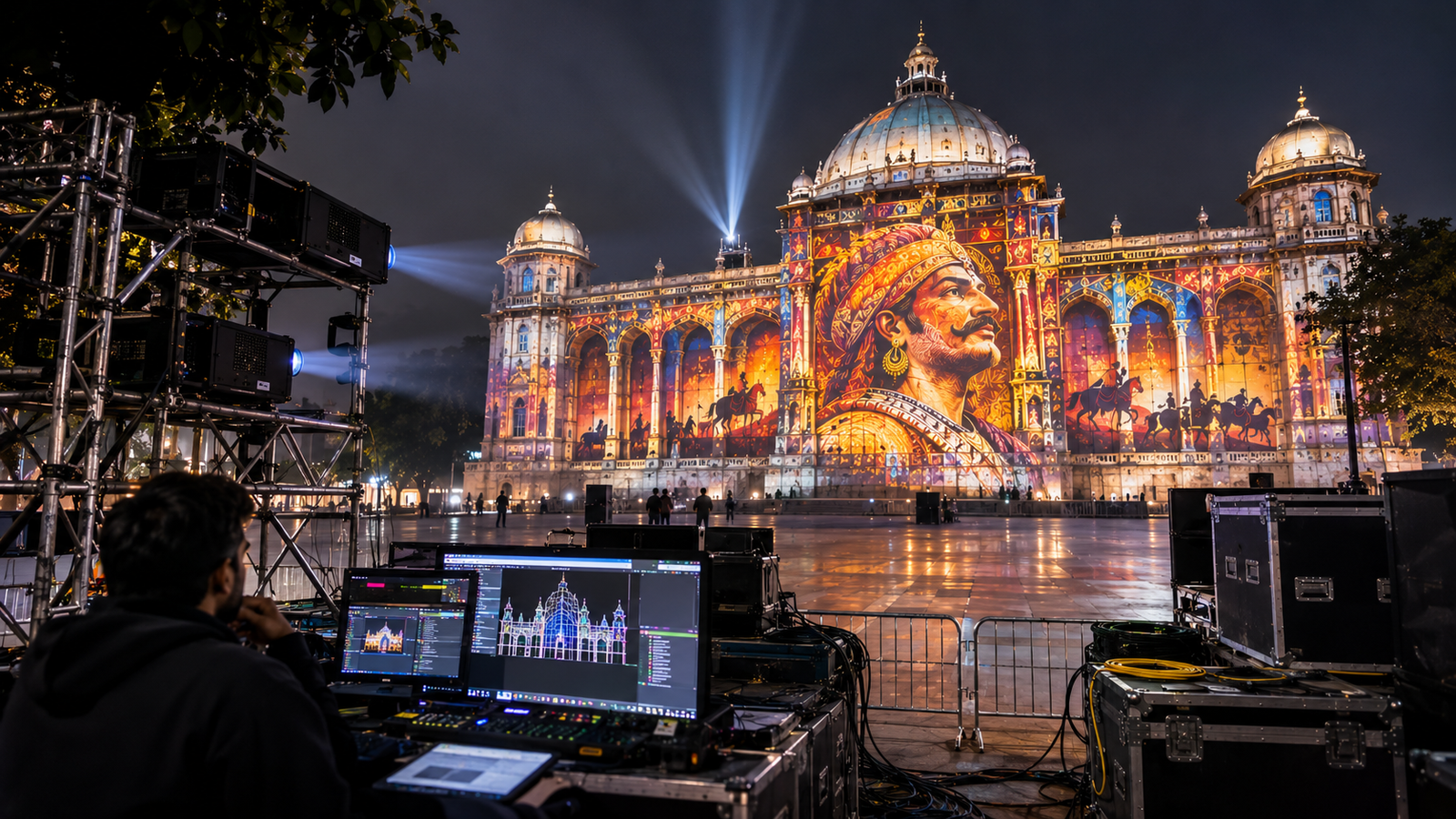
The technical design considers projector brightness, lens selection, resolution, placement, media playback, cabling, and control systems.
Shopping malls and busy retail locations also require careful management of equipment security, cable routing, customer movement, and installation access.
Step 6: Test Before Launch
The team should test the installation under actual operating conditions.
Testing helps identify image alignment issues, excessive ambient light, reflections, visibility problems, and playback errors before customers encounter the experience.
How Much Does Retail Projection Mapping Cost?
The cost of projection mapping for retail environments depends on the scale and complexity of the installation.
Key cost factors include:
Size and geometry of the projection surface
Number and specifications of projectors
Custom animation and content production
Media servers and playback systems
Mounting and installation requirements
Installation and dismantling schedules
Campaign duration
Technical support and maintenance
Site access and operational restrictions
A short-term storefront activation may have different requirements from a permanent installation covering a large shopping mall facade.
For a more detailed overview of pricing factors, visit our guide to Projection Mapping Costs.
Challenges to Consider
Before investing in a retail projection mapping project, brands should assess several practical considerations.
Ambient light: Bright retail environments can reduce the visibility and contrast of projected imagery.
Glass reflections: Storefront glass may create unwanted reflections or allow light to pass through rather than producing a clear image.
Customer movement: Equipment placement and cable routing must not obstruct pedestrian routes or emergency exits.
Operating hours: Installation and maintenance may need to take place outside normal trading hours.
Content readability: Campaign messages must remain understandable at the expected viewing distance.
Reliability: Public-facing installations need dependable playback and a clear response plan for technical issues.
A professional site survey helps determine whether projection mapping is suitable and what technical configuration is required.
Measuring the Success of a Retail Projection Mapping Campaign
Visual impact alone does not determine whether a retail campaign has succeeded.
Before launching the experience, brands should define measurable objectives and identify suitable ways to evaluate performance.
Potential indicators include:
Visitor engagement with the installation
Attendance at a launch or promotional event
Campaign-related social media content
Customer interaction with the featured product
Changes in footfall during the activation
Sales performance where measurement is practical
Feedback from visitors and retail partners
Results should be evaluated alongside other marketing activities and relevant external factors. Projection mapping can support a retail campaign, but outcomes depend on the complete customer experience and the quality of the wider marketing strategy.
Conclusion
Projection mapping for retail and shopping malls offers an innovative way to transform storefronts, architectural spaces, product displays, and promotional installations into immersive visual experiences.
From festive campaigns and product launches to flagship-store presentations and mall attractions, it gives brands new ways to communicate visually and engage audiences.
The best results come from combining a clear campaign objective with creative content, suitable projection surfaces, careful technical planning, and reliable execution.
Visual GAP develops projection mapping and immersive visual experiences for architectural spaces, events, museums, and public attractions. Each project is tailored to the location, creative brief, and intended audience experience.