Projection Mapping for Tourism: Transforming Destinations into Immersive Experiences
Tourism is no longer just about visiting a destination and taking photographs. Modern travellers increasingly look for memorable experiences, cultural storytelling, interactive attractions, and unique things to do. For destinations that want to stand out, projection mapping for tourism offers an innovative way to transform buildings, monuments, landscapes, and public spaces into immersive visual experiences.
By combining digital animation, sound, storytelling, and architectural surfaces, projection mapping can help destinations present their history, celebrate their culture, and create engaging attractions after sunset.
For tourism boards, heritage sites, cultural institutions, and destination developers, this technology provides new opportunities to enhance visitor engagement and create distinctive experiences.
What Is Projection Mapping in Tourism?
Projection mapping is a visual technology that uses specialised projectors to display digital content on physical surfaces. Unlike conventional projection onto a flat screen, projection mapping can adapt visuals to the shape and structure of buildings, monuments, facades, and other architectural elements.
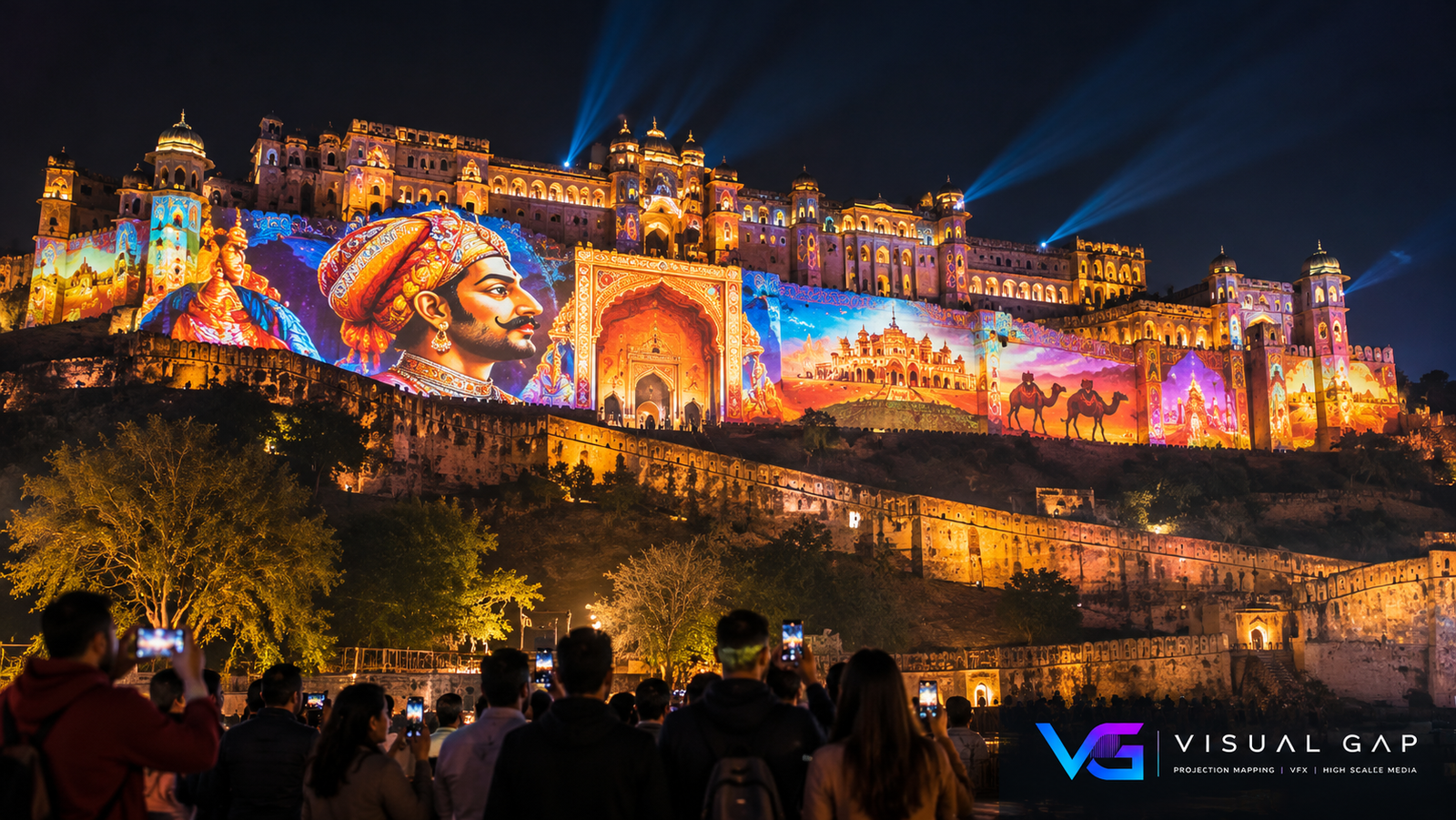
In tourism, the technology can transform a historic fort into a storytelling canvas, bring the architecture of a landmark to life, or turn a public square into a vibrant cultural experience.
A projection mapping experience may include:
Historical storytelling and cultural narratives
Animated architectural transformations
Immersive sound and visual shows
Festival and seasonal experiences
Destination branding and promotional content
Interactive visitor experiences
The goal is not simply to display visuals. It is to create an experience that helps visitors connect with the destination.
How Projection Mapping Enhances Tourism Experiences
1. Bringing Historical Monuments to Life
Historic monuments often contain centuries of stories that are difficult to communicate through conventional displays or information boards.
Projection mapping can help narrate these stories through animated visuals, historical reconstructions, characters, and carefully designed soundscapes.
For example, a fort could visually transform through different historical periods, showing its construction, important events, cultural significance, and architectural details. Visitors can experience the narrative on the monument itself rather than only reading about it.
These experiences can make heritage interpretation more engaging while helping preserve and communicate local history.
2. Creating Night-Time Tourist Attractions
Many destinations have limited visitor activities after sunset. Projection mapping can introduce scheduled evening shows that encourage visitors to spend more time at a location.
A landmark, palace, cultural complex, or public building can become the centrepiece of a night-time attraction through a carefully planned projection experience.
Potential benefits include:
More engaging evening activities
Opportunities to extend visitor dwell time
Additional programming for festivals and special events
New experiences for local and international tourists
Opportunities for ticketed shows where commercially and operationally suitable
Success depends on the quality of the content, visitor accessibility, operating costs, and the destination’s overall tourism strategy.
3. Promoting Local Culture and Traditions
Every destination has its own identity, shaped by its art, architecture, music, festivals, crafts, and traditions.
Projection mapping provides a visual medium for communicating this identity. A cultural show can feature traditional artwork, regional stories, local legends, historical figures, folk traditions, and significant cultural events.
The creative direction should be developed with cultural experts and local stakeholders to ensure that the presentation is accurate and respectful.
When designed thoughtfully, projection mapping can help visitors understand what makes a destination distinctive.
4. Transforming Public Spaces and City Landmarks
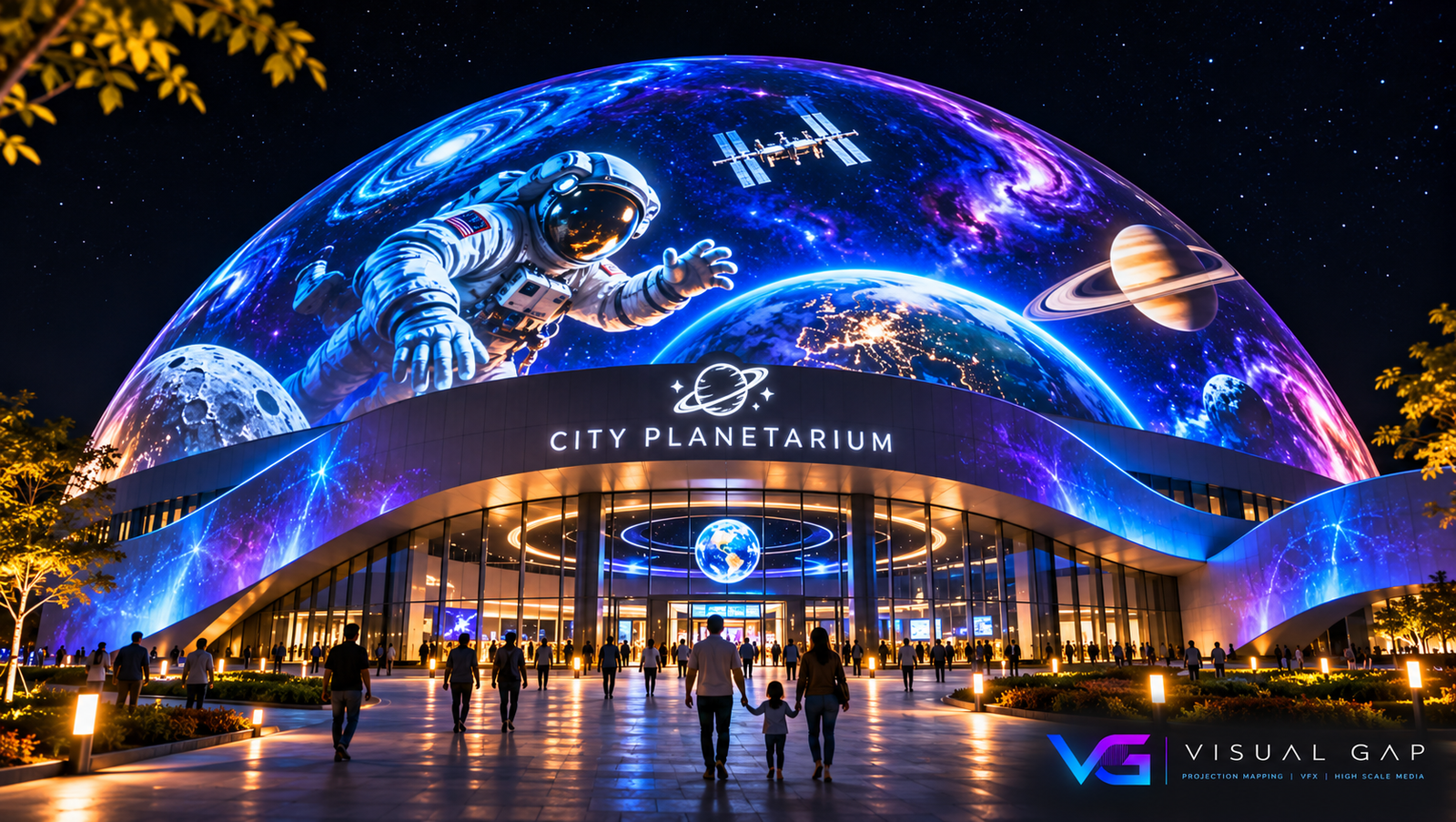
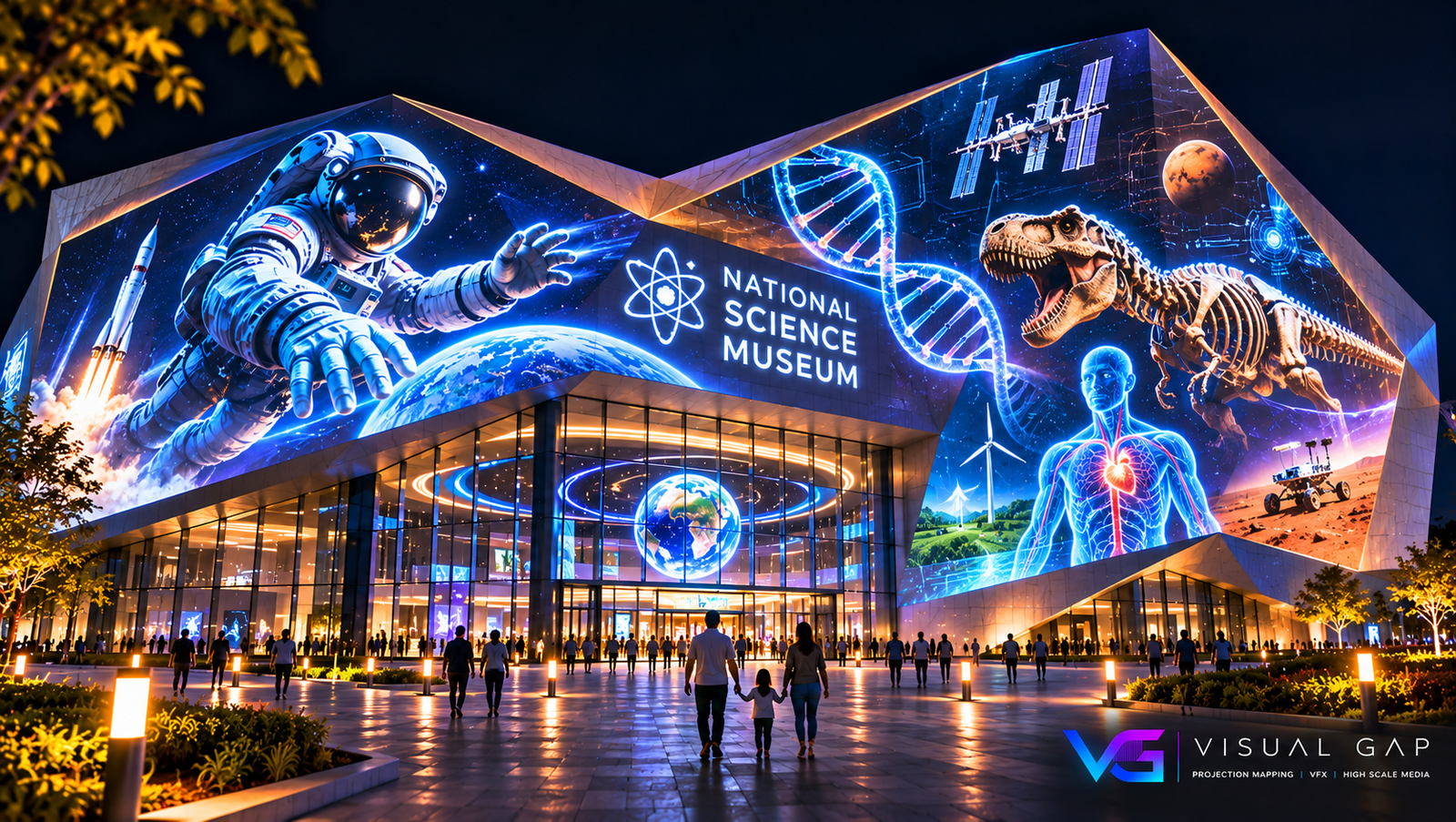
Projection mapping is not limited to historic monuments. Modern buildings, tourism complexes, waterfronts, plazas, and public spaces can also become visual attractions.
A city could use architectural projection mapping during a cultural festival, tourism campaign, anniversary celebration, or major public event.
Large-scale visuals can introduce visitors to a city’s identity and create memorable shared experiences.
Explore our guide to Outdoor Projection Mapping to understand how projection experiences can be designed for exterior environments.
5. Supporting Destination Marketing
Tourism destinations compete for attention across websites, social media, travel platforms, and promotional campaigns. A distinctive projection mapping experience can provide visually compelling material for destination marketing.
Photographs and short videos of a landmark transformed through light and animation can help communicate the destination’s atmosphere and creative identity.
Tourism organisations can incorporate these experiences into:
Destination promotion campaigns
Cultural and heritage festivals
Tourism launch events
City branding initiatives
Visitor attraction promotions
Seasonal celebrations
However, projection mapping should support a broader tourism strategy rather than serve as a standalone marketing solution. Accessibility, transport, visitor services, and the quality of the overall destination experience remain essential.
Popular Applications of Projection Mapping for Tourism
Projection mapping can be adapted to different locations, audiences, and storytelling objectives.
| Application | Possible Experience |
|---|---|
| Heritage tourism | Historical narratives projected onto forts, palaces, and monuments |
| Cultural tourism | Regional traditions, art, music, and folklore |
| Urban tourism | Night-time shows on prominent city buildings |
| Festival tourism | Special projection experiences for cultural celebrations |
| Waterfront attractions | Visual storytelling integrated with suitable waterfront architecture |
| Tourism complexes | Scheduled shows that complement visitor facilities |
| Destination launches | Architectural visuals introducing a new attraction or campaign |
The right application depends on the physical location, visitor profile, available infrastructure, and long-term operating plan.
Projection Mapping for Heritage and Cultural Destinations
Heritage tourism requires a balance between visitor engagement and conservation.
Projection mapping can present stories on existing architectural surfaces without requiring the installation of a conventional display screen across the building’s facade. Nevertheless, the projection system, mounting equipment, cabling, lighting infrastructure, and operating procedures must be planned carefully.
Before developing a heritage projection show, project teams should assess:
The monument’s architectural characteristics
Surface condition and conservation requirements
Permission from the relevant heritage authority
Ambient light and surrounding light pollution
Projector placement and viewing distances
Visitor circulation and crowd management
Audio levels and environmental restrictions
Equipment protection and maintenance access
Projection mapping must comply with the site’s conservation guidelines and applicable permissions. The fact that imagery is projected rather than physically painted does not automatically eliminate conservation concerns.
For a deeper understanding of heritage-focused experiences, explore our upcoming or published guide to Heritage Projection Mapping once its final URL is confirmed.
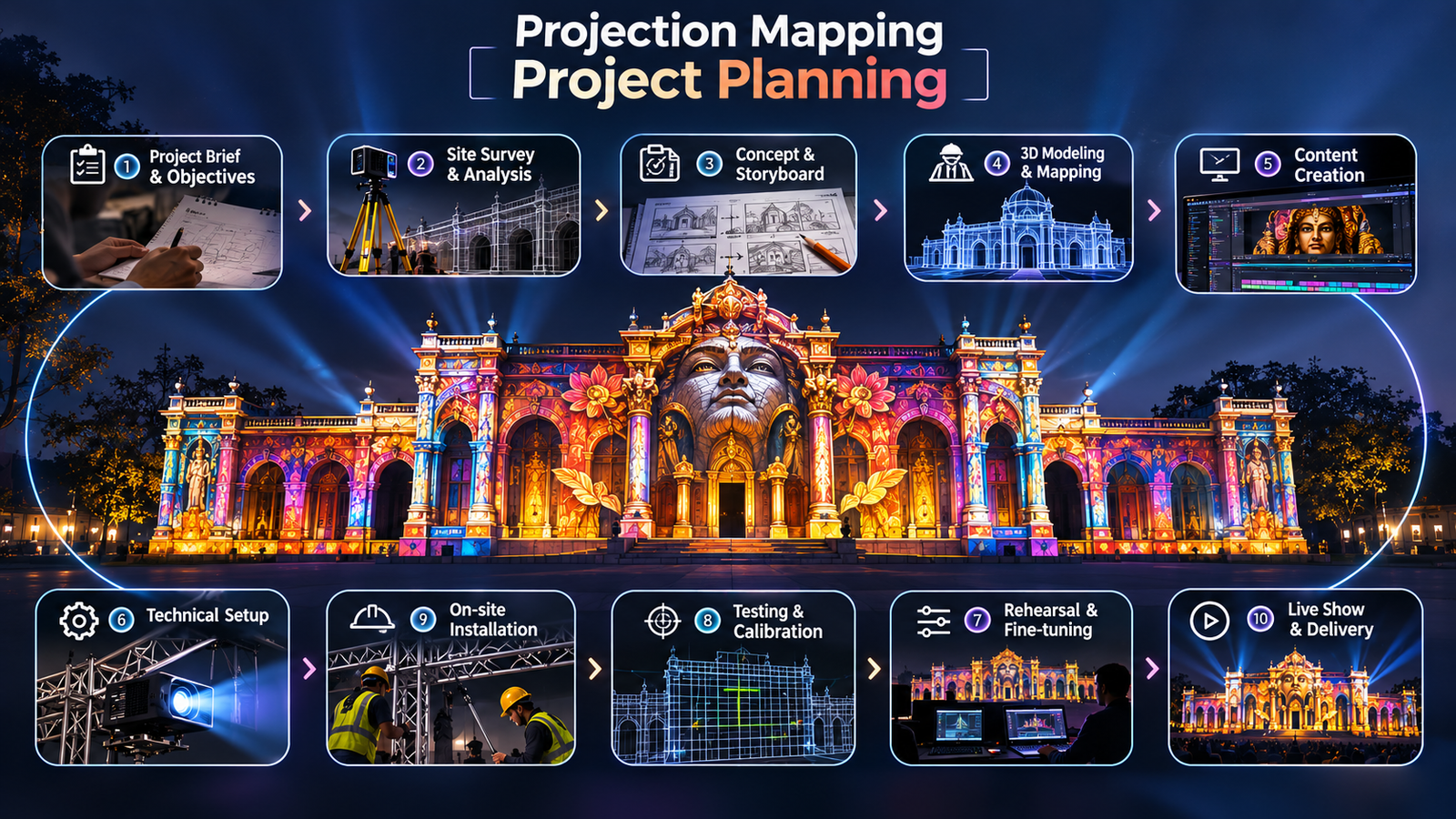
How to Plan a Tourism Projection Mapping Project
A successful tourism projection mapping project requires coordination between creative, technical, operational, and destination-management teams.
Step 1: Define the Tourism Objective
Determine what the experience should achieve. The goal could be heritage education, cultural promotion, visitor engagement, festival programming, or a new evening attraction.
Clear objectives help guide both the creative concept and the technical design.
Step 2: Select the Right Location
Evaluate the building or surface, visibility, viewing angles, visitor capacity, accessibility, ambient lighting, power availability, and equipment installation options.
A visually impressive structure may still be unsuitable if it cannot provide safe viewing conditions or practical projector positions.
Step 3: Develop the Story and Content
The content should reflect the destination’s identity and be appropriate for its audience.
A historical show may require research and consultation with historians. A destination-branding experience may focus on local culture, architecture, landscapes, and future development.
Step 4: Design the Projection System
The technical design considers surface dimensions, projector brightness, resolution, lenses, projection distance, overlap, media servers, playback systems, and environmental conditions.
Multiple projectors may be required to cover a large facade or achieve the intended image quality. The exact configuration depends on the site survey and content requirements.
Step 5: Create and Map the Visuals
Artists develop content according to the building’s geometry and the intended viewing perspective. Mapping and calibration align the imagery with the physical surface.
For a broader explanation of the technology, read our Complete Projection Mapping Guide.
Step 6: Test the Experience On-Site
On-site testing helps identify alignment problems, visibility issues, sound challenges, and operational limitations before public opening.
The team should also test playback reliability, emergency procedures, visitor movement, and the process for starting and ending each show.
Step 7: Plan Long-Term Operations
A tourism attraction may operate for months or years, making maintenance and operational planning important.
Consider staffing, equipment servicing, content updates, weather protection, power consumption, spare equipment, and the process for handling technical failures.
How Much Does Projection Mapping for Tourism Cost?
The cost of a tourism projection mapping project varies considerably. A small temporary installation and a permanent monument show can require very different levels of investment.
Key cost factors include:
Number and specifications of projectors
Projection surface size and complexity
Content duration and creative complexity
Media servers and playback equipment
Installation and structural requirements
Audio systems and control infrastructure
Site surveys, testing, and calibration
Permissions, logistics, and operational support
Maintenance and content updates
Temporary events may involve equipment rental and short-term installation, while permanent attractions may require capital investment in equipment, infrastructure, and long-term support.
There is no single price that applies to every tourism project. A site survey and a clear technical and creative brief are the best starting points.
For more information, read our guide to Projection Mapping Costs.
Is Projection Mapping a Good Investment for Tourism Destinations?
Projection mapping can be valuable when it supports a clear visitor-experience objective and is designed around the destination’s needs.
Potential advantages include stronger storytelling, distinctive evening programming, cultural engagement, and reusable marketing content. Some destinations may also develop ticketed shows or commercial partnerships, depending on visitor demand and the operating model.
However, the investment should be evaluated against equipment and content costs, maintenance, staffing, expected attendance, ticketing or sponsorship opportunities, and the lifespan of the experience.
A well-designed project should be assessed not only by its visual impact but also by its contribution to visitor satisfaction, cultural interpretation, and the destination’s long-term tourism goals.
Conclusion
Projection mapping for tourism offers destinations a creative way to combine architecture, technology, and storytelling. From historic monuments and cultural landmarks to modern buildings and public spaces, it can turn familiar locations into memorable visual experiences.
The most successful projects begin with a clear story, a suitable location, accurate technical planning, and respect for the destination’s cultural and environmental context.
For tourism boards, heritage organisations, and destination developers exploring immersive attractions, projection mapping can become a powerful part of a broader visitor-experience strategy.
Visual GAP develops projection mapping and immersive visual experiences for architectural spaces, cultural environments, museums, and public attractions. Every project begins with understanding the location, the story, and the experience the audience should take away.