Projection Mapping for Weddings: Creating Unforgettable Visual Experiences
Weddings are becoming increasingly personalized, with couples looking for creative ways to make their celebrations memorable. From elaborate stage designs to immersive venue decorations, modern weddings combine lighting, music, architecture, and digital content to create distinctive experiences.
Projection mapping for weddings offers a unique way to transform wedding venues, stages, walls, ceilings, and decorative installations into dynamic visual environments. Instead of relying entirely on conventional decorations, couples can use projected visuals to tell their story, complement the wedding theme, and create memorable moments throughout the celebration.
Whether it is a luxury destination wedding, a grand reception, an intimate celebration, or a themed wedding event, projection mapping can introduce a new dimension to wedding design.
For wedding planners, decorators, event agencies, and luxury venues, this technology creates opportunities to offer more personalized and visually engaging celebrations.
What Is Projection Mapping for Weddings?
Projection mapping is a visual technology that projects digital content onto physical surfaces, adapting the imagery to their shapes, dimensions, and geometry.
Unlike conventional projection onto a flat screen, projection mapping can transform architectural features, stage structures, decorative installations, and suitable physical objects into dynamic visual displays.
At a wedding, projection mapping can be used to create:
Animated wedding stage backgrounds.
Personalized couple storytelling.
Immersive reception environments.
Projection-mapped wedding cakes.
Decorative architectural projections.
Customized visuals for engagement ceremonies.
Themed visuals for wedding entrances and special performances.
The projected content can include animations, cinematic sequences, floral patterns, personalized messages, and visuals designed around the couple’s preferences.
The goal is to complement the wedding’s atmosphere while creating a cohesive visual experience.
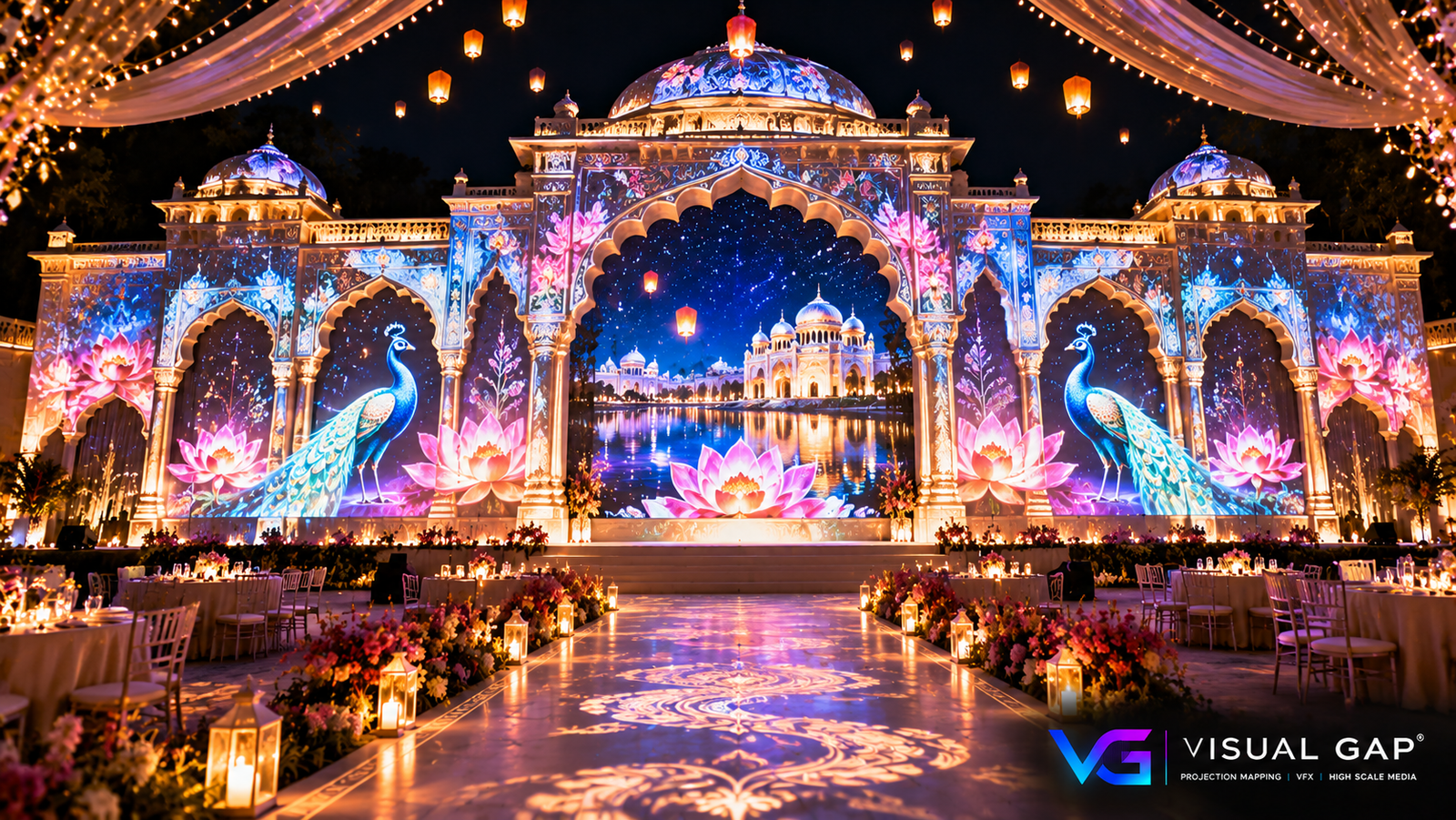
1. Wedding Stage Projection Mapping
The wedding stage is often the focal point of the celebration. It is where the couple is introduced, photographs are taken, and important moments unfold.
Projection mapping can transform a suitable stage structure into a dynamic visual backdrop that changes throughout the event.
For example, an elegant floral theme could transition into animated golden patterns during the couple’s entrance. A contemporary wedding might use abstract motion graphics, while a traditional celebration could feature decorative motifs inspired by regional art and architecture.
Possible applications include:
Personalized stage visuals: Create animations based on the wedding theme, colours, names, or monograms.
Dynamic floral environments: Use projected flowers, leaves, and decorative patterns to complement physical stage decorations.
Cinematic introductions: Design a visual sequence that builds anticipation before the couple enters.
Reception transitions: Change the stage atmosphere between ceremonies, speeches, performances, and celebrations.
The stage surface, surrounding lighting, projector positions, and audience viewing angles must be assessed before the content is created.
Projection mapping works best when the physical stage design and digital visuals are developed together.
2. Personalized Couple Storytelling
Every couple has a unique story. Projection mapping can turn that story into a visual experience that becomes part of the wedding celebration.
A personalized sequence could introduce how the couple met, highlight important milestones, or represent memorable locations and shared interests.
For example, the visuals might begin with an illustrated cityscape, transition into meaningful moments from the couple’s relationship, and conclude with a personalized wedding message.
Content can be designed using:
Custom illustrations and animations.
Photographs and cinematic transitions.
Personalized typography and monograms.
Symbolic landscapes or locations.
Animated decorative elements.
A visual introduction synchronized with music.
The storytelling should be concise and appropriate for the occasion. A short, carefully produced sequence is often more effective than a long presentation that interrupts the event’s flow.
Couples should also ensure they have permission to use any photographs, music, or other third-party material included in the production.
3. Projection Mapping on Wedding Cakes
Wedding cakes can become distinctive visual elements through projection mapping when their shape, surface, and placement are suitable.
Instead of keeping the cake visually static, projected animations can introduce patterns, colours, and decorative effects that change over time.
Potential designs include:
Animated floral arrangements.
Elegant gold and silver patterns.
Seasonal or nature-inspired visuals.
Personalized initials and monograms.
Animated textures that complement the wedding theme.
A coordinated reveal during the cake-cutting ceremony.
Because cakes often have curved surfaces, the content must be designed for their geometry. White or light-coloured surfaces may provide a suitable base, but the actual result depends on surface texture, ambient light, projection distance, and projector brightness.
The projection setup should also be planned with the caterer and venue team to protect food hygiene and avoid obstructing the ceremony.
Projection mapping is a visual effect; it should not involve placing equipment where it creates a safety risk for guests or staff.
4. Immersive Wedding Receptions
For couples planning a luxury reception, immersive projection can extend the visual theme beyond the stage.
Suitable walls, ceilings, architectural features, and custom-built installations can become part of a coordinated visual environment.
Imagine entering a reception space with softly animated floral patterns across selected walls, a ceiling that resembles a night sky, or a visual landscape that complements the evening’s theme.
Depending on the venue, an immersive installation might include:
Romantic garden environments: Project botanical visuals onto suitable surfaces to complement floral decorations.
Starry-night themes: Create celestial visuals for evening receptions.
Royal and heritage-inspired designs: Use decorative motifs and architectural imagery suited to the venue.
Contemporary luxury environments: Introduce abstract visuals and elegant motion graphics.
Seasonal wedding themes: Develop content around the couple’s preferred colours, flowers, or locations.
Before choosing an immersive concept, assess the venue’s ambient lighting, surface colours, available projection positions, and guest movement.
Projection mapping should enhance the room rather than make it difficult for guests to see one another, navigate the space, or enjoy the celebration.
5. Projection Mapping for Wedding Entrances
The couple’s entrance is often one of the most anticipated moments of a wedding celebration.
Projection mapping can support this moment with a carefully timed visual sequence that builds anticipation and complements the accompanying music.
For example, a stage could begin with subtle animations before transitioning into a brighter, personalized reveal as the couple enters.
The visuals might incorporate the wedding monogram, decorative motifs, a cinematic landscape, or graphics inspired by the couple’s story.
Entrance sequences can be synchronized with:
Music and audio cues.
Stage lighting transitions.
The couple’s entrance timing.
LED displays or other event visuals.
Special effects approved for the venue.
Timing is especially important. The technical team should rehearse the sequence with the event coordinator and audio team to ensure that the visuals begin and end at the intended moments.
6. Projection Mapping for Destination Weddings
Destination weddings often take place in distinctive locations such as heritage properties, luxury resorts, palaces, beachfront venues, and landscaped outdoor spaces.
Projection mapping can complement these environments by using suitable architectural features or purpose-built structures as projection surfaces.
For example, a heritage venue might feature carefully designed visuals on an appropriate façade, while a resort reception could use projections on a stage structure or selected interior walls.
Outdoor projection mapping requires particular attention to ambient light, weather, projector protection, power supply, and equipment placement.
The architectural surface must also be assessed for its colour, texture, geometry, and visibility from the audience area.
For suitable buildings and outdoor spaces, Visual GAP’s Outdoor Projection Mapping guide provides additional context on the considerations involved in outdoor installations.
Any projections on heritage properties or protected structures should be planned with the venue owner’s approval and in accordance with applicable restrictions.
7. Projection Mapping vs Traditional Wedding Decorations
Projection mapping and traditional decorations serve different purposes. They can be used independently or combined to create a cohesive wedding design.
| Feature | Projection Mapping | Traditional Decorations |
|---|---|---|
| Visual content | Dynamic digital animations | Primarily physical decorative elements |
| Personalization | Custom animations and visual storytelling | Customized flowers, fabrics, props, and structures |
| Theme changes | Content can change throughout the event | Changes may require physical adjustments |
| Physical presence | Uses projected light on suitable surfaces | Adds tangible materials and structures |
| Installation needs | Projectors, content, calibration, and technical control | Decoration materials, structures, and installation teams |
| Venue requirements | Suitable surfaces, controlled lighting, and projector positions | Adequate space, structural support, and installation access |
| Reusability | Digital content can potentially be reused or adapted | Some decorative elements can be reused, depending on their design |
For many weddings, a hybrid approach provides the best result. Physical flowers, stage structures, and decorative installations can create depth, while projection mapping adds motion, atmosphere, and personalized content.
8. How Much Does Wedding Projection Mapping Cost?
The cost of projection mapping for weddings depends on the scale of the installation, the complexity of the content, and the venue’s technical requirements.
A small stage installation may require a relatively simple setup, while a large destination wedding with multiple projection surfaces and custom animation will need more extensive planning and equipment.
Major cost factors include:
Number and brightness of projectors.
Size and geometry of the projection surfaces.
Custom animation and content production.
Projection mapping and playback equipment.
Installation, calibration, and testing.
Cabling, rigging, and power requirements.
Technical crew and on-site operation.
Event duration and rehearsal schedule.
Transport, accommodation, and logistics.
Weather protection for outdoor installations.
Custom content is an important consideration. A personalized couple-story sequence or a projection-mapped cake animation requires creative development and testing that may not be necessary for a simple decorative projection.
For an accurate quotation, provide the event date, venue, surface measurements, wedding theme, expected programme, and the type of visual experience you want to create.
You can review Visual GAP’s guide to Projection Mapping Costs to understand the main factors that influence projection-based project budgets.
9. How to Plan a Successful Wedding Projection Mapping Experience
A successful installation requires coordination between the creative team, wedding planner, venue, decorators, and technical crew.
Define the Creative Concept
Identify the moments that matter most, such as the couple’s entrance, stage presentation, cake cutting, or reception.
Choose a visual theme that complements the overall wedding design.
Inspect the Venue
Evaluate the available projection surfaces, ambient lighting, ceiling height, projector positions, power supply, and audience viewing angles.
Do not assume that every wall or stage can produce a good projection result.
Develop Custom Content
Prepare the visuals around the actual surface dimensions and the planned sequence of events. Personalized content should be reviewed and approved before the final production.
Coordinate With Other Vendors
Projection mapping should work alongside the lighting, sound, photography, videography, stage design, and event-management teams.
Clear communication helps prevent conflicting lighting cues and timing problems.
Conduct a Technical Rehearsal
Test the content at the venue whenever possible. Check alignment, focus, brightness, colour, playback, and synchronization before guests arrive.
Plan for Reliability
Keep critical equipment accessible and establish backup procedures for playback or power issues. For outdoor events, account for weather and environmental conditions.
Conclusion
Projection mapping for weddings creates opportunities to transform suitable venues and stage structures into personalized visual experiences.
From animated wedding stages and immersive receptions to projection-mapped cakes and cinematic couple storytelling, this technology can add movement and creativity to important moments.
The best results come from combining a strong creative concept with accurate technical planning, custom content, and coordination between the wedding and production teams.
For couples, wedding planners, and luxury venues seeking distinctive visual experiences, projection mapping offers another way to make a celebration feel personal and memorable.
Visual GAP develops projection mapping and immersive visual experiences for events, architectural environments, museums, and exhibitions. By combining creative storytelling with technical execution, Visual GAP helps turn event concepts into carefully designed visual experiences.