Projection Mapping for Luxury Brands: Creating Premium Brand Experiences
Luxury brands are built on more than products. They represent craftsmanship, exclusivity, heritage, innovation, and emotion. From premium fashion houses to luxury watchmakers, jewellery brands, and high-end automobile manufacturers, creating a memorable brand experience is essential to standing out in a competitive market.
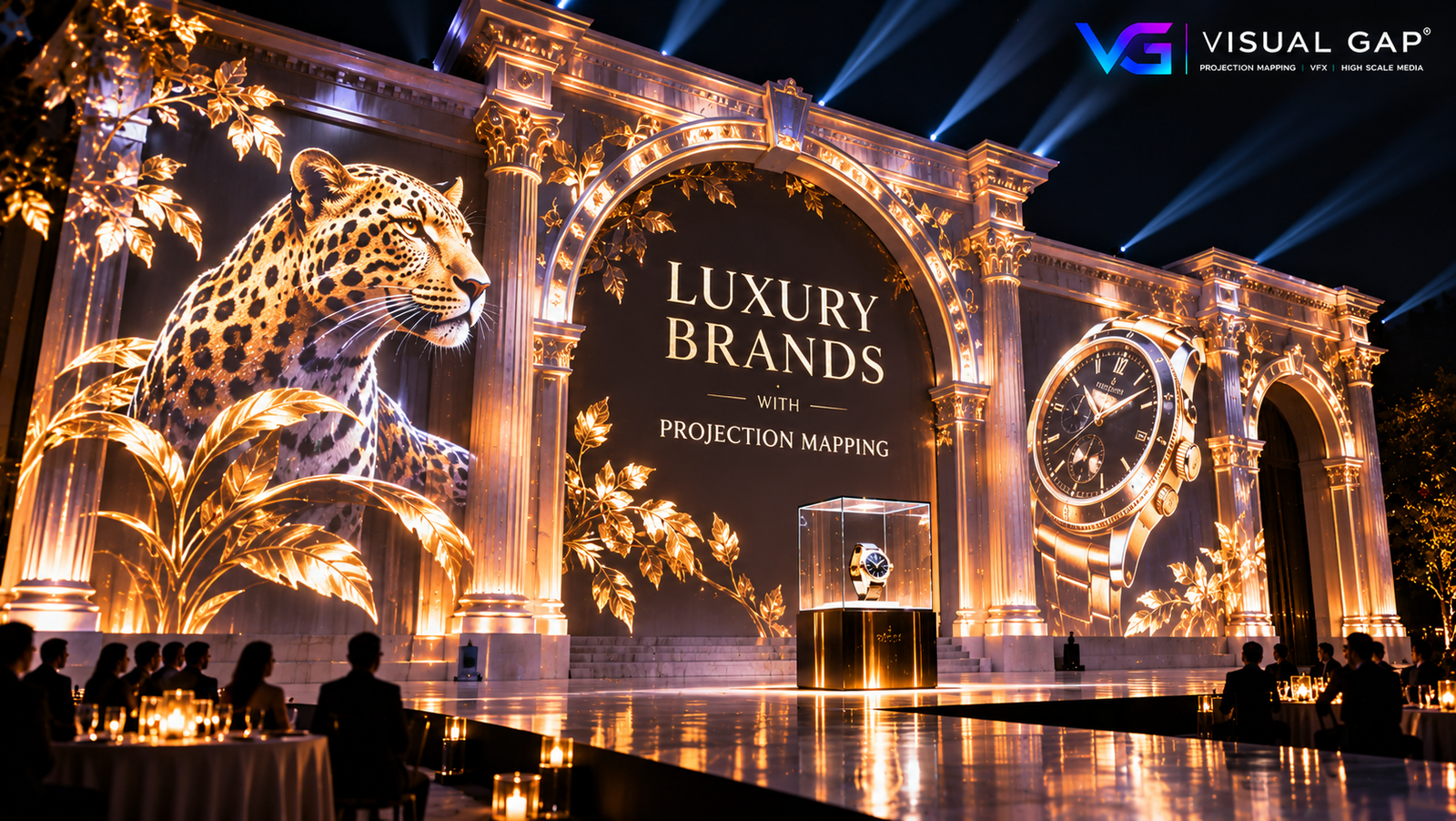
Traditional advertising can communicate a brand’s message, but immersive visual experiences allow audiences to experience it more directly. Projection mapping for luxury brands transforms architectural surfaces, retail environments, product displays, and event spaces into sophisticated visual experiences that capture attention and communicate brand identity.
At Visual GAP, projection mapping and immersive visual storytelling can help luxury brands turn physical spaces into memorable brand experiences.
What Is Projection Mapping for Luxury Brands?
Projection mapping is a visual technology that uses specialised projectors to display digital content on physical surfaces. Unlike conventional projection on a flat screen, mapped content is designed around the shape, dimensions, and features of a specific object or environment.
For luxury brands, this technology can transform:
Flagship store facades and interiors
Premium product displays
Fashion show stages and runways
Luxury watches and jewellery showcases
Exhibition booths and experiential installations
Architectural spaces used for exclusive brand events
Temporary pop-up stores and product launch venues
The content can range from subtle lighting effects and elegant animations to detailed 3D illusions that make products appear to transform, unfold, or emerge from their surroundings.
The objective is not simply to create a spectacular visual display. It is to communicate the brand’s personality through a carefully designed visual experience.
Why Luxury Brands Are Using Projection Mapping
1. Creating Exclusive Brand Experiences
Exclusivity is a defining characteristic of luxury marketing. A carefully designed projection mapping installation can create an environment that feels unique to a particular product, collection, or event.
For example, a luxury fashion brand launching a new collection could transform the walls of its venue into an evolving visual narrative inspired by the collection’s materials, colours, craftsmanship, and creative direction.
Every visual element can be customised to the brand, making the experience more distinctive than a standard presentation.
2. Communicating Brand Heritage Through Visual Storytelling
Many luxury brands have a rich history spanning decades or even centuries. Projection mapping provides an opportunity to present that heritage in a visually engaging way.
A brand could use architectural projection mapping to tell the story of its origins, showcase traditional craftsmanship, or illustrate how its products have evolved over time.
Through carefully paced animation, sound design, and visual transitions, audiences can experience the journey behind a brand rather than simply reading about it on a display panel.
3. Making Product Launches More Memorable
Luxury product launches require a strong visual identity. Whether introducing a premium watch, designer handbag, jewellery collection, perfume, or fashion line, the launch environment plays an important role in shaping audience perception.
Projection mapping can reveal a product through a sequence of visual transformations. A seemingly ordinary presentation surface can dissolve into digital textures, reveal product details, or create the illusion that a physical object is changing form.
This approach can make the reveal itself a central part of the event’s narrative.
4. Supporting Premium Brand Positioning
Luxury experiences often depend on attention to detail. Projection mapping can support this positioning through refined animation, controlled lighting, carefully selected colour palettes, and precise synchronisation.
The most effective installations do not necessarily use the brightest projectors or the most complicated effects. Instead, they combine visual restraint with strong creative direction.
A minimal visual sequence, subtle movement across architectural surfaces, or a carefully timed product reveal can be more effective than an overwhelming display of effects.
Applications of Projection Mapping in Luxury Marketing
1. Luxury Product Launches
Product launches are one of the most compelling applications of projection mapping.
For a luxury watch launch, projections could reveal the movement of internal mechanisms, highlight the craftsmanship of the dial, or illustrate the materials used in the design.
For a premium fragrance launch, the visuals might communicate scent through abstract forms, flowing textures, landscapes, and atmospheric transitions.
The projection content should support the product’s identity and enhance the reveal without distracting from the actual item.
2. Flagship Stores and Luxury Retail
Flagship stores are physical expressions of a luxury brand’s identity. Projection mapping can enhance these spaces through temporary installations, seasonal campaigns, and immersive product presentations.
Possible applications include:
Architectural projections on storefronts
Interactive visual installations inside retail spaces
Digital storytelling around featured collections
Immersive displays for limited-edition products
Seasonal visual experiences for major shopping periods
Projection mapping can also help brands refresh a retail environment for a campaign without permanently changing its architecture.
The installation must be designed around customer movement, product visibility, ambient lighting, and the store’s overall atmosphere.
3. Fashion Shows and Designer Presentations
Fashion shows increasingly combine clothing, lighting, music, stage design, and digital media to create a unified experience.
Projection mapping can transform runways, walls, floors, and set pieces into dynamic environments that complement a designer’s collection.
For example, a collection inspired by nature could use evolving organic textures, landscapes, and atmospheric effects. A futuristic collection might incorporate geometric structures and precise digital motion.
The content should remain synchronised with the show’s timing and allow the audience to focus on the garments.
4. Luxury Jewellery and Watch Exhibitions
Jewellery and watch exhibitions depend on detail, presentation, and atmosphere. Projection mapping can create a supporting visual environment that communicates the precision and craftsmanship behind each product.
Small-scale product mapping, carefully designed display environments, and architectural projections can work together to create a cohesive exhibition.
However, lighting must be planned carefully. Projections should not overpower reflective surfaces or interfere with the visibility of the jewellery itself.
5. Luxury Hotels and Exclusive Events
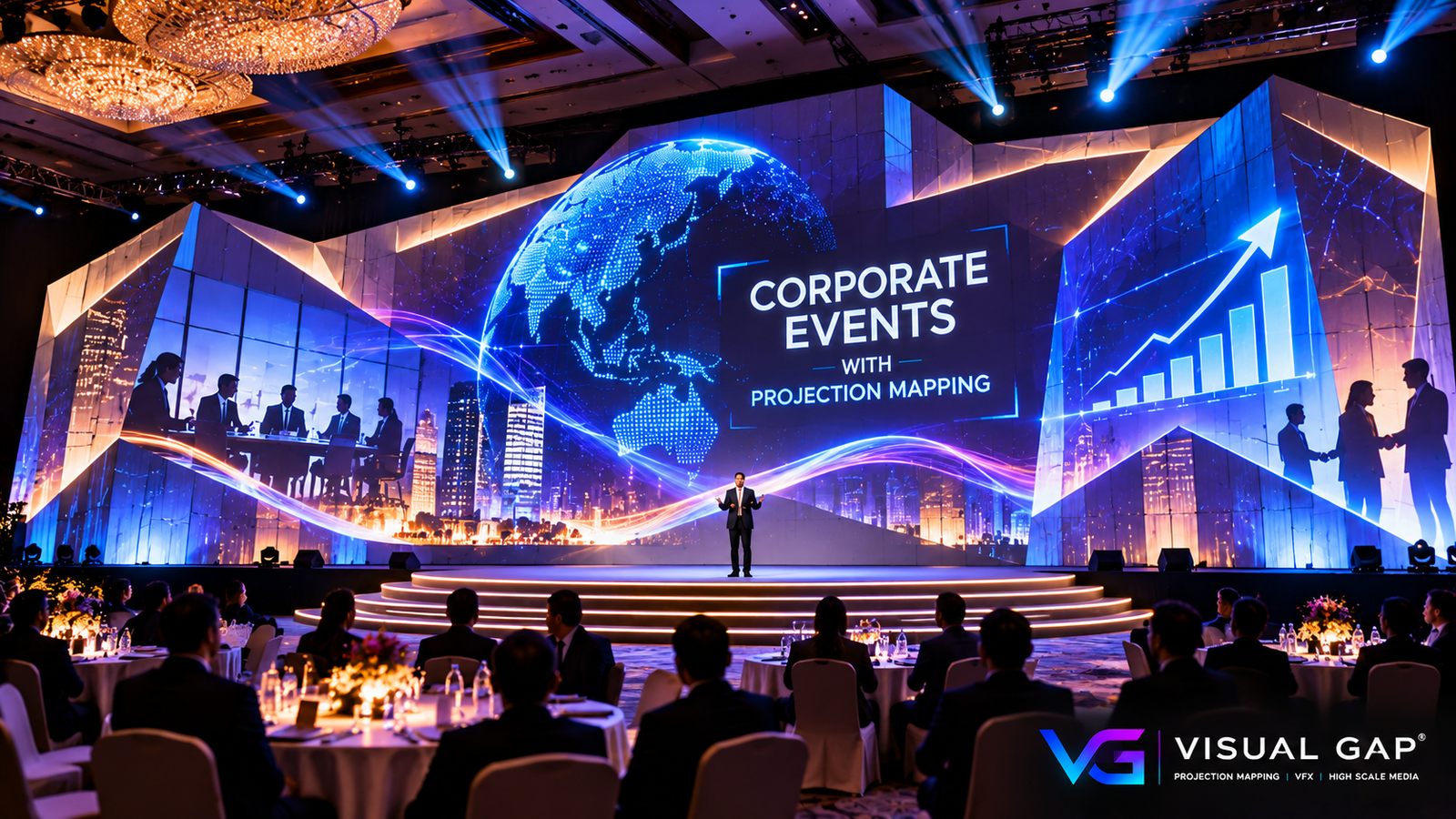
Luxury hotels, private venues, and premium hospitality spaces can use projection mapping for brand activations, gala dinners, collection launches, and invitation-only events.
Mapped visuals can transform walls, architectural features, or custom-built installations into an environment that reflects the event’s theme.
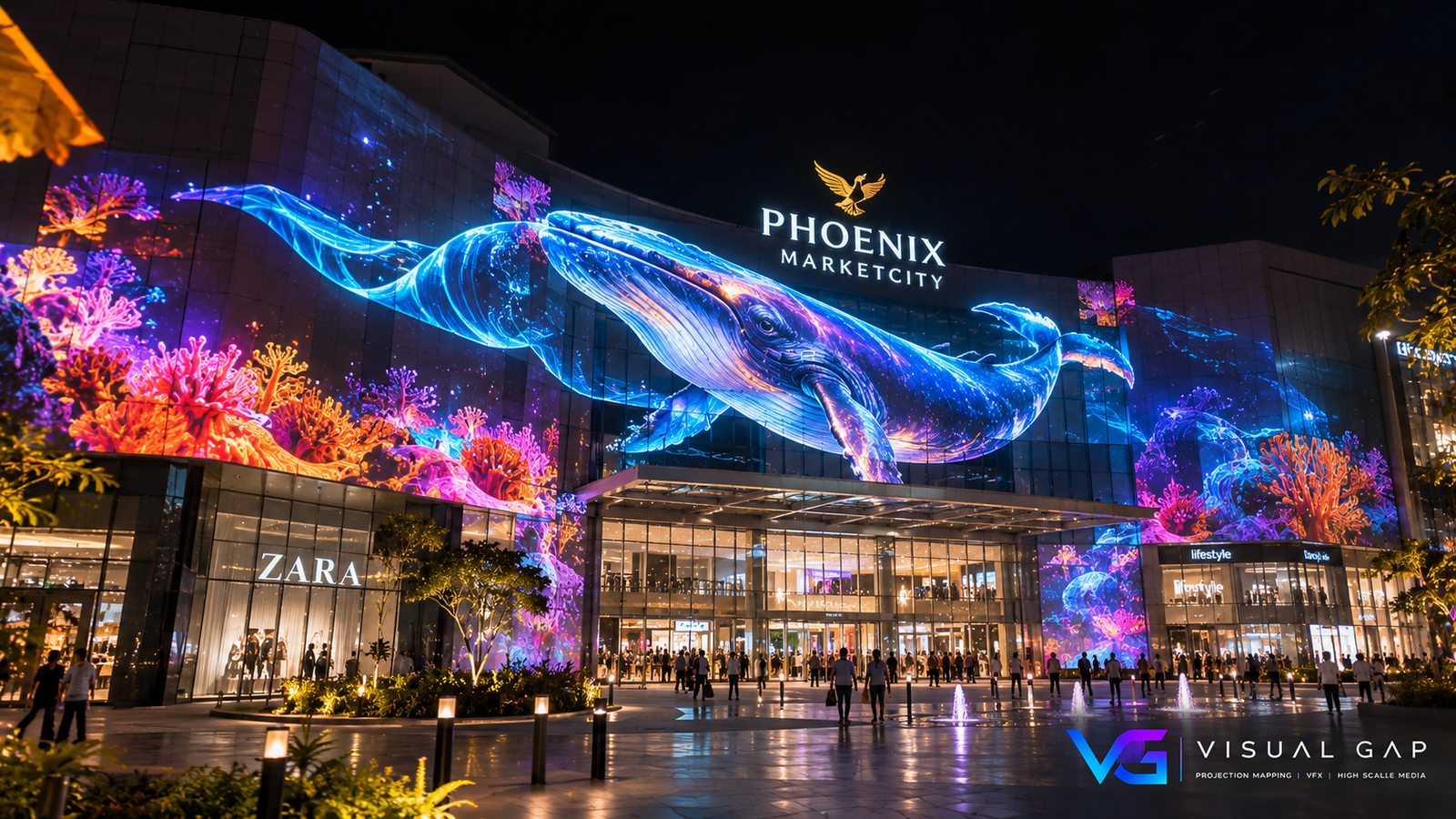
For more ideas, explore Visual GAP’s guide to Outdoor Projection Mapping, which explains how projection technology can be applied to larger exterior environments.
6. Experiential Marketing Campaigns
Experiential marketing allows audiences to engage with a brand through a physical experience rather than only through traditional advertising.
Luxury brands can use projection mapping to create temporary installations in prominent locations, immersive exhibition environments, and campaign-specific experiences.
When the visuals are distinctive and the experience is well executed, visitors may also choose to photograph and share the installation, extending its reach beyond the physical venue.
However, social sharing should be treated as a potential benefit rather than a guaranteed marketing outcome.
3D Projection Mapping for Luxury Products
Three-dimensional projection mapping can create the illusion that a physical object is changing shape, opening, breaking apart, or transforming into another form.
For luxury brands, this technique can be particularly effective for product reveals and high-impact presentations.
Imagine a premium perfume bottle placed on a custom display. The projection begins with subtle reflections and abstract textures before revealing the bottle’s design through a sequence of visual transformations.
Alternatively, a luxury watch could appear to separate into its individual components before the animation brings them together into the finished product.
These effects require accurate content design, precise alignment, suitable projection equipment, and a physical object or surface that supports the intended illusion.
Learn more about the technical differences in our guide to 2D vs 3D Projection Mapping.
Projection Mapping vs LED Walls for Luxury Brand Events
Projection mapping and LED walls can both create premium visual environments, but they serve different purposes.
Projection mapping is particularly useful when the physical surface is an important part of the experience. It can integrate visuals with architecture, custom-shaped objects, and existing structures.
LED walls are often preferable when the event requires a bright, consistent image on a dedicated display surface, especially in environments with substantial ambient light.
| Feature | Projection Mapping | LED Wall |
|---|---|---|
| Surface integration | Can map onto architectural features and 3D objects | Usually displayed on a constructed screen |
| Creative flexibility | High for shaped surfaces and spatial illusions | High for screen-based content |
| Ambient light | Performance depends strongly on lighting conditions | Generally performs well in brighter environments |
| Installation | Requires projector positioning, mapping, and calibration | Requires LED panels, structural support, and configuration |
| Luxury applications | Product illusions, architecture, immersive spaces | Presentations, high-brightness displays, digital backdrops |
The right solution depends on the venue, creative concept, visibility requirements, and production budget.
Read our detailed comparison of Projection Mapping vs LED Wall before selecting the display technology for a luxury brand activation.
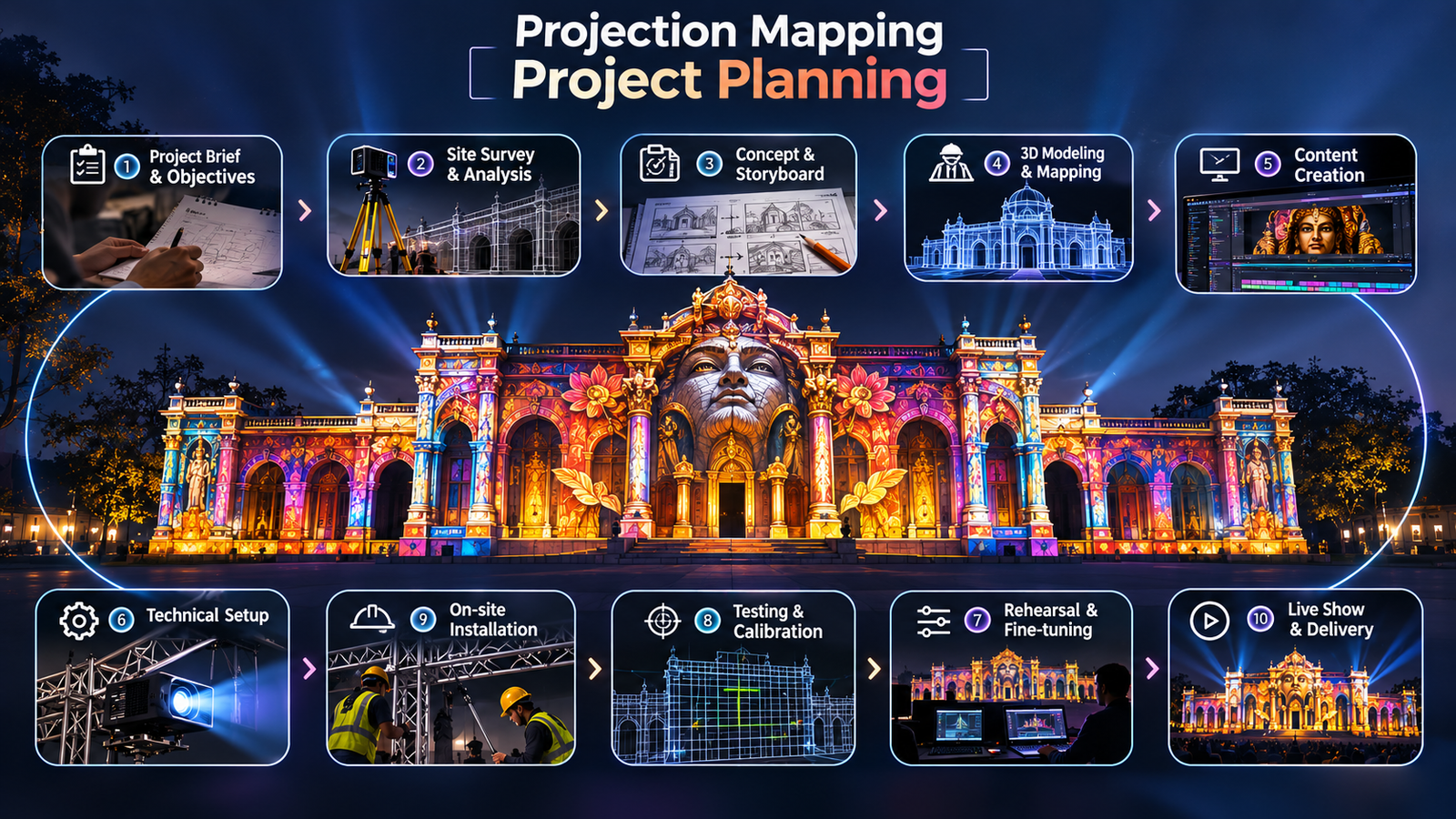
How to Plan a Luxury Projection Mapping Experience
A successful installation requires coordination between creative, technical, and event-production teams.
Step 1: Define the Brand Objective
Determine whether the installation is intended to launch a product, communicate heritage, attract visitors, or create an immersive event environment.
The objective will influence the narrative, visual style, and technical approach.
Step 2: Select the Right Surface
The architecture, product dimensions, surface material, and viewing angles all influence the final result.
A product display requires different planning from a building facade or a large immersive room.
Step 3: Develop a Creative Concept
Create a visual narrative that reflects the brand’s identity. Establish the colour palette, animation style, pacing, music, transitions, and product-reveal sequence.
Step 4: Choose the Projection Technology
Projector brightness, resolution, lens selection, throw distance, and the number of projectors must be determined according to the venue and surface.
For installations involving multiple projectors, edge blending, geometric alignment, and colour matching may also be necessary.
Step 5: Produce and Test the Content
The animation should be created for the actual mapped surface rather than designed as a generic video.
Technical rehearsals help identify alignment problems, unwanted shadows, visibility issues, and timing inconsistencies before the event opens.
Step 6: Coordinate the Complete Experience
Projection content should work with the event’s lighting, music, staging, audience movement, and product presentation.
A technically impressive installation can still feel disconnected if these elements are not planned together.
How Much Does Projection Mapping for Luxury Brands Cost?
The cost of a luxury projection mapping installation depends on its scale and creative complexity.
Key cost factors include:
Number and brightness of projectors
Projection surface dimensions and complexity
Custom animation and 3D content production
Mapping, media-server, and playback requirements
Installation, calibration, and technical rehearsals
Venue access, equipment transport, and event duration
Crew requirements and operational support
A small product-display installation may require a very different budget from a large architectural projection or a multi-surface immersive launch.
For a clearer understanding of budgeting, read our guide to How Much Does Projection Mapping Cost?.
The best approach is to define the creative ambition, inspect the venue, and develop a technical plan before finalising the quotation.
The Future of Projection Mapping in Luxury Marketing
As brands continue to invest in physical experiences, projection mapping offers a flexible way to combine architecture, storytelling, product presentation, and digital creativity.
Its value lies in the connection between a brand’s message and the physical environment. Rather than placing content on a screen, projection mapping can make the surroundings part of the story.
For luxury brands, this creates opportunities to communicate craftsmanship, exclusivity, and innovation through experiences designed around a specific product, collection, or location.
The strongest installations will be those in which technology supports the brand’s identity instead of competing with it.
Create a Premium Brand Experience with Visual GAP
Visual GAP specialises in projection mapping, immersive visual experiences, architectural projections, and custom visual content for events and physical spaces.
Whether you are planning a luxury product launch, a flagship-store activation, a fashion presentation, or an immersive brand experience, the right combination of creative storytelling and technical planning can transform your concept into a memorable installation.
Looking to create a projection mapping experience for your luxury brand? Contact Visual GAP to discuss your concept, venue, and production requirements.