Heritage Projection Mapping: Bringing History to Life Through Light
Heritage sites preserve the stories of civilizations, cultures, architecture, and important historical events. However, communicating these stories to modern audiences can be challenging when visitors rely primarily on information boards, photographs, and guided tours.
Heritage projection mapping offers another way to interpret historical places. By projecting carefully designed visuals onto architectural surfaces, monuments, and exhibition structures, it combines digital storytelling with the physical environment.
From historic forts and palaces to cultural landmarks and heritage museums, this technology can help visitors explore the past through animation, sound, and immersive visual experiences.
In this guide, we explore how heritage projection mapping works, where it can be used, and what to consider when planning a project.
What Is Heritage Projection Mapping?
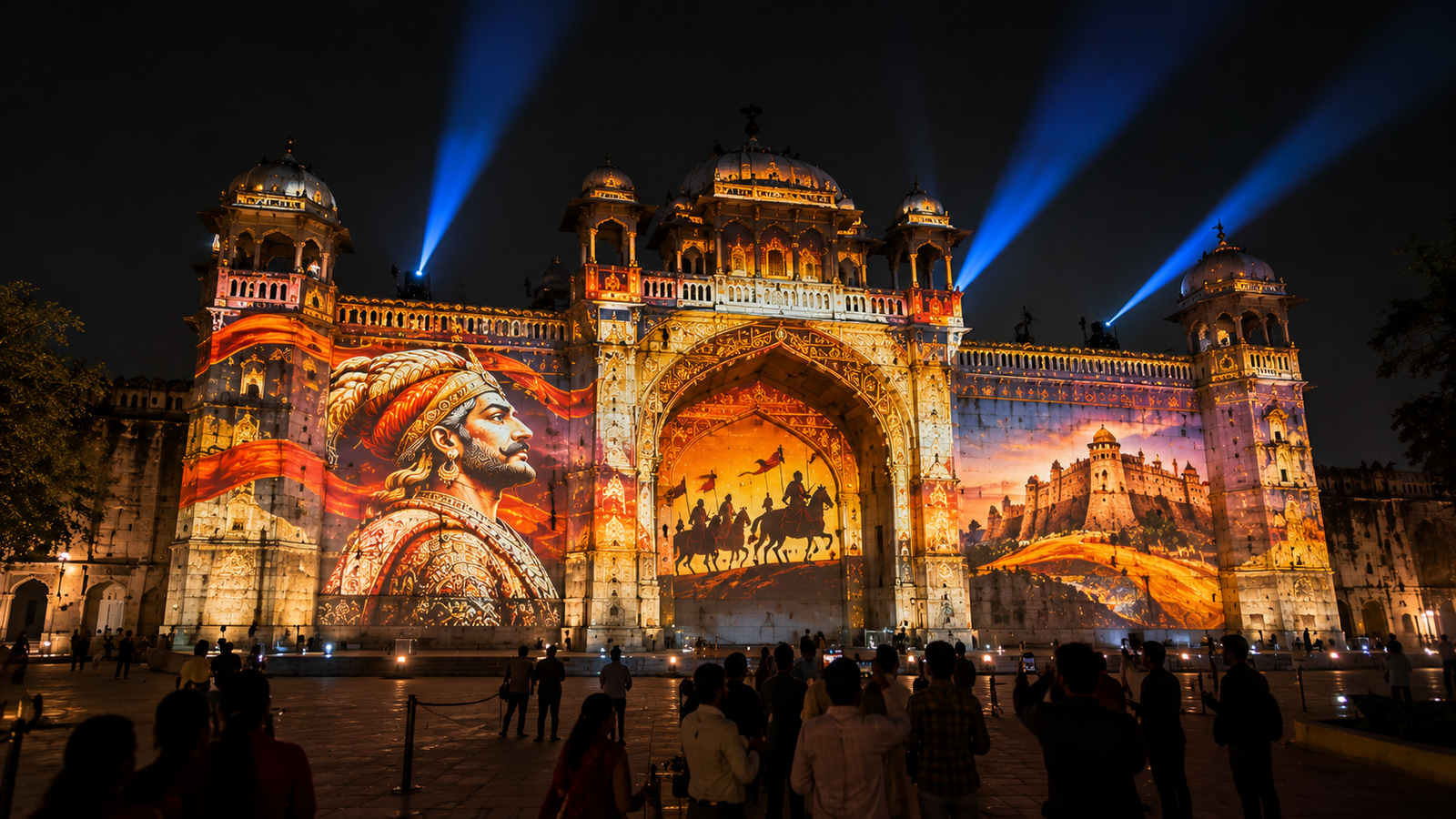
Heritage projection mapping is a visual storytelling technique that uses projectors to display digital content on historic buildings, monuments, architectural structures, or exhibition surfaces associated with cultural heritage.
Unlike conventional video displays, projection mapping aligns digital content with the shape and features of the target surface.
Architectural details such as arches, columns, walls, and domes can become part of the narrative. Animation can illustrate historical events, architectural changes, cultural traditions, or the evolution of a location.
For example, a heritage fort could feature a visual timeline showing its construction, important historical periods, and cultural significance.
For a broader introduction to the technology, explore our Complete Projection Mapping Guide.
How Does Heritage Projection Mapping Work?
A heritage projection mapping project combines historical research, creative content development, and technical planning.
1. Research and Historical Documentation
The process begins with understanding the site’s history and identifying the story that the experience should communicate.
Research may involve historical records, photographs, architectural documentation, museum archives, and consultations with historians or cultural experts.
The objective is to develop a narrative that is engaging while remaining faithful to reliable historical information.
2. Site Survey and Architectural Analysis
The project team examines the monument’s dimensions, geometry, surface condition, surroundings, and available projector positions.
Photographs, architectural drawings, measurements, and digital models may be used to understand the structure.
This stage also helps identify access restrictions, ambient lighting, potential obstructions, and conservation requirements.
3. Visual Content Production
Artists create animation and visual sequences based on the historical narrative.
Depending on the project, content may include:
Historical reconstructions
Architectural transformations
Animated timelines
Archival photographs
Maps and geographical visualisations
Cultural illustrations
Motion graphics and visual effects
The content is designed to complement the architecture and help visitors follow the story.
4. Projection Design and Mapping
Projectors are selected according to the site’s dimensions, brightness requirements, projection distances, and environmental conditions.
Mapping software is then used to align the content with the monument’s physical features.
Large structures may require multiple projectors, image warping, and edge blending to achieve the desired coverage.
5. Testing and Presentation
The final stage includes testing image alignment, playback, sound, visibility, and the visitor experience.
Outdoor installations also require appropriate environmental protection, safe equipment placement, and contingency planning.
To learn more about the technical process, read How Does Projection Mapping Work?.
Applications of Heritage Projection Mapping
1. Historic Forts and Palaces
Forts and palaces often have distinctive architectural features and rich histories that can support compelling visual narratives.
Projection mapping can illustrate historical periods, architectural development, important events, and cultural traditions associated with a site.
The content should reflect the monument’s documented history and respect its cultural significance.
2. Temples and Religious Heritage Sites
Projection mapping may be used at suitable religious and cultural heritage sites to communicate architectural history, traditional stories, and cultural significance.
However, the approach must be sensitive to the site’s religious importance, conservation rules, local customs, and visitor expectations.
Any installation should follow the relevant permissions and operational requirements.
3. Heritage Museums
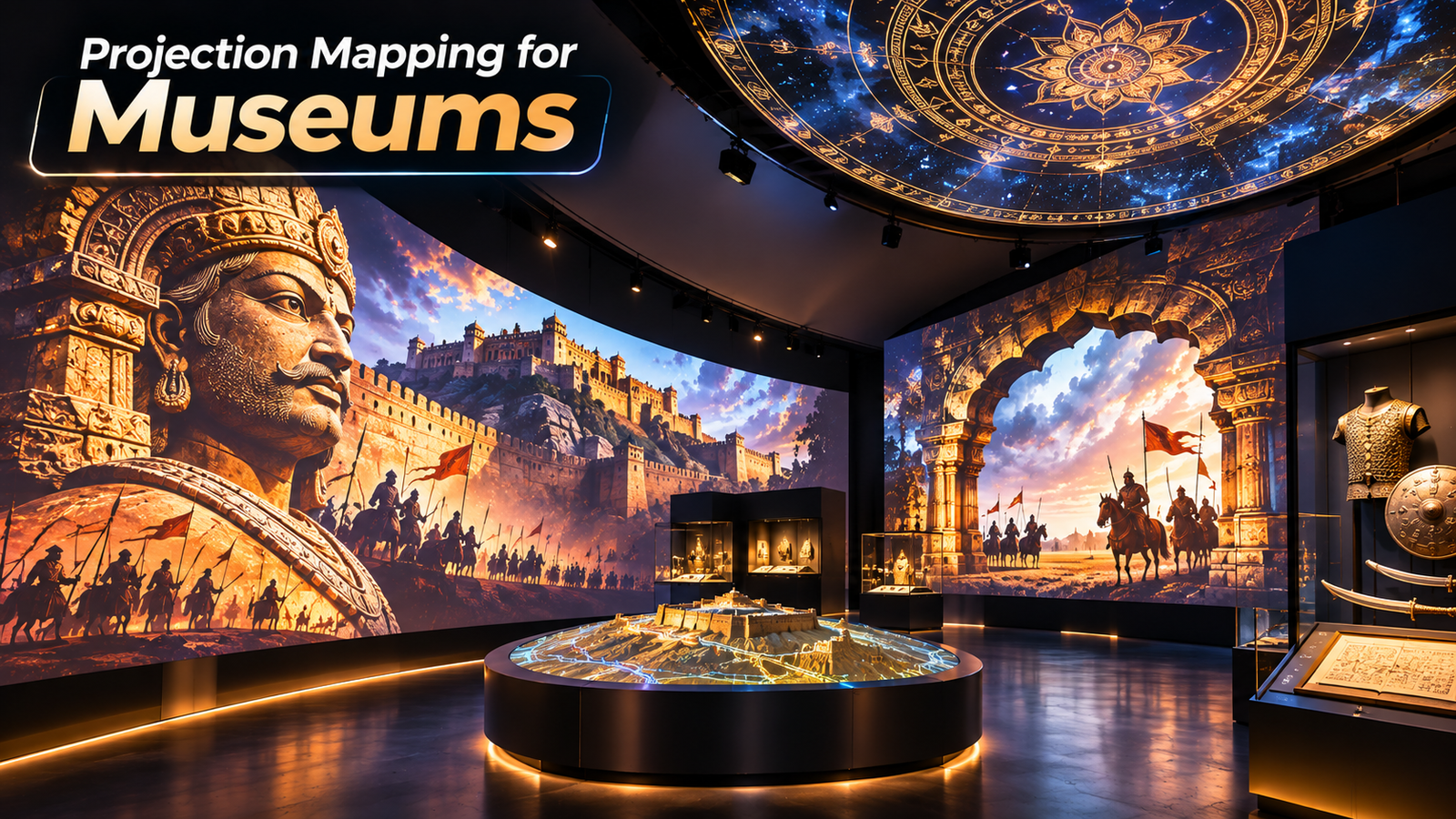
Museums can combine physical exhibits with projection-based storytelling to provide additional context.
A historical model, architectural reconstruction, or exhibition wall can display animated information that helps visitors understand how a place or object changed over time.
Explore our article on Projection Mapping for Museums.
4. Cultural Festivals and Tourism
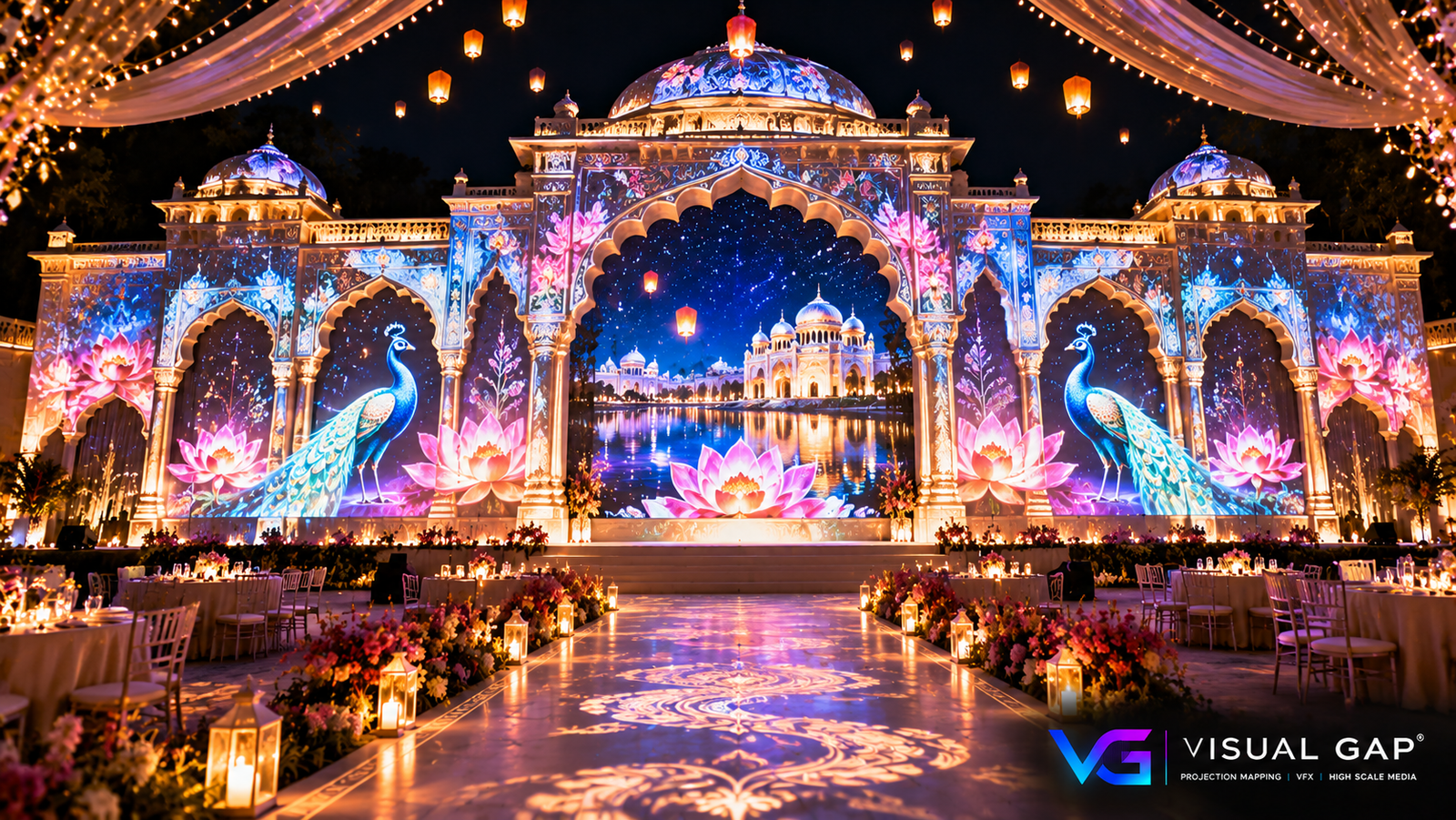
Tourism organisations and cultural institutions can use heritage projection mapping to develop special evening experiences, educational programmes, and public events.
A well-designed presentation can help communicate the identity of a destination while giving visitors another way to engage with its history.
5. Archaeological and Historical Interpretation
Projection mapping can support the interpretation of archaeological sites and historical structures by illustrating reconstructed environments, architectural features, or historical timelines.
Digital reconstructions should be clearly distinguished from established historical facts when the evidence is incomplete or interpretations remain uncertain.
Benefits of Heritage Projection Mapping
Engaging Historical Storytelling
Animation, sound, and visual transitions can help audiences follow complex historical narratives.
Instead of presenting information only through text, the experience can show how places, structures, and events relate to one another.
Improved Visitor Engagement
A carefully designed projection experience can encourage visitors to spend more time exploring a heritage site.
The content should support learning and appreciation rather than rely solely on spectacle.
Visualisation of Historical Changes
Projection mapping can illustrate architectural development, reconstructed environments, and changes across different historical periods.
This can be especially useful when physical structures have been altered or only partially survive.
Flexible Digital Content
Digital content can be revised when exhibitions change or new historical material becomes available.
Updates still require appropriate research, production, testing, and approval, but they may be easier than modifying permanent physical displays.
Support for Cultural Tourism
Heritage projection shows can become part of a destination’s visitor programme when they complement the site’s history and conservation needs.
Their long-term value depends on content quality, operational planning, accessibility, and sustainable management.
Technical Challenges in Heritage Projection Mapping
Complex Architecture
Irregular surfaces, deep recesses, columns, and decorative details can complicate image alignment and projection coverage.
Detailed surveys and carefully planned projector positions help address these challenges.
Ambient Light
Streetlights, nearby buildings, and surrounding illumination can reduce image contrast.
Projector brightness and show timings should be selected according to the actual site conditions.
Weather and Equipment Protection
Outdoor installations may be exposed to rain, dust, humidity, and changing temperatures.
Equipment protection, safe cable routing, and weather contingency procedures should be included in the technical plan.
Heritage Conservation
Historic structures may have strict restrictions on mounting equipment, routing cables, or making physical alterations.
The installation should follow the site’s conservation requirements and use approved methods.
Historical Accuracy
Visual effects can make a story engaging, but inaccurate reconstructions may misrepresent the heritage being presented.
Research, expert consultation, and appropriate review processes help maintain historical credibility.
For a detailed look at outdoor technical issues, read our Outdoor Projection Mapping guide.
How to Plan a Heritage Projection Mapping Project
A successful project requires coordination between creative teams, technical specialists, site managers, and relevant cultural or heritage authorities.
Step 1: Define the objective. Determine whether the experience is intended for education, tourism, cultural storytelling, or a special event.
Step 2: Research the heritage site. Gather reliable historical information and identify the key narrative.
Step 3: Conduct a site survey. Document the architecture, lighting conditions, projector positions, audience areas, and access restrictions.
Step 4: Develop the creative concept. Create a narrative structure and decide how visuals, animation, and audio will communicate the story.
Step 5: Design the technical system. Select projectors, lenses, mapping software, playback systems, and audio equipment according to the site’s requirements.
Step 6: Confirm permissions and conservation requirements. Coordinate with the appropriate authorities and site managers before installation.
Step 7: Install and calibrate. Align the projection with the architecture and test the content under realistic conditions.
Step 8: Establish operational procedures. Plan maintenance, show scheduling, visitor safety, technical monitoring, and future content updates.
How Much Does Heritage Projection Mapping Cost?
The budget depends on the scale of the site, content complexity, equipment requirements, and project duration.
Major cost factors include:
Site survey and technical design
Projector quantity, brightness, and lens specifications
Historical research and custom animation
3D modelling and visual effects
Media servers and playback systems
Audio equipment
Installation and calibration
Permissions, logistics, and technical support
Maintenance and operational requirements
A small heritage exhibit will have different requirements from a large outdoor monument show with multiple projectors and custom 3D animation.
For a general overview of pricing factors, see our Projection Mapping Cost Guide.
Conclusion
Heritage projection mapping brings together cultural storytelling, architecture, animation, and projection technology to create engaging ways of interpreting history.
When planned responsibly, it can help visitors understand historical events, appreciate architectural details, and connect with the cultural significance of a place.
The strongest projects balance creative presentation with historical accuracy, technical reliability, accessibility, and heritage conservation.
At Visual GAP, we combine visual storytelling, content production, projection planning, and technical execution to develop experiences for monuments, museums, architectural environments, and immersive spaces.
By starting with the story and respecting the site, heritage projection mapping can turn historical architecture into a meaningful visual experience.
Frequently Asked Questions
What is heritage projection mapping?
Heritage projection mapping uses digital projections on historic buildings, monuments, and cultural spaces to communicate history and heritage through visual storytelling.
Can projection mapping be used on protected monuments?
It may be possible, depending on the site’s status and applicable rules. The project team must confirm permissions and conservation requirements before planning an installation.
Does heritage projection mapping require 3D animation?
Not always. Projects may use 2D animation, motion graphics, archival imagery, 3D reconstruction, or a combination of techniques depending on the story and the architecture.
Can heritage projection mapping support tourism?
Yes. It can complement heritage interpretation and cultural tourism programmes when the experience is appropriate for the site and supported by sound operational planning.
How do you ensure historical accuracy?
Use reliable research, credible historical references, and expert consultation where appropriate. Clearly distinguish documented facts from artistic interpretations or uncertain reconstructions.