Projection Mapping for Events: Transforming Venues into Immersive Experiences
Events today are about more than stages, lighting, and large screens. Brands, event organisers, and creative agencies are increasingly looking for innovative ways to capture attention and create memorable experiences. Projection mapping for events offers a powerful way to transform stages, buildings, set designs, and physical objects into dynamic visual environments.
By combining animation, architectural surfaces, motion graphics, sound, and storytelling, projection mapping can turn an ordinary venue into an extraordinary visual experience.
From corporate conferences and product launches to concerts, festivals, and private celebrations, this technology gives event designers new ways to communicate messages and engage audiences.
What Is Projection Mapping for Events?
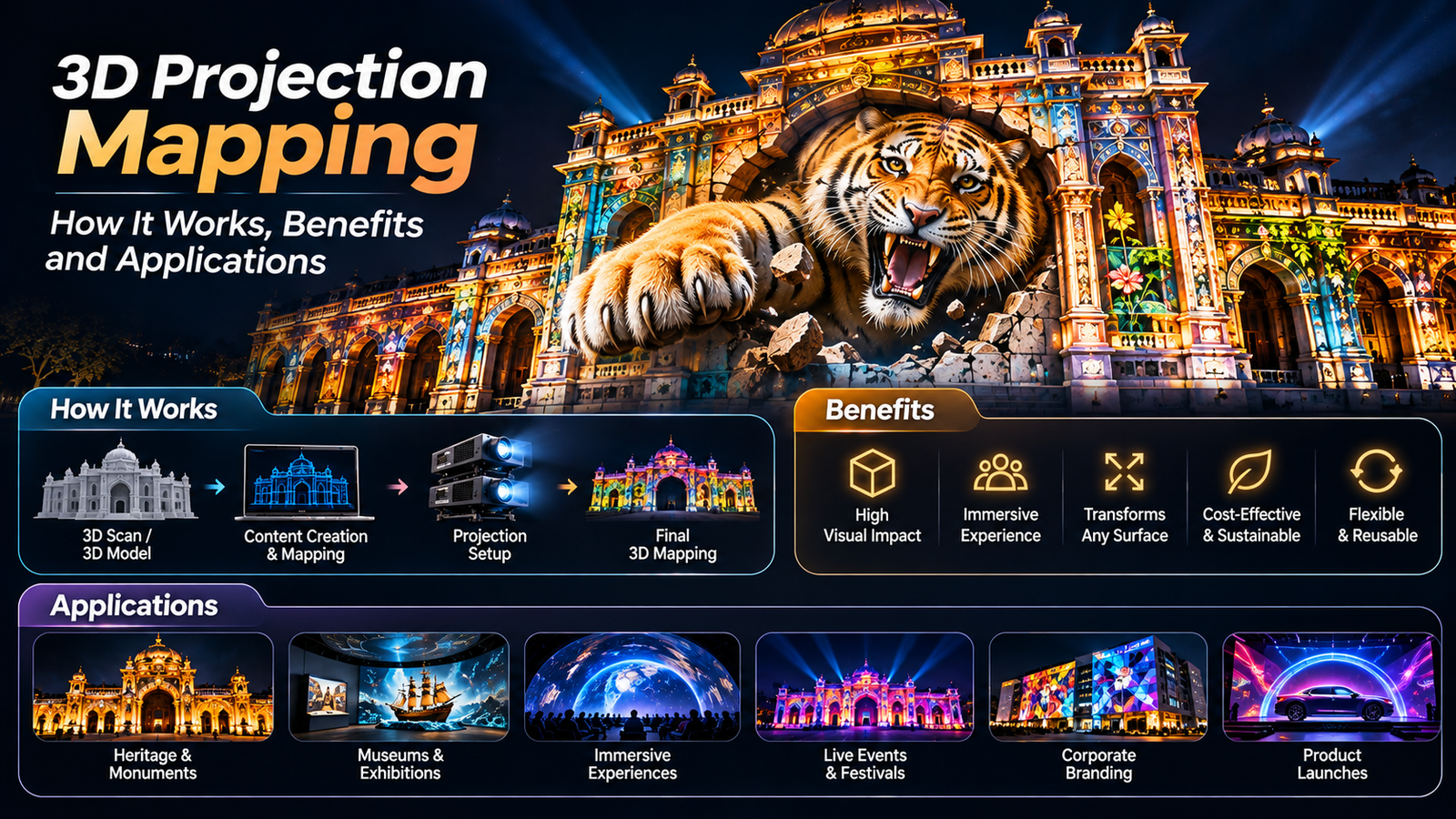
Projection mapping is a visual technique that aligns projected digital content with the shape and dimensions of a physical surface. Unlike conventional projection onto a flat screen, it allows visuals to interact with three-dimensional objects, stage structures, buildings, and custom-built scenery.
For events, projection mapping can be used to create:
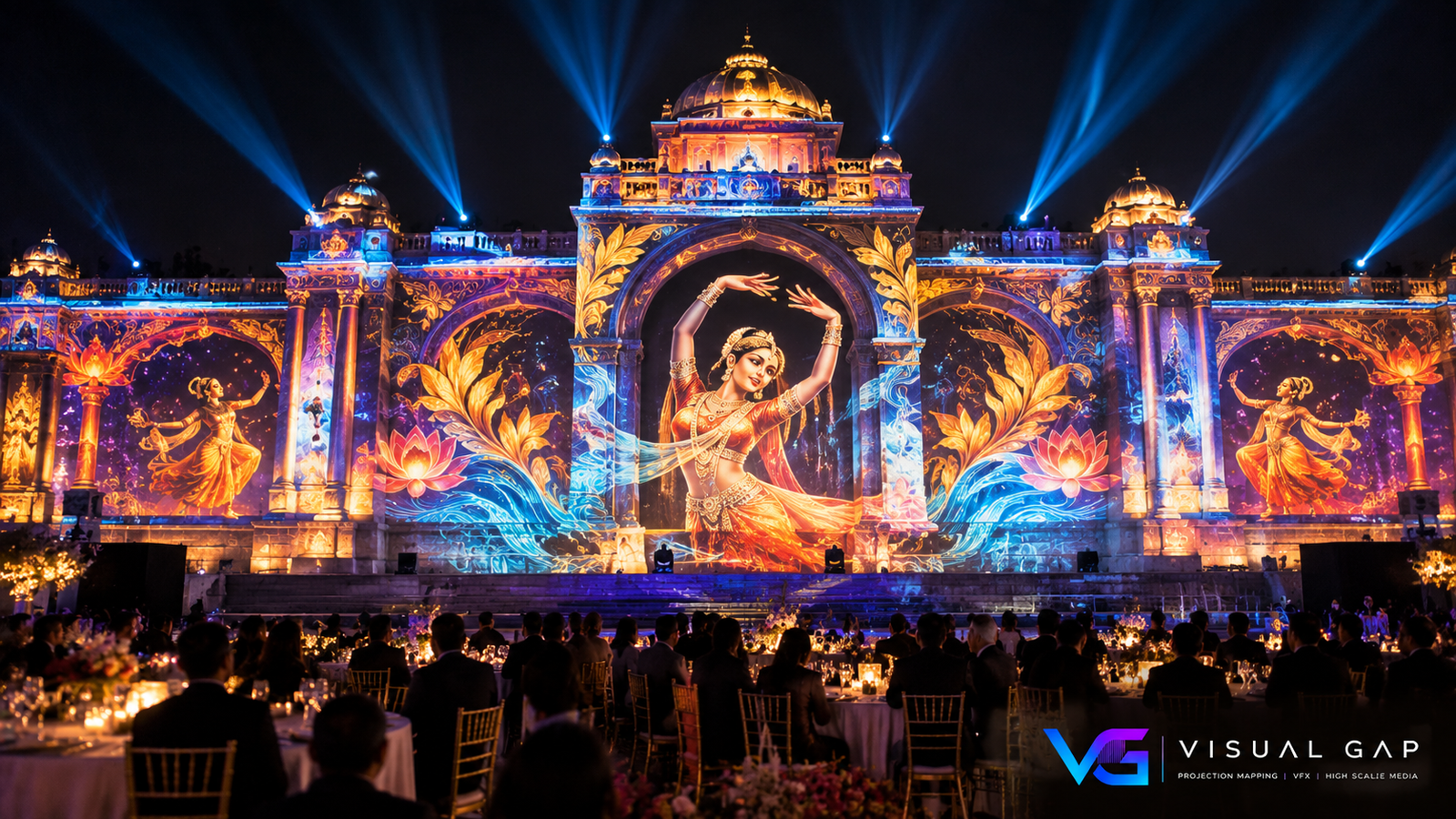
Immersive stage backgrounds
Three-dimensional visual illusions
Product reveal experiences
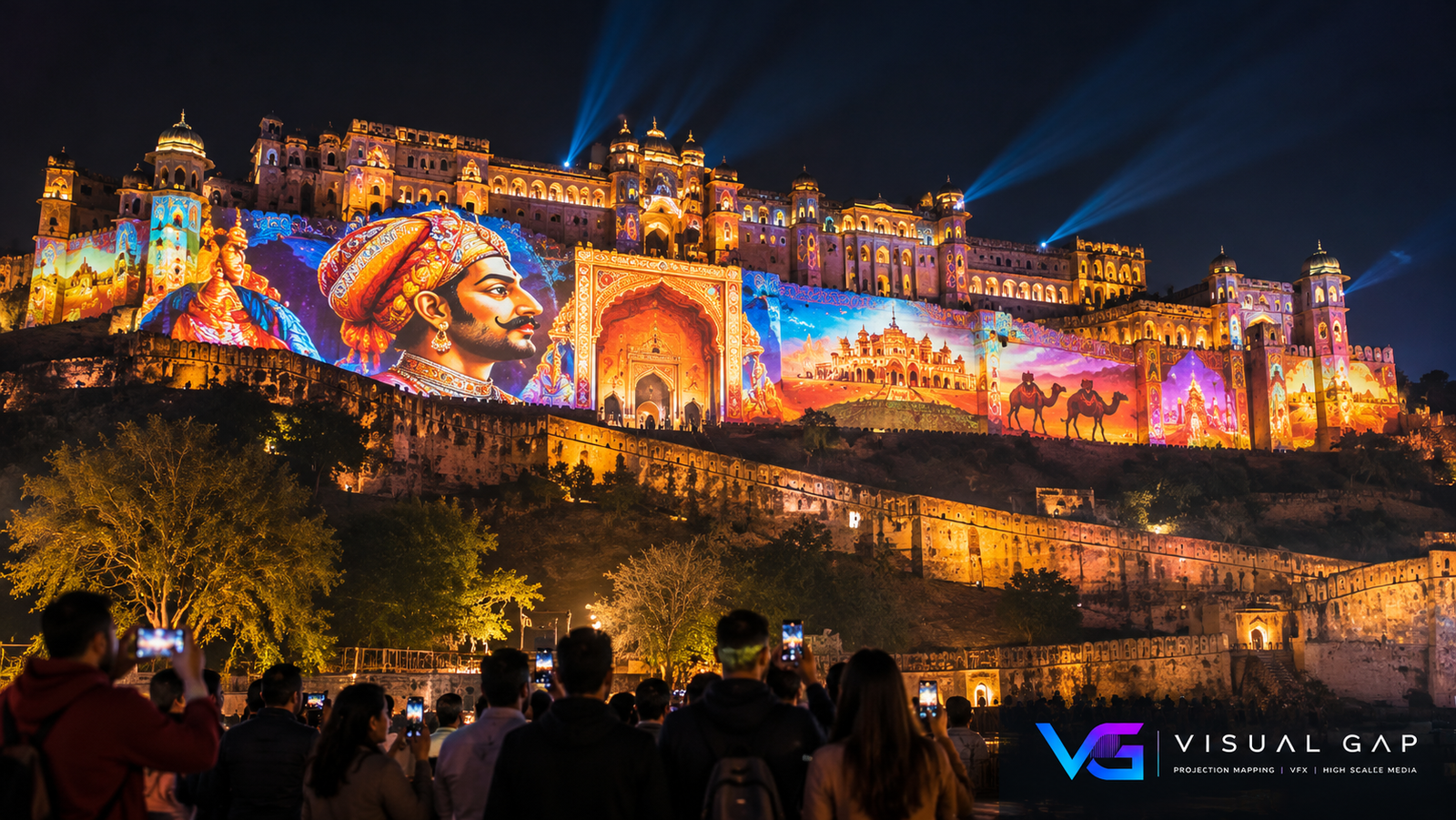
Animated architectural facades
Interactive brand environments
Concert and festival visuals
Immersive dining and entertainment experiences
The result is an experience in which the physical venue becomes part of the creative presentation.
To understand the underlying technology, read our Complete Projection Mapping Guide.
Types of Events That Use Projection Mapping
1. Corporate Events and Conferences
Corporate events often need to communicate complex ideas, introduce business strategies, and reinforce brand identity.
Projection mapping can transform a conference stage into a visually engaging environment that supports keynote presentations, award ceremonies, leadership announcements, and company milestones.
Instead of relying entirely on static backdrops, organisers can use coordinated visuals that change according to the speaker, presentation, or programme.
Common applications include:
Annual general meetings and corporate gatherings
Leadership conferences
Awards and recognition ceremonies
Business summits
Company anniversaries
Employee engagement events
The content should complement the event’s purpose rather than distract the audience from the message.
2. Product Launches and Brand Activations
A product launch is an opportunity to create a memorable first impression. Projection mapping can support the reveal of a new product by building anticipation through animation, sound, and carefully timed visual sequences.
For example, a projection-mapped structure could gradually reveal a product’s design, demonstrate its features, or visually communicate the technology behind it.
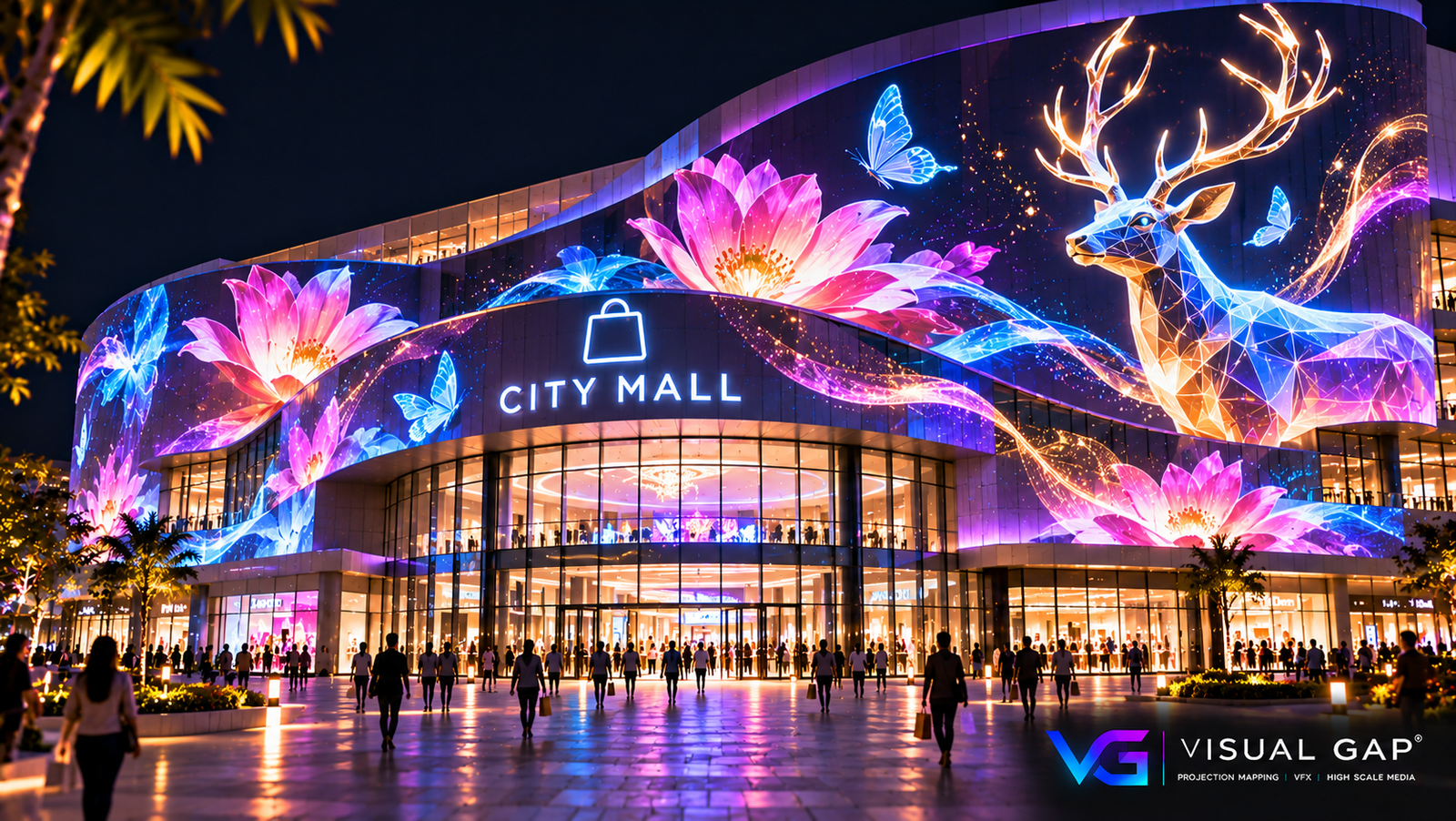
Brands can also use projection mapping to create temporary immersive environments at exhibitions, shopping centres, and promotional events.
A successful product reveal typically combines a strong creative concept with precise timing, reliable playback, and a clear view of the featured product.
3. Concerts and Live Entertainment
Concerts and live performances rely on atmosphere, rhythm, and visual storytelling. Projection mapping can complement these elements by transforming stage structures and scenic objects throughout a performance.
Visual content can respond to changes in music, lighting cues, or the narrative of a live show.
Potential applications include:
Concert stage visuals
Theatre productions
Dance performances
Live music festivals
Touring entertainment shows
Special performance installations
Projection mapping works best when it is coordinated with the lighting, audio, stage design, and show-control systems. Technical rehearsal is particularly important for synchronised live performances.
4. Weddings and Private Celebrations
Projection mapping can introduce personalised visual storytelling into weddings, receptions, and private celebrations.
Depending on the venue and design, projections can transform a stage backdrop, decorate selected architectural surfaces, or create a themed environment for guests.
Creative possibilities include animated floral designs, personalised monograms, visual narratives, and coordinated transitions between different parts of the event.
For private celebrations, the design should consider viewing angles, ambient light, venue restrictions, and how the visuals will appear in photographs and videos.
5. Festivals and Public Events
Festivals provide opportunities to use projection mapping at a larger scale. Public buildings, temporary structures, and specially designed installations can become visual attractions during cultural celebrations and city events.
Projection mapping may be used for:
Cultural and seasonal festivals
Public art installations
Tourism campaigns
City celebrations
Outdoor entertainment programmes
Brand-sponsored experiences
Outdoor installations require careful consideration of weather, ambient light, equipment protection, power distribution, crowd movement, and safe installation practices.
Explore our guide to Outdoor Projection Mapping for more information about exterior projection environments.
Projection Mapping vs LED Walls for Events
Projection mapping and LED walls are both useful event-display technologies, but they serve different purposes.
| Feature | Projection Mapping | LED Walls |
|---|---|---|
| Display surface | Can use buildings, stages, objects, and custom structures | Uses modular LED panels |
| Creative flexibility | Can align visuals with complex physical shapes | Primarily displays content across the panel surface |
| Daylight performance | Usually requires controlled lighting conditions | Often better suited to bright environments |
| Physical integration | Can make scenery appear animated or transformed | Creates a visible digital display surface |
| Installation | Requires projector placement, alignment, and calibration | Requires panel assembly, support structures, and processing |
| Best suited for | Architectural visuals, object mapping, and immersive transformations | Presentations, live camera feeds, text, and high-brightness displays |
The right choice depends on the venue, viewing distance, lighting conditions, creative concept, and production budget.
For a more detailed comparison, read Projection Mapping vs LED Wall.
How to Plan a Projection Mapping Event
A successful projection mapping experience requires creative planning and technical coordination. The following steps help event teams develop a reliable production workflow.
Step 1: Define the Event Objective
Start by identifying the purpose of the experience. Is it designed to launch a product, communicate a brand message, entertain an audience, or transform the venue?
A clear objective helps determine the content style, technical requirements, and desired audience experience.
Step 2: Select the Projection Surface
The projection surface may be a stage, building facade, sculptural installation, product, or custom-built set.
Its size, shape, colour, texture, and position will influence the visual design and technical setup. A site survey helps determine whether the surface is suitable for projection mapping.
Step 3: Develop the Creative Concept
The creative team develops the narrative, visual style, storyboard, animation, and show sequence.
Content should be designed specifically for the surface rather than simply stretched across it. This is particularly important when creating depth illusions or making architectural elements appear to move or transform.
Step 4: Design the Technical Setup
The technical design may include:
Projector specifications and lens selection
Projection distance and placement
Resolution and image coverage
Media servers and playback systems
Video signal distribution
Audio synchronisation
Power and cable management
Backup and show-control procedures
The number of projectors depends on the surface dimensions, required brightness, resolution, and installation conditions.
Step 5: Create and Map the Content
The visual content is produced according to the physical geometry of the surface.
Mapping software is used to align the content with the structure, while playback systems ensure that the correct visuals appear at the right time.
For complex installations, the team should allow sufficient time for on-site alignment and calibration.
Step 6: Rehearse and Test
Technical rehearsals help identify alignment errors, playback problems, timing issues, and visibility challenges before the event begins.
The production team should test the complete sequence under conditions similar to those expected during the actual event.
Backup playback files, spare signal cables, and a clear troubleshooting procedure can reduce the impact of technical failures.
How Much Does Projection Mapping for Events Cost?
The cost of projection mapping for events varies according to the scale and complexity of the production.
Important cost factors include:
Number and specifications of projectors
Size and complexity of the projection surface
Custom animation and content production
Mapping and playback equipment
Installation and dismantling
Media servers and signal distribution
Technical crew and event duration
Travel, logistics, and accommodation
Rehearsals and on-site support
A small indoor installation may require a relatively simple setup, while a large outdoor event with custom content, multiple projectors, and complex synchronisation can involve a substantially larger investment.
For an accurate estimate, the production team should review the venue, dimensions, content requirements, event dates, and technical specifications.
Read our guide to Projection Mapping Costs for more information about the factors that influence project budgets.
Common Challenges in Event Projection Mapping
Although projection mapping can produce striking results, several challenges must be addressed during planning.
Ambient light: Excessive surrounding light can reduce image contrast and visibility.
Surface geometry: Complex surfaces require careful mapping and suitable projector placement.
Restricted setup time: Event venues may provide limited installation and rehearsal windows.
Content revisions: Late changes to animations can affect rendering, testing, and playback preparation.
Technical reliability: Signal interruptions, playback errors, or power issues can disrupt the show.
Audience viewing angles: Projector positions and audience layout influence the perceived quality of the experience.
Early site surveys, realistic production schedules, technical rehearsals, and contingency planning help minimise these risks.
Why Choose Professional Projection Mapping for Events?
Professional projection mapping requires more than powerful projectors and attractive animation. It combines creative direction, content production, spatial design, technical planning, calibration, and show execution.
An experienced team can help assess the venue, develop the visual concept, select appropriate equipment, coordinate with other event departments, and test the experience before the audience arrives.
This integrated approach is particularly valuable for high-profile product launches, complex stage designs, large-scale public events, and installations where timing and visual accuracy are critical.
Conclusion
Projection mapping for events provides a creative way to transform stages, venues, products, and architectural structures into memorable visual experiences.
Whether used for corporate presentations, product launches, concerts, weddings, or festivals, the technology can help organisers tell stories, reinforce brand identity, and create a stronger connection with their audiences.
The best results come from combining a clear creative vision with suitable equipment, carefully produced content, accurate mapping, and thorough technical preparation.
Visual GAP develops projection mapping and immersive visual experiences for events, architectural spaces, museums, and public attractions. Each project is designed around the venue, the audience, and the story the experience needs to communicate.